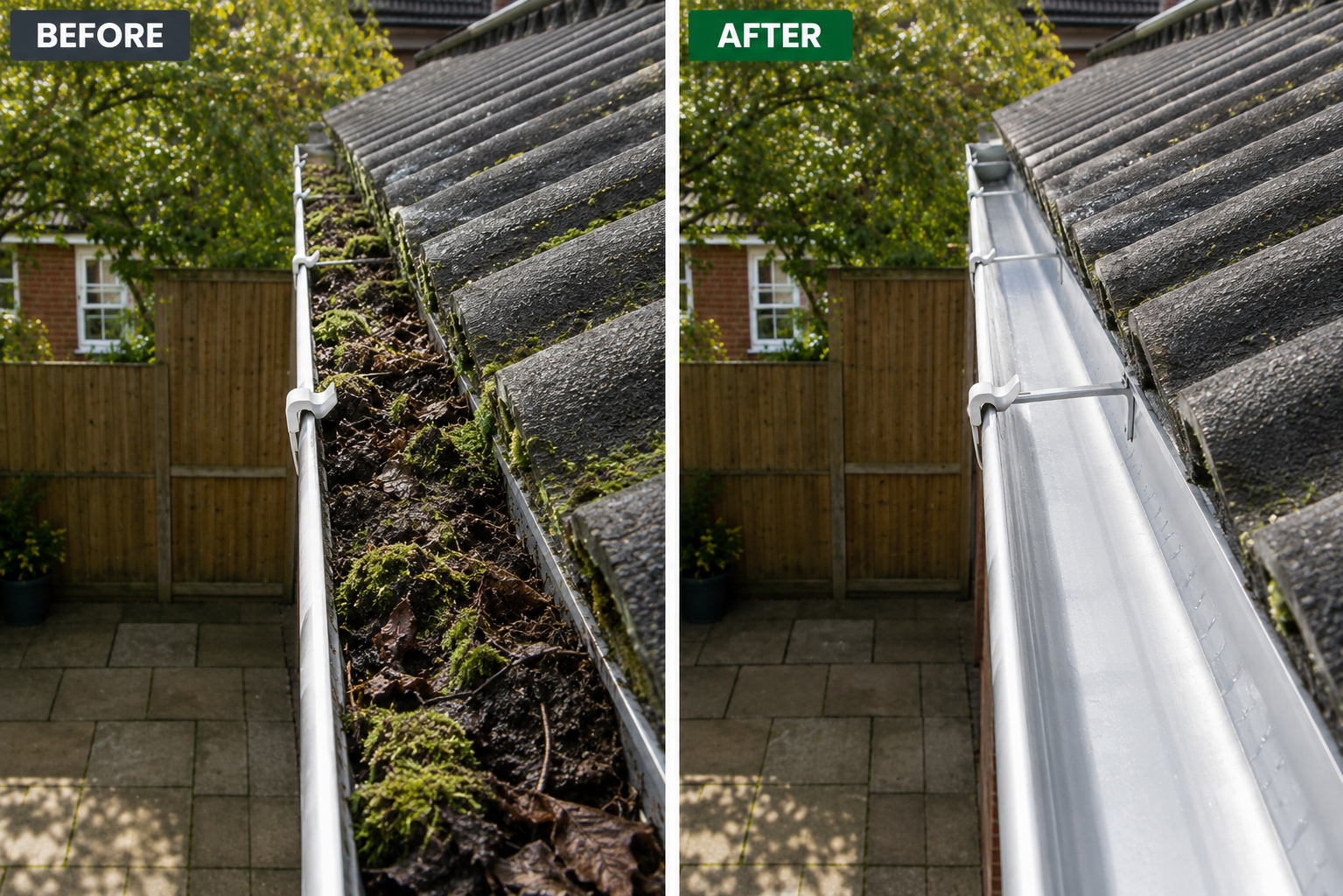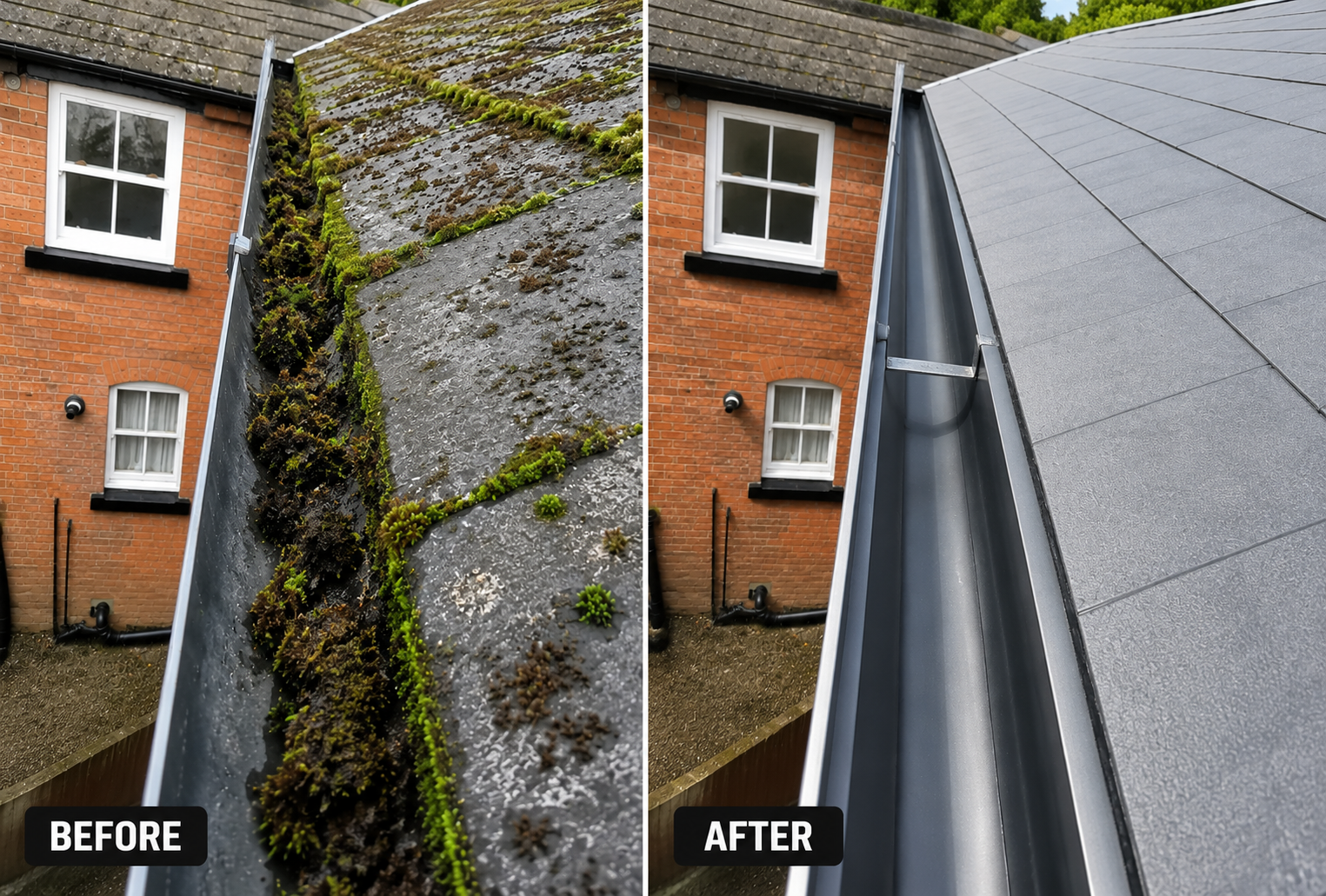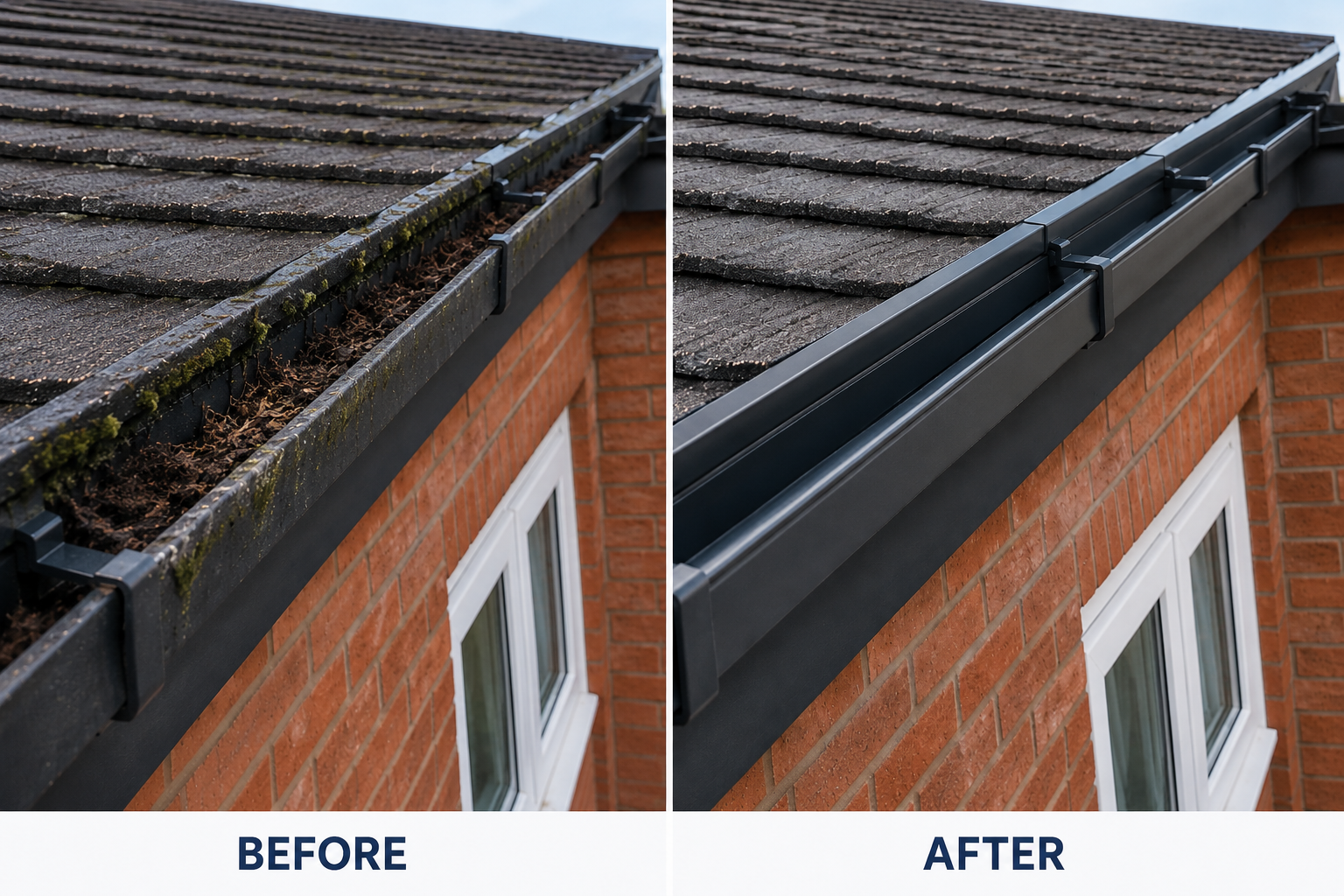

A Victorian terrace in Bournville and a 2005-built semi in a modern Solihull development genuinely require two different approaches to gutter cleaning, and treating them identically is one of the most consistent gaps we see across Birmingham's maintenance sector. The materials are different. The fixing methods are different. The typical defect patterns are different. Even the way debris physically behaves within the system genuinely differs between a Victorian cast iron run and a modern UPVC equivalent.
This article breaks down exactly why Victorian housing stock across Birmingham demands a genuinely tailored Victorian gutter cleaning approach, what specific components need particular attention, and how that approach translates into what a proper visit should actually cover on a property of this age and construction type.
📞 WOW Gutters Ltd — Birmingham's Victorian property gutter specialists: 07421 433910
Free quote · Before and after photos on every job · Fully insured professional team
Why Age and Material Change Everything About the Approach
Modern UPVC gutter systems are designed around standardised, relatively forgiving tolerances. Sections clip together rather than requiring sealant. Brackets are straightforward, interchangeable, and readily available. The material itself resists corrosion entirely, meaning a considerable category of defect that affects older systems simply doesn't apply. Victorian gutter systems were frequently cast iron, installed using methods and materials that have, in a genuinely significant number of Birmingham properties, been in continuous service for well over a century.
This age and material difference changes what a proper maintenance visit needs to prioritise in ways that go considerably beyond simply "being more careful." As covered extensively throughout our detailed guidance on how professional gutter cleaning extends the life of your roofline, the entire chain reaction connecting gutter condition to fascia, brickwork, and internal wall health behaves differently depending on the specific materials and age involved. Cast iron corrodes in ways UPVC simply doesn't experience. Joint seals on century-old systems have almost certainly been replaced multiple times across their service life, with genuinely varying quality depending on when and by whom that work was carried out. And the fascia boards these older systems fix into are frequently original timber, considerably older and correspondingly less tolerant of ongoing moisture exposure than anything found on more recent construction.
Treating a Victorian cast iron system with the same maintenance assumptions built for modern UPVC genuinely misses the specific, distinct risk factors this age and material combination introduces — and it's precisely these distinct risk factors that this article addresses in detail.
Cast Iron: Weight, Corrosion, and Joint Failure Patterns
Cast iron gutters carry genuinely significant baseline weight compared with modern UPVC — a factor that matters considerably once any debris accumulates within the channel, exactly as detailed extensively throughout our comprehensive guidance on hidden gutter damage that's easier to spot in summer. A UPVC gutter channel carrying accumulated silt adds a modest amount of additional weight to its fixings, given the material's own light baseline weight. A cast iron gutter carrying the identical accumulation adds considerably more overall stress, given the material's own substantial weight before any debris is even factored in, meaning bracket stress genuinely compounds faster on Victorian cast iron systems than it would on a comparable lighter modern equivalent carrying the same debris load.
Corrosion presents its own genuinely distinct maintenance challenge specific to this material. As explained comprehensively throughout our full walkthrough of what happens during a professional gutter clean, real-time camera inspection is considerably more valuable on cast iron systems specifically, because corrosion frequently begins on the inner surface of the channel itself, or at the specific points where a bracket makes contact with the gutter, entirely invisible from any external viewing angle and considerably harder to assess reliably by touch or general visual impression than an equivalent defect on a modern UPVC system would be.
Joint seals on Victorian cast iron systems present a further genuinely distinct challenge. Rather than the clip-together mechanical design standard on modern UPVC systems, cast iron joints typically rely on putty or rubber seals applied at installation or during subsequent repair work, and these seals genuinely fail more frequently and more unpredictably than modern mechanical joints, as detailed extensively throughout our dedicated guide on why downpipes keep blocking again despite repeated clearing attempts and our companion guidance on the specific signs Birmingham homes show when a downpipe is genuinely blocked. A property with an original cast iron system frequently carries several joints simultaneously approaching or already past their reasonable service life, rather than presenting a single, isolated fault that a maintenance visit needs to address — meaning a proper assessment on a Victorian property genuinely needs to check every joint along the full run, rather than assuming the system is broadly sound based on a general visual impression.
Original Timber Fascia Boards and Their Genuinely Different Risk Profile
Fascia boards on Victorian properties across areas including Bournville, Selly Oak, and Handsworth are frequently original timber, often genuinely over a century old, carrying considerably less remaining tolerance for ongoing moisture exposure than a modern board of any material would present. As explained throughout our dedicated guide to soffit damage across West Midlands homes and the early signs worth recognising, this reduced remaining tolerance means the identical moisture exposure that might take several years to meaningfully affect a modern fascia or soffit board can progress considerably faster on genuinely original Victorian timber that's already carrying the cumulative effect of a century or more of prior weathering, however well maintained it may have been across that extended period.
This reduced tolerance is precisely why dry-condition inspection, as detailed extensively throughout our guidance on how dry summer weather makes gutter inspections considerably easier and more accurate, genuinely matters more on Victorian properties than it does on newer construction. Catching early-stage fascia softening while it remains genuinely addressable through a straightforward joint reseal or targeted repair, rather than discovering the same underlying issue only once the original timber has already progressed considerably further toward requiring full section replacement, carries proportionally greater value on a property where the fascia board itself represents a genuinely irreplaceable piece of original period fabric rather than a straightforward modern component that can simply be swapped for an equivalent replacement without any loss of the property's original character.
Parapet and Valley Gutters: The Configuration Modern Guidance Ignores
A considerable number of Victorian terraces across Birmingham don't use the standard open eave gutter configuration that most modern properties, and most generic gutter maintenance guidance, genuinely assumes as the default arrangement. Parapet gutters, running along a channel positioned behind a raised boundary wall rather than at an open, visible eave, and valley gutters positioned at the specific junction where two adjoining terraced properties meet, are genuinely common features across Victorian terraced housing stock throughout the city.
These configurations behave considerably more like the flat roof drainage systems described extensively throughout our dedicated guidance on flat roof gutters across Birmingham and the specific maintenance problem most generic guides genuinely ignore entirely, than they behave like a standard, open pitched-roof eave gutter. Water travels across a broader surface toward specific collection points rather than falling directly into a linear channel along an open edge, creating the same genuine risk of ponding — standing water remaining in place for extended periods — that our flat roof guidance explains in full detail.
This distinction matters enormously for Victorian property maintenance specifically, because a maintenance approach genuinely built around the assumptions of standard open eave gutters, without any accounting for this parapet or valley configuration, can miss entirely the actual drainage system a considerable proportion of Victorian terraced properties genuinely rely on, addressing only whatever standard guttering happens to be visible while leaving the genuinely more consequential parapet or valley section unassessed and unaddressed.
Shared Drainage Across Terrace Rows, Not Just Two Properties
Victorian terraces frequently share drainage responsibility across party walls connecting multiple adjoining properties simultaneously, considerably more extensively than the straightforward two-property configuration described throughout our detailed guidance on the shared boundary issue affecting Birmingham semi-detached homes specifically. A genuine Victorian terrace row can involve shared drainage responsibility spanning several neighbouring households at once, particularly where a continuous parapet or valley gutter of the kind described above runs along the full length of the terrace without any physical break at each individual property boundary.
This introduces a genuinely more complex coordination challenge than the simpler two-party semi-detached scenario our dedicated guide addresses. Where a neglected section of shared parapet gutter exists partway along a terrace row, the consequence can genuinely extend to multiple neighbouring properties simultaneously rather than affecting just one adjoining household, meaning the kind of neighbourly coordination conversation described throughout that semi-detached guidance becomes considerably more involved when it potentially needs to include several separate households along the same continuous drainage run rather than a single neighbouring party.
Why Clay Soil Considerations Compound Over a Longer Timeframe
Victorian properties positioned across Birmingham's clay-influenced areas, as explained carefully and responsibly throughout our detailed guidance on how Birmingham's clay soil affects foundation damage connected to blocked gutters specifically, have genuinely had considerably longer for any downpipe discharge fault to potentially contribute to localised ground movement than a property built within the last few decades would have experienced.
This extended timeframe doesn't mean every Victorian property across the city's clay-influenced areas genuinely faces subsidence risk — the overwhelming majority don't, exactly as that guide explains in careful, responsible detail. But it does mean the cumulative period over which any genuinely unaddressed downpipe fault could potentially have been contributing to localised ground moisture variation is considerably longer on a Victorian property than on more recent construction, making the proper downpipe discharge assessment described throughout that guidance genuinely more relevant to prioritise on properties of this specific age.
Why Mature Street Tree Coverage Compounds Everything Further
Victorian residential streets across areas including Edgbaston, Harborne, and Moseley frequently carry genuinely mature street tree planting dating from broadly the same era as the housing stock itself, as detailed extensively throughout our comprehensive guidance on how tree cover changes gutter cleaning scheduling requirements across Birmingham. This means the elevated debris volume produced by mature sycamore, lime, or oak specimens is genuinely combining with the already more vulnerable cast iron systems and original timber fascia boards described throughout the earlier sections of this article, compounding overall risk in a way that neither the tree coverage factor nor the older housing stock factor would produce in isolation from the other.
A Victorian property beneath mature lime specifically faces the combination of the sticky, honeydew-coated debris characteristic covered in that tree guidance landing directly into a cast iron system with joint seals already more likely to be marginal given the property's age, creating a genuinely compounded risk profile that a maintenance approach built purely around either factor in isolation would fail to properly account for.
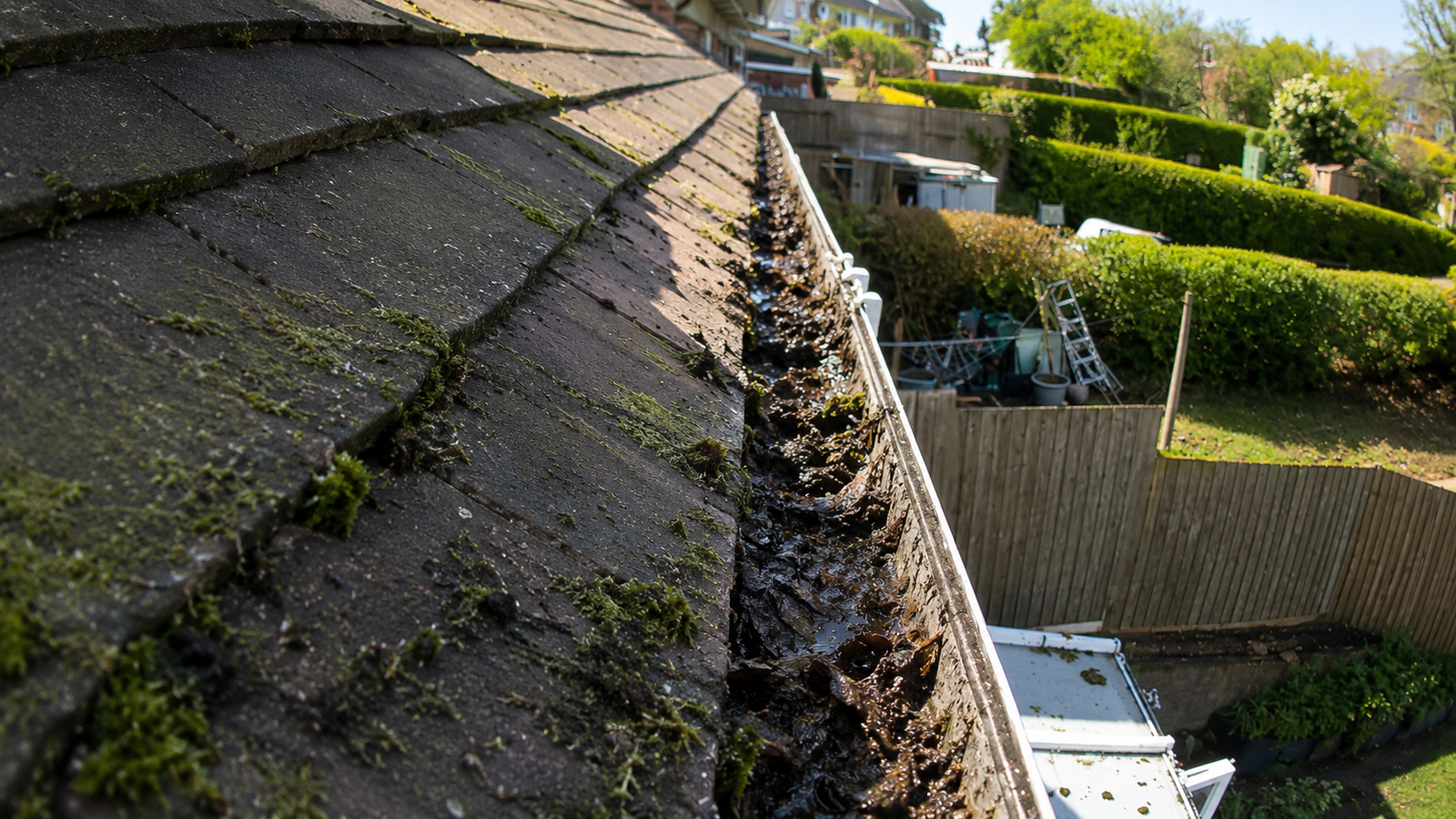
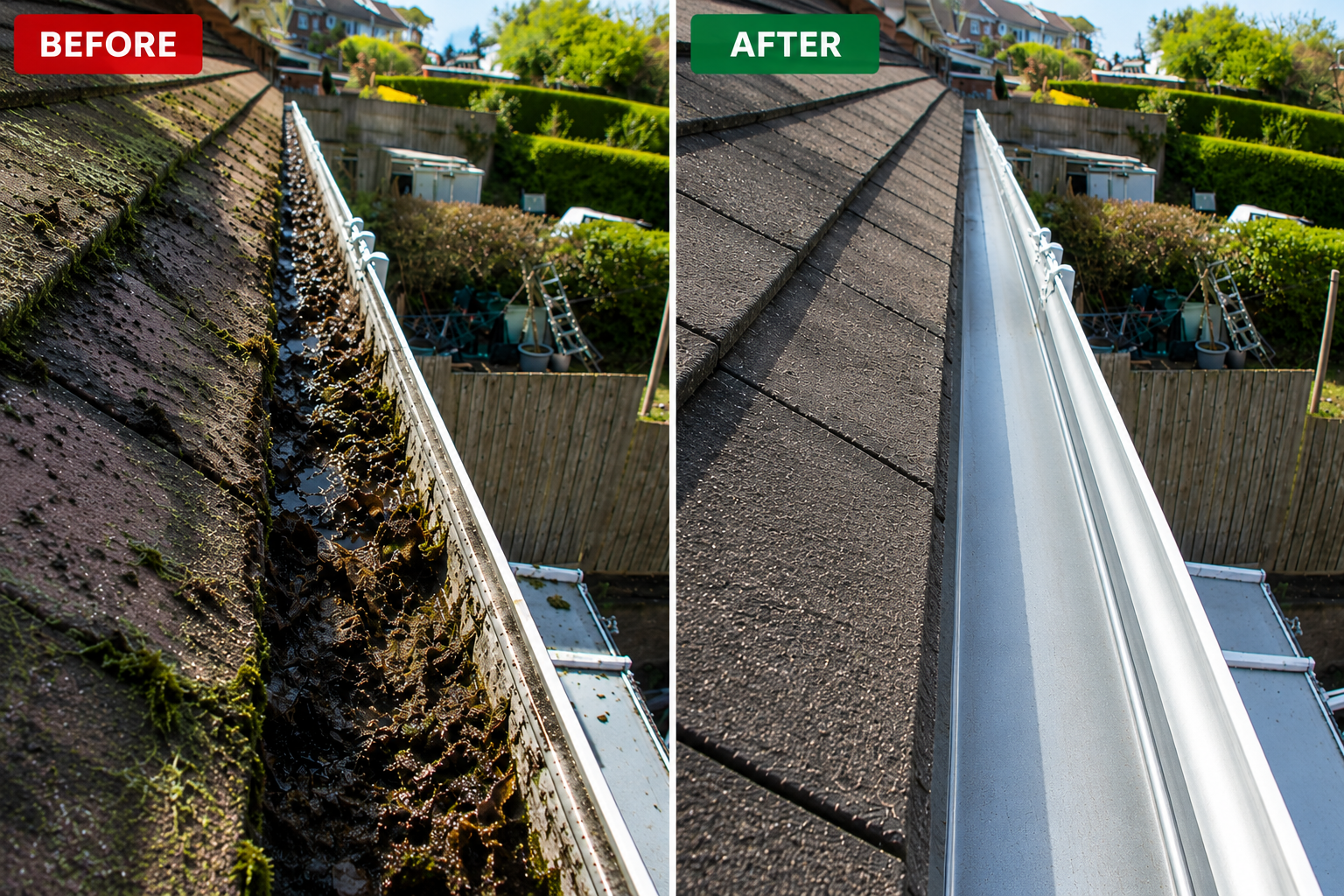
Before: Heavy organic silt and moss placing severe load on cast iron brackets.
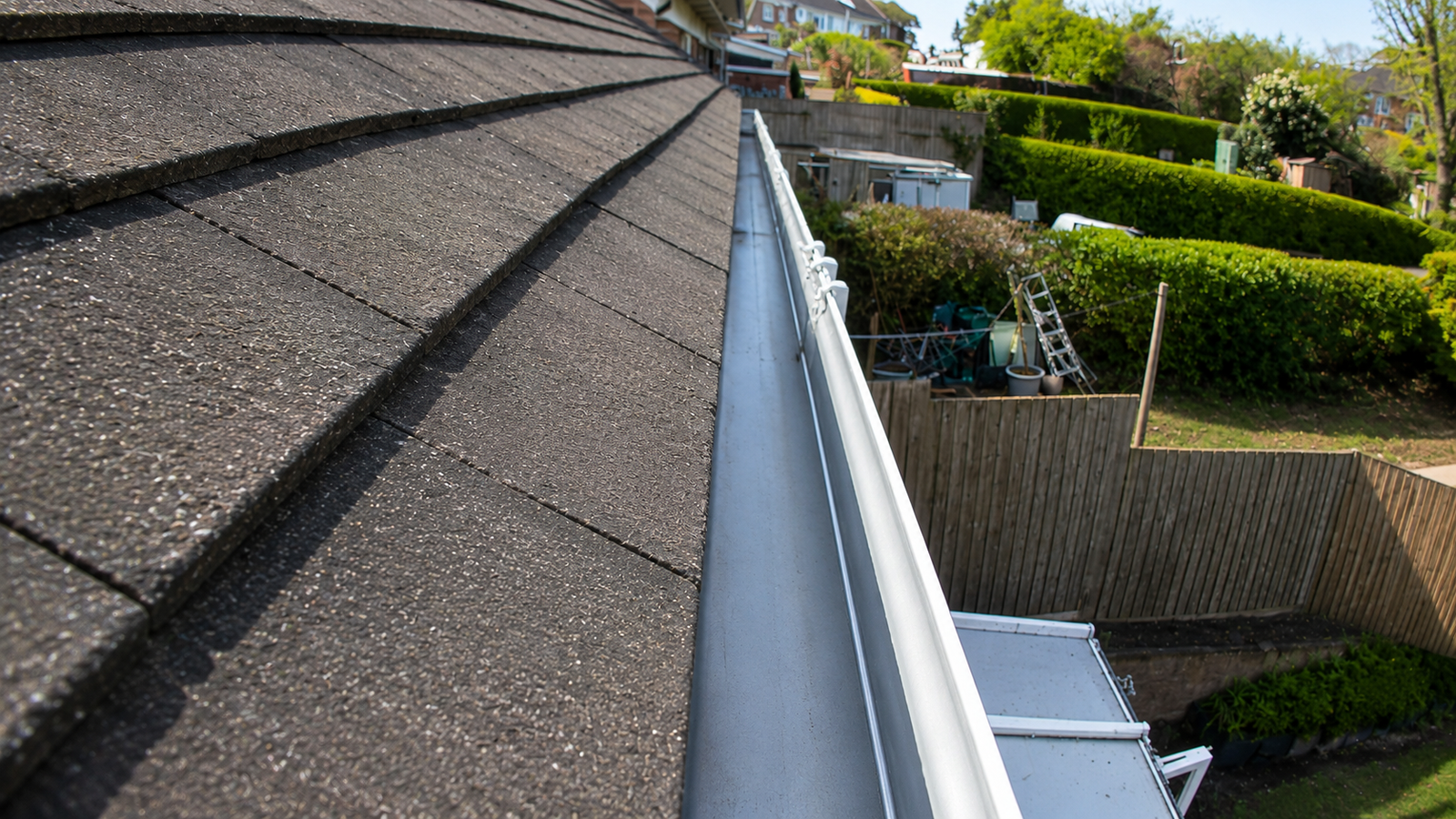
After: Fully cleared channel with joint integrity inspected and verified.
Specific Birmingham Areas With the Highest Concentration of This Housing Type
While the general principles described throughout this article apply to any Victorian property regardless of its specific location, certain areas across Birmingham carry a particularly high concentration of this specific housing type, making the tailored approach described throughout this article especially relevant for properties in these particular locations.
Bournville, developed substantially during the Victorian and early Edwardian period as part of the Cadbury family's model village development, genuinely retains a considerable proportion of its original housing stock, including original guttering and fascia in a meaningful number of properties. Selly Oak, Handsworth, and Sparkhill similarly carry substantial Victorian terraced housing stock across large sections of their residential areas. Perry Barr and parts of Erdington include genuine Victorian and Edwardian development alongside later interwar and post-war construction, meaning properties of considerably different ages and construction types genuinely sit alongside one another within the same immediate area, making it particularly important not to assume a uniform maintenance approach across an entire street purely based on general area knowledge.
What a Properly Tailored Victorian Property Visit Actually Includes
Given everything described throughout this article, a genuinely appropriate maintenance approach for Victorian Birmingham properties should include several specific elements beyond what a standard visit built for modern housing stock would necessarily cover.
Particular attention to cast iron joint condition specifically, checking every joint along the full run given the statistical likelihood that a property of this age carries multiple joints simultaneously approaching or past their reasonable service life, rather than assuming general soundness from a single representative check. Genuine assessment of original fascia timber condition using the dry-condition inspection principles detailed throughout our guidance on how dry summer weather makes inspections easier, given the reduced remaining tolerance original timber of this age genuinely carries compared with modern boards. Identification of any parapet or valley gutter configuration specifically, rather than assuming standard open eave guttering is the only drainage system present on the property. And genuine awareness of shared drainage responsibility potentially extending across an entire terrace row, as described above, rather than treating each individual property in complete isolation from its neighbours.
This tailored approach, delivered entirely from ground level using the ladder-free method described throughout our detailed explanation of how professional gutter cleaning actually works without a ladder, genuinely addresses the specific risk factors Victorian housing stock presents rather than applying a generic approach built primarily around the assumptions of modern construction.
What Happens When a Standard, Untailored Approach Is Applied Instead
It's worth being explicit about the genuine consequence of applying a standard, generic maintenance approach — built implicitly around modern UPVC assumptions — to a genuinely Victorian cast iron and original timber property instead of the tailored approach described throughout this article.
A generic visit that clears visible debris without specifically checking every cast iron joint along the run genuinely risks missing one or more marginal seals that are already approaching failure, precisely the kind of hidden defect described extensively throughout our detailed guidance on hidden gutter damage that's easier to spot in summer. A generic visit that doesn't specifically assess original fascia timber using dry-condition inspection principles genuinely risks missing early-stage softening that, on original century-old timber with reduced remaining tolerance, can progress toward genuine replacement need considerably faster than it would on a modern equivalent board. And a generic visit that assumes standard open eave guttering without checking for parapet or valley configuration genuinely risks leaving an entire section of a Victorian property's actual drainage system completely unaddressed, regardless of how thoroughly the visible standard guttering elsewhere on the property was cleared.
FAQ: Gutter Maintenance for Victorian Birmingham Properties
Book the Approach Your Victorian Property Actually Needs
A Victorian Birmingham property genuinely deserves a maintenance approach built around its specific cast iron systems, original timber fascia, and potentially non-standard gutter configuration — not a generic visit designed with modern UPVC assumptions in mind.
WOW Gutters Ltd provides Victorian gutter cleaning genuinely tailored to Victorian and Edwardian housing stock across Birmingham and the West Midlands, with particular attention to cast iron joint condition, original fascia timber assessment, and identification of parapet or valley gutter configurations. Ground-based vacuum system with real-time camera inspection. No ladders. Before and after photographs on every job without exception. Fully insured professional team.
BOOK THE APPROACH YOUR VICTORIAN PROPERTY ACTUALLY NEEDS
A Victorian Birmingham property genuinely deserves a maintenance approach built around its specific cast iron systems, original timber fascia, and potentially non-standard gutter configuration — not a generic visit designed with modern UPVC assumptions in mind. WOW Gutters Ltd provides tailored Victorian gutter cleaning across Birmingham and the West Midlands. Ground-based vacuum system · No ladders · Before and after photographs on every job without exception.
📞 Call: 07421 433910
📧 Email: support@wowgutters.co.uk
🌐 Website: wowgutters.co.uk
Serving Birmingham, Solihull, Sutton Coldfield, Edgbaston, Harborne, Kings Heath, Moseley, Bournville, Erdington, Wolverhampton, Dudley, Walsall, West Bromwich, Coventry, Redditch, Bromsgrove, Worcester, Kidderminster and all West Midlands areas.
Related Guides
- How Professional Gutter Cleaning Extends the Life of Your Roofline
- Soffit Damage in West Midlands Homes: Early Signs You Shouldn't Ignore
- Downpipes Blocked Again? The Birmingham Fix Most Homeowners Miss
- How Do You Know If Your Downpipe Is Blocked?
- Hidden Gutter Damage Is Easier to Spot in Summer
- How Dry Summer Weather Makes Gutter Inspections Easier
- Flat Roof Gutters in Birmingham: The Maintenance Problem Most Guides Ignore
- Gutter Cleaning for Semi-Detached Homes: The Shared Boundary Issue in Birmingham
- How Birmingham's Clay Soil Affects Foundation Damage From Blocked Gutters
- How Tree Cover Changes Your Gutter Cleaning Schedule in Birmingham
- What Happens During a Professional Gutter Clean?
- How Do You Clean Gutters Without a Ladder?