
Every year, Birmingham homeowners pay to fix gutter problems that a summer inspection would have caught months earlier — for a fraction of the cost and without any of the collateral damage.
The overflowing gutter in November is visible. The damp patch on the bedroom wall in January is visible. The fascia board sagging and pulling away in February is visible. These things announce themselves loudly and expensively.
But before every visible failure there is a period of hidden deterioration — often months, sometimes years — during which the damage is building silently and invisibly. A joint weeping water down the back of the fascia with every rainfall event. A gutter section holding a permanent low point that corrodes the channel from below. A hairline crack that is inconsequential in light summer rain and catastrophic in heavy October downpours. A fascia board softening behind its paint, two seasons from bracket failure.
None of this is visible from the ground in any season. But in autumn and winter — when most people actually look at their gutters — it is actively concealed by the one thing that is everywhere: water. Running down every surface, covering every stain, masking every diagnostic signal that would otherwise reveal the problem clearly.
Summer removes that concealment. Dry surfaces. Clear light. No competing moisture. And the specific evidence of hidden gutter damage — staining, biological growth patterns, surface changes, silt layers — stands out plainly against dry backgrounds in a way it simply cannot when everything is wet.
This is what summer reveals. This is what those findings cost when they are missed. And this is why every Birmingham homeowner with an older property, mature trees nearby, or a gutter system that has never had a summer inspection should book one before the diagnostic window closes.
WOW Gutters Ltd — Birmingham's gutter specialists
07421 433910Why Hidden Damage Hides So Well in Autumn and Winter
The evidence of hidden gutter damage is almost entirely moisture-based. A failing joint leaves a stain — the dried residue of water that has been tracking through the failed seal. A dropped bracket that has created a low point shows biological growth at exactly that location — algae and moss that establish where water pools permanently. A deteriorating fascia board shows surface softening and early paint lifting — changes that are reliably distinguishable in dry conditions.
In autumn and winter, that moisture-based evidence disappears into the ambient moisture level of the season. Rain falls continuously across Birmingham from October through February. Every surface is wet for much of the time. The stain from a failing joint is indistinguishable from the general moisture on a wet fascia board. The biological growth at a low point is masked by the water level across all gutter sections after rainfall. The early softening of a deteriorating fascia board is indistinguishable from the surface dampness of a board that is simply wet.
The diagnostic signal hides in the noise. And the noise never stops in a Birmingham winter.
Summer removes it. No rainfall on dry surfaces. No competing moisture. Every diagnostic signal — stain, growth pattern, surface change, silt layer — clear and readable against dry backgrounds for the first time in months.
This is why summer is not just a more comfortable season for gutter inspection. It is a fundamentally more accurate one. And accuracy in gutter inspection is what separates small summer fixes from large winter repair bills.
The Seven Hidden Damage Types Summer Reveals
1. Joint Sealant Failure
What it is: Every gutter run has multiple joints — where channel sections meet, where gutters connect to outlets, angles, and stop ends. Each joint relies on sealant or a rubber seal to remain watertight. Once that sealant fails, water tracks through the joint with every rainfall event — not into the channel, but behind it, onto the fascia board directly behind the joint.
What summer reveals: A failing joint leaves a precise, localised stain on the fascia board at the exact point of failure — the dried residue of past water tracking. In dry summer conditions this is unambiguous. A specific, bounded area of discolouration, often with a rust streak on cast iron systems, at exactly one location. There is no other explanation for a stain of that character in that position.
Why autumn hides it: Water runs down the entire fascia surface during rainfall. The specific stain from a failing joint is completely indistinguishable from the general surface moisture covering every fascia board during rain. Finding the exact source requires sustained close-up investigation that dry conditions make unnecessary.
The cost trajectory:
- Found in summer → joint reseal: inexpensive, straightforward, done in optimal conditions
- Missed until winter → fascia board softening after two seasons of sustained moisture
- Missed until year three → fascia board replacement, gutter removal and refit: £400–£900 minimum on a standard Birmingham semi
Joint sealant failure is the single most common hidden defect in Birmingham gutter systems. On Victorian and Edwardian properties across Bournville, Selly Oak, Handsworth, and Perry Barr — where original cast iron systems carry seals well past their service life — a summer inspection routinely finds multiple failing joints simultaneously.
2. Gutter Fall Angle Failure
What it is: Every gutter run must slope slightly toward the downpipe outlet — approximately 3mm per metre of run. When a bracket drops through corrosion, fixing failure, or fascia movement, a low point is created in the run at that location. Water no longer drains past it. It pools there permanently, even when the rest of the system appears to function normally.
What summer reveals: A structural low point in a gutter run shows in dry conditions as a specific biological signature — algae, moss, or dark organic staining at one precise location that does not appear in adjacent sections. Water has been sitting at that location after every rainfall event through every dry period, creating the persistent damp conditions biological growth requires. The location and character of the growth identifies the low point with precision.
Why autumn hides it: Every gutter section holds water after rainfall. The structural low point looks identical to the normal post-rainfall water level in surrounding sections. Without specific measurement comparison — not practical during a routine visit — the defect is undetectable in wet conditions.
The cost trajectory:
- Found in summer → bracket reset or replacement: simple repair
- Missed through winter → standing water accelerates corrosion in cast iron, deepening the low point and stressing the bracket further
- Missed through multiple seasons → channel corrosion through at the low point, requiring section replacement rather than bracket reset
3. Hairline Cracks in UPVC Channel Sections
What it is: UPVC gutter channels develop hairline cracks over their service life through UV degradation, thermal cycling, and physical impact. In light rainfall these cracks are inconsequential — water drains past them without significant leakage. Under sustained heavy autumn and winter downpours, they become active leak points, forcing water through under pressure onto the fascia board behind the affected section.
What summer reveals: Against the uniform pale interior surface of a dry UPVC channel, a hairline crack is a distinct and visible feature to the camera inspection head passing along the gutter interior. Its location, extent, and orientation are all clearly assessable in dry conditions.
Why autumn hides it: The same crack in a gutter running with water looks identical to the normal wet surface surrounding it. The contrast that makes it visible in dry conditions disappears entirely when everything is wet.
The cost trajectory:
- Found in summer → section replacement before fascia damage occurs: straightforward
- Missed through winter → the crack propagates under repeated hydraulic and thermal stress; fascia board behind the section receives water through every heavy autumn downpour
- Missed through multiple seasons → section replacement plus fascia assessment and potential repair
4. Bracket Corrosion
What it is: Gutter brackets — particularly the cast iron and early steel brackets on Birmingham's large stock of Victorian and Edwardian terraces — corrode over time. Critically, corrosion typically begins not on the visible outer face of the bracket but on the inner face that contacts the gutter channel and the fascia board behind it. A bracket that appears sound from outside may have lost significant structural integrity at its fixing points.
What summer reveals: A corroding bracket in a dry cast iron system shows characteristic rust tracking from the bracket contact points — staining on the fascia board at the fixing locations that is distinct from normal weathering. Camera inspection from above the gutter line reveals the contact surface condition of the bracket directly — rust bloom, pitting, and delamination clearly visible against the dry channel surface.
Why autumn hides it: The general rust colouration and moisture of wet cast iron in autumn rain obscures the specific additional staining from corroding bracket fixings. Distinguishing active structural corrosion from normal weathered appearance of old cast iron is significantly harder in wet conditions.
The cost trajectory:
- Found in summer → bracket replacement in dry conditions with correct fixing
- Missed until failure → bracket pulls from fascia under the weight of a loaded autumn gutter, often taking fascia surface material with it; gutter section detachment is also a safety hazard on sections above doorways, windows, or pathways
5. Fascia Board Softening — Early Stage
What it is: The fascia board is what everything in the roofline assembly hangs from. Brackets fix into it. Gutters hang from those brackets. Fascia board deterioration begins as a surface process — paint lifting fractionally, surface texture changing, slight softening at specific locations — before progressing inward toward the timber core. Early-stage softening is structurally minor. Late-stage softening means bracket fixings have progressively less purchase until the gutter can no longer be securely supported.
What summer reveals: In dry conditions, early fascia deterioration shows clearly — paint beginning to lift at bracket fixing points or behind failing joints; surface discolouration distinct from normal weathering; and a marginal yield to light finger pressure that dry sound timber does not show. The contrast between a dry sound board and a dry early-deterioration board is reliable and immediate.
Why autumn hides it: A wet fascia board and a slightly deteriorating wet fascia board feel remarkably similar. All timber absorbs surface moisture in wet conditions. The specific softening that identifies early-stage deterioration is genuinely ambiguous on a board that is simply wet from rainfall.
The cost trajectory:
- Found at early stage in summer → address the joint failure or overflow causing the moisture exposure; board stabilises
- Found at mid-stage → localised repair may extend the board's service life
- Found at late stage or not found → full fascia board replacement: £400–£900 on a standard Birmingham semi, plus gutter removal and refit
6. Downpipe Inlet Blockage
What it is: The downpipe inlet — where the gutter outlet connects to the top of the downpipe — is one of the most consistent blockage points in any residential gutter system. Debris accumulates at this narrowing and forms a partial plug that restricts downpipe flow without producing symptoms in light or moderate rainfall. Under the volume of a sustained heavy autumn downpour, the partial restriction becomes a complete functional blockage — the gutter backs up, overflows, and causes wall and fascia damage.
What summer reveals: Camera inspection of the downpipe inlet in dry summer conditions shows its condition directly and clearly. Clear, partially obstructed, and fully blocked are all immediately apparent from the visual inspection. Dry debris at the inlet extracts completely and cleanly in a single vacuum operation.
Why autumn hides it: The inlet has water running through it or standing water above it during and after rain. Degree of obstruction must be assessed by flow testing rather than direct visual observation. Waterlogged compacted debris at the inlet requires more sustained extraction effort and complete clearance is harder to confirm.
The cost trajectory:
- Found in summer → inlet cleared completely: straightforward
- Missed through summer accumulation → partial restriction becomes near-complete block as autumn leaf fall adds from above
- First heavy autumn downpour → complete blockage, gutter overflow, water damage to wall and fascia before the blockage is even identified
7. Silt Layer Accumulation
What it is: Fine mineral particles washed from the roof surface over months of rainfall settle at the base of the gutter channel and compact gradually over seasons. This layer produces no obvious overflow symptoms in normal conditions. It simply reduces the effective depth of the channel year on year — leaving progressively less capacity for the debris and rainfall volume of autumn and winter.
A gutter installed at the correct size for its roof area can become functionally undersized over several seasons of unaddressed silt accumulation — leading to overflow during heavy rain that is incorrectly attributed to the gutter being too small when the real cause is a channel that has lost a significant proportion of its effective depth.
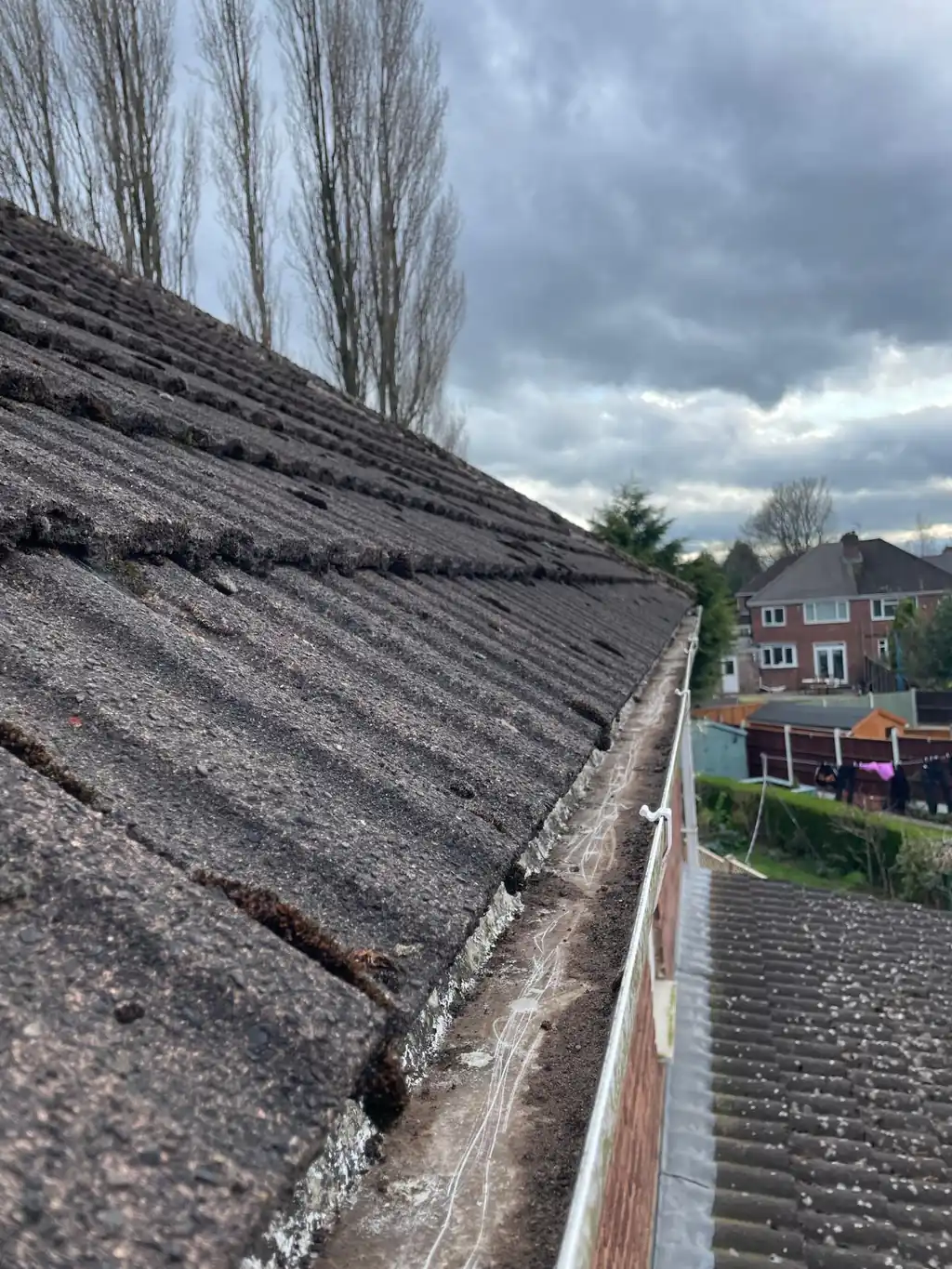
What summer reveals: In dry conditions, the silt layer is visible as a distinct horizontal band of compacted mineral material at the channel floor — its depth measurable, its removal by industrial vacuum confirmable by direct observation of the clean channel floor below.
Why autumn hides it: The silt layer is submerged beneath waterlogged debris in wet conditions. In wet extraction it is indistinguishable from the general wet material filling the channel. Whether it has been removed or simply covered by extraction above it is genuinely difficult to confirm until the channel dries.
The cost trajectory:
- Addressed in summer → industrial vacuum extraction restores full channel depth: included in every WOW Gutters Ltd visit
- Unaddressed across multiple seasons → effective channel capacity reduces year on year; overflow problems worsen incrementally; each autumn clean addresses surface debris but not the base layer below
BOOK YOUR SUMMER INSPECTION
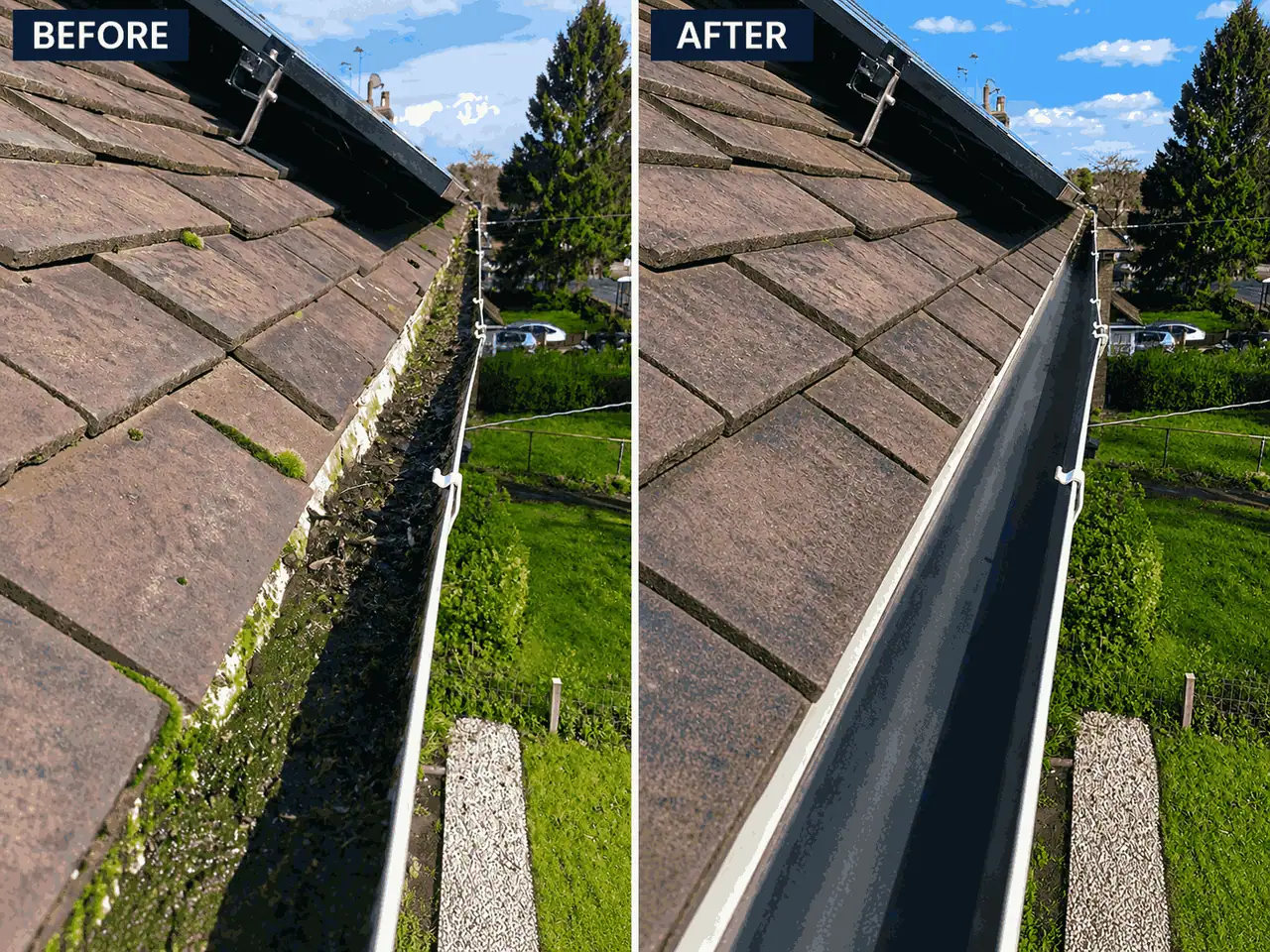
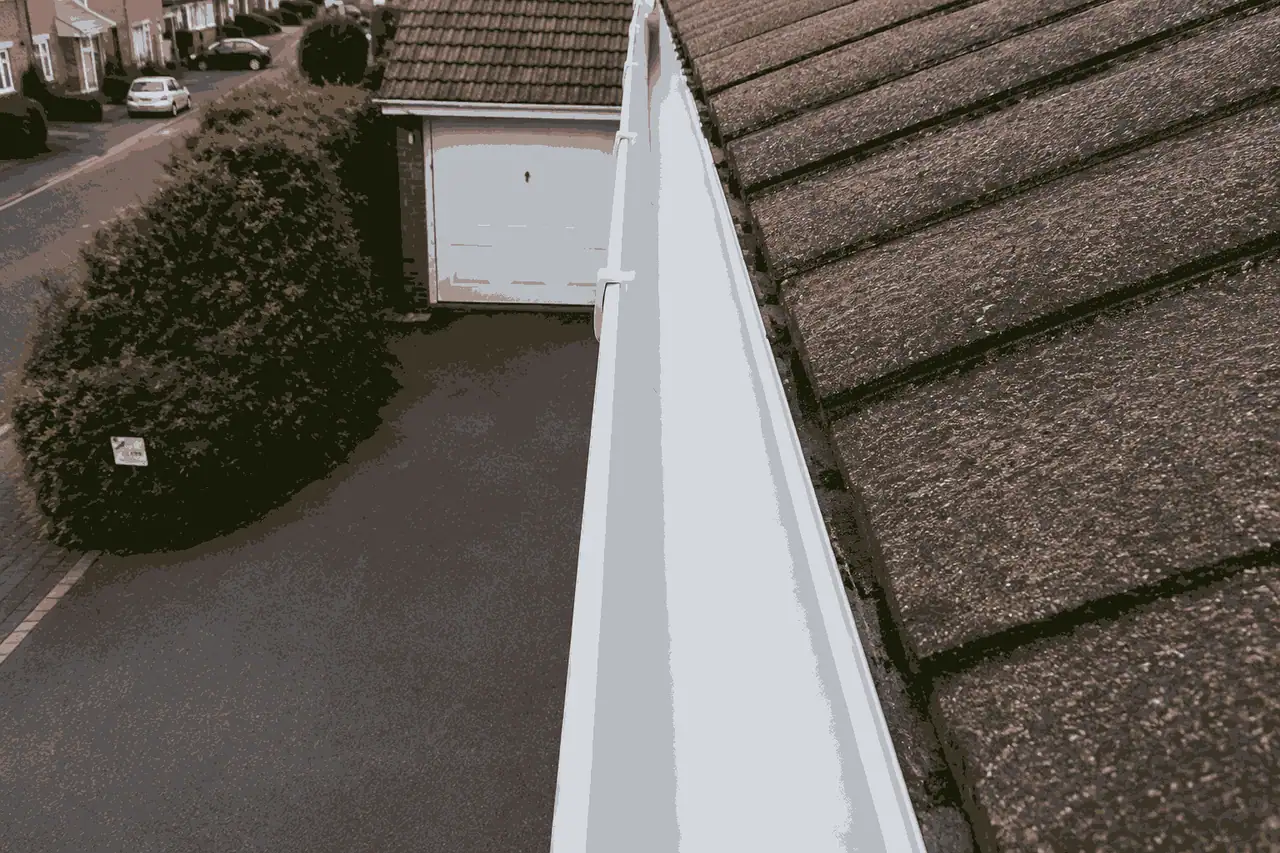
Free quote — no hidden charges. Before and after photos on every job across Birmingham and the West Midlands.
The Cost of Finding Each Defect in Summer vs Missing It Until Autumn
| Hidden Defect | Found in Summer | Missed Until Damage Visible |
|---|---|---|
| Joint sealant failure | Reseal: low cost | Fascia replacement: £400–£900+ |
| Gutter fall angle | Bracket reset: simple repair | Channel corrosion, section replacement |
| Hairline crack in UPVC | Section swap: straightforward | Section swap + fascia repair |
| Bracket corrosion | Bracket replacement | Gutter detachment, safety risk, fascia damage |
| Fascia board softening | Joint fix, board stabilises | Full fascia replacement: £400–£900+ |
| Downpipe inlet blockage | Cleared in one visit | Wall and fascia damage from overflow |
| Silt accumulation | Removed by industrial vacuum | Progressive capacity loss, worsening overflow |
The pattern is consistent across every defect type. Found in summer — in dry conditions, with accurate diagnostic evidence, with months of lead time — each is a manageable and inexpensive repair. Found after it has caused damage — in autumn under pressure, in conditions that obscure the original defect — each becomes a significantly larger job.
The cost difference between summer discovery and autumn-damage discovery is not marginal. It is, in most cases, a multiple of the original repair cost. And the only variable is when the inspection happens.
Which Birmingham Properties Carry the Most Hidden Damage
Hidden gutter damage exists to some degree on almost every Birmingham property that has not had a summer inspection. But certain property types carry a consistently higher hidden defect rate.
Victorian and Edwardian terraces across Bournville, Selly Oak, Handsworth, Sparkhill, Kings Heath, Perry Barr, and Erdington. These properties carry cast iron systems where joint seal failure is a recurring maintenance item and bracket corrosion is near-universal in older installations. A summer inspection of a Victorian terrace in Birmingham routinely identifies two to five hidden defects that an autumn visit in the same year would miss entirely — because the autumn conditions conceal precisely the evidence that reveals them.
1930s semi-detached properties across Great Barr, Northfield, Erdington, and suburban Solihull. These properties typically carry half-round systems on timber fascia boards now approaching ninety years old in some cases. Early-stage fascia board softening — catchable and addressable in summer, invisible in autumn wet — is the most valuable single finding a summer inspection makes on properties of this era and stock type.
Properties that have only ever had autumn cleans. For any Birmingham property that has received annual autumn maintenance but never a summer inspection, the probability of finding one or more of the hidden defects described in this article on the first summer visit is very high. Autumn cleans address what is visible — the leaf debris. Summer inspections address what autumn conditions were actively hiding underneath and behind it.
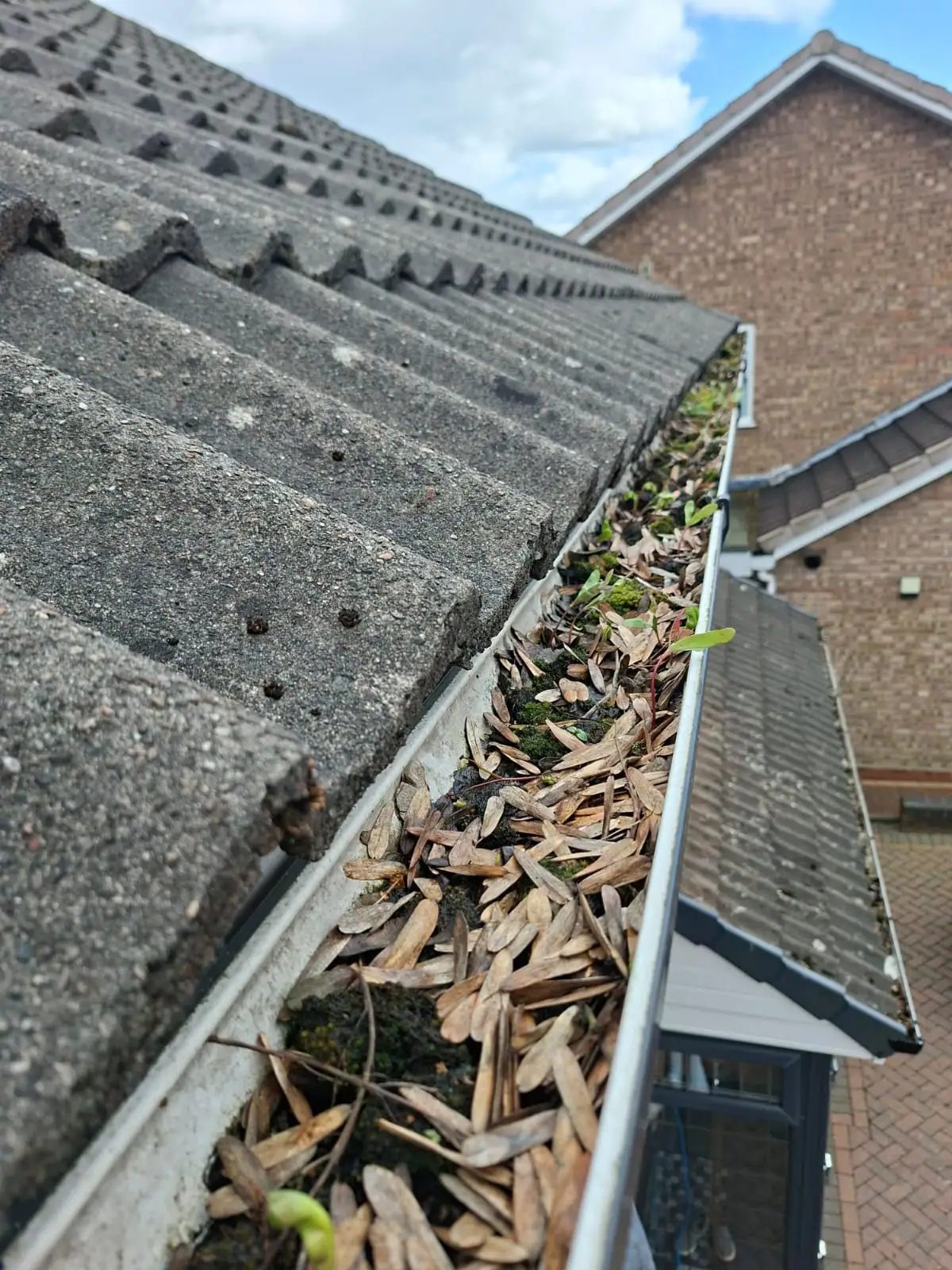
Properties adjacent to mature trees in Edgbaston, Harborne, Moseley, and Sutton Coldfield. Higher accumulation rates — sycamore seeds, continuous moss fragments, storm debris — mean silt layers build faster and inlet blockages from compacted organic material are more common. The combination of summer inspection and late summer clear is the most effective maintenance approach for these properties.
North-facing roof slopes in Wolverhampton, Walsall, and north Birmingham. These surfaces support more active moss growth. The silt and biological growth accumulation in gutters draining north-facing slopes is consistently higher than south-facing equivalents — making silt assessment and extraction more significant as a maintenance item.
WOW Gutters Ltd — Birmingham's gutter specialists
07421 433910How WOW Gutters Ltd Finds Hidden Summer Damage
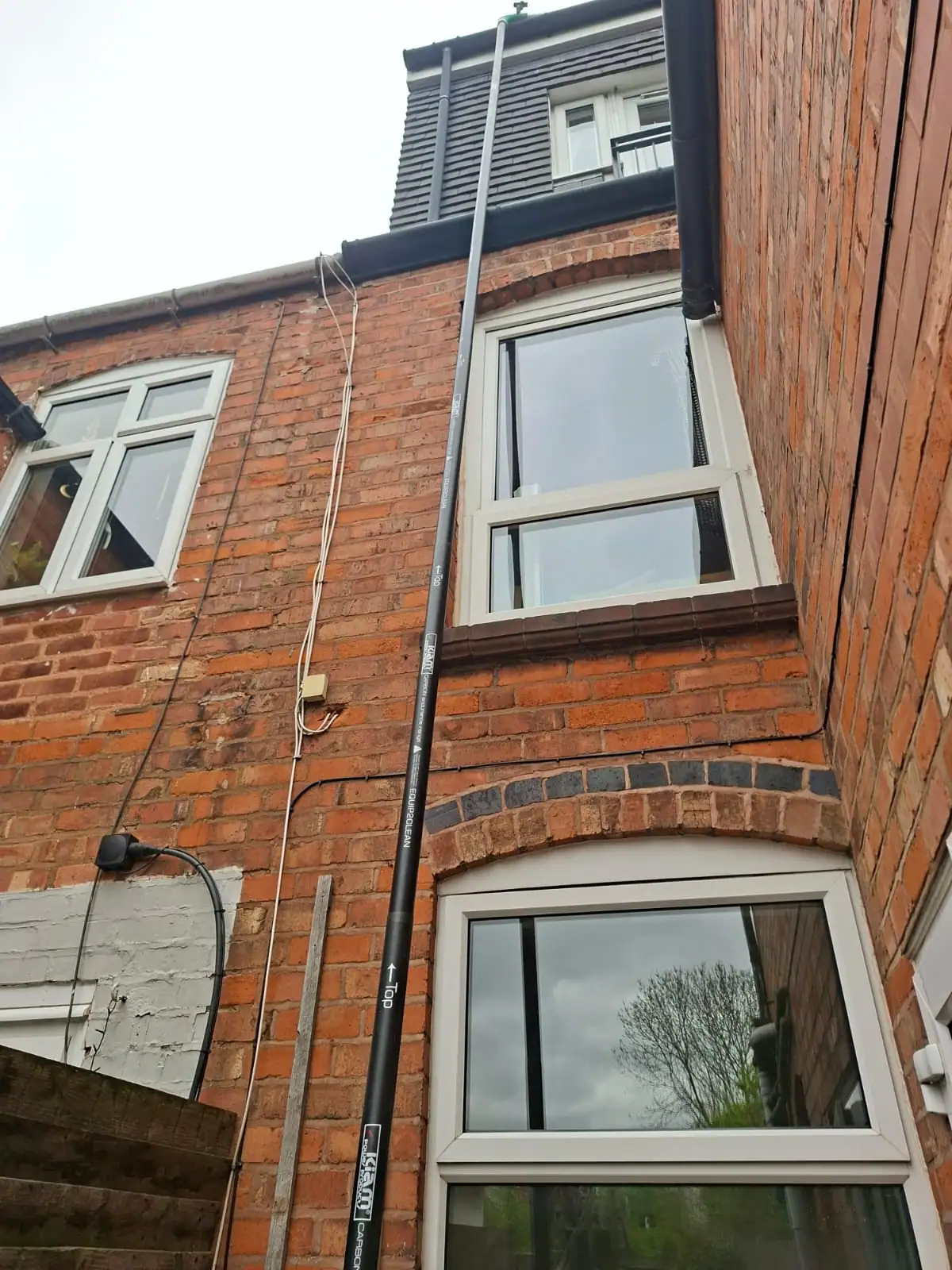
Every WOW Gutters Ltd summer inspection is carried out using our industrial-grade SkyVac gutter vacuum system — operating entirely from the ground. No ladders are placed against your property at any point. Our carbon-fibre reach poles extend to four storeys. The camera inspection head provides real-time internal views of every gutter section in the dry conditions that make hidden damage findable.
What we check for on every summer visit:
- Joint sealant condition — every joint on every run assessed from the precise localised staining on the fascia board behind it that dry conditions make unambiguous. Failing joints identified exactly rather than inferred from general moisture patterns.
- Gutter fall angle — low points identified from biological growth evidence at specific channel locations — only visible in dry conditions where the growth is not masked by water level across all sections.
- Hairline cracks — channel interior examined in real time through the camera head against the dry, uniform background that makes cracks clearly visible.
- Bracket condition — rust tracking and corrosion staining at bracket contact points assessed from camera inspection in dry conditions.
- Fascia board condition — assessed in dry conditions where early softening is immediately and reliably distinguishable from superficially wet but structurally sound timber.
- Downpipe inlet condition — direct visual assessment of every inlet in dry conditions, plus flow testing on every outlet to confirm unobstructed drainage.
- Silt layer — visible and measurable in dry conditions, removed by industrial vacuum to channel floor level, extraction confirmed by direct visual observation of the clear channel floor.
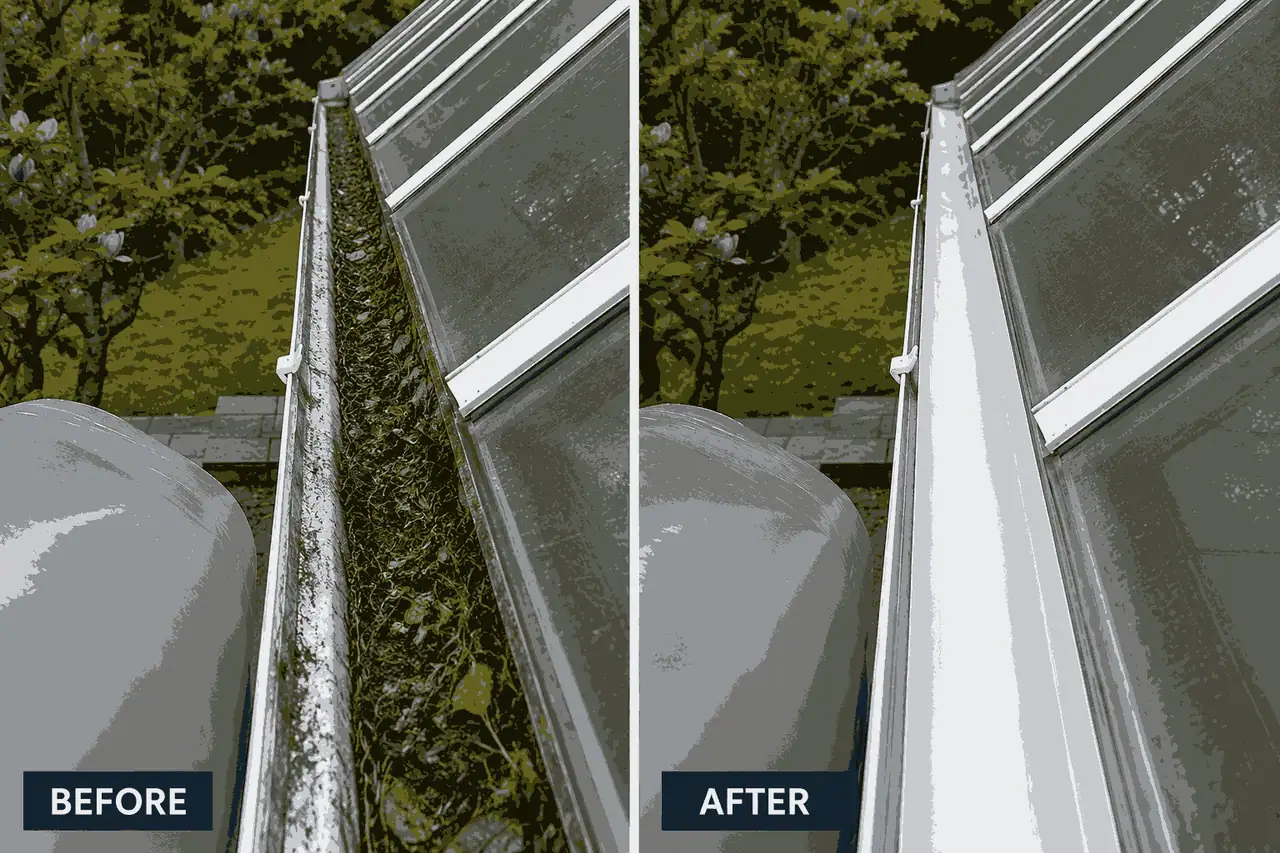
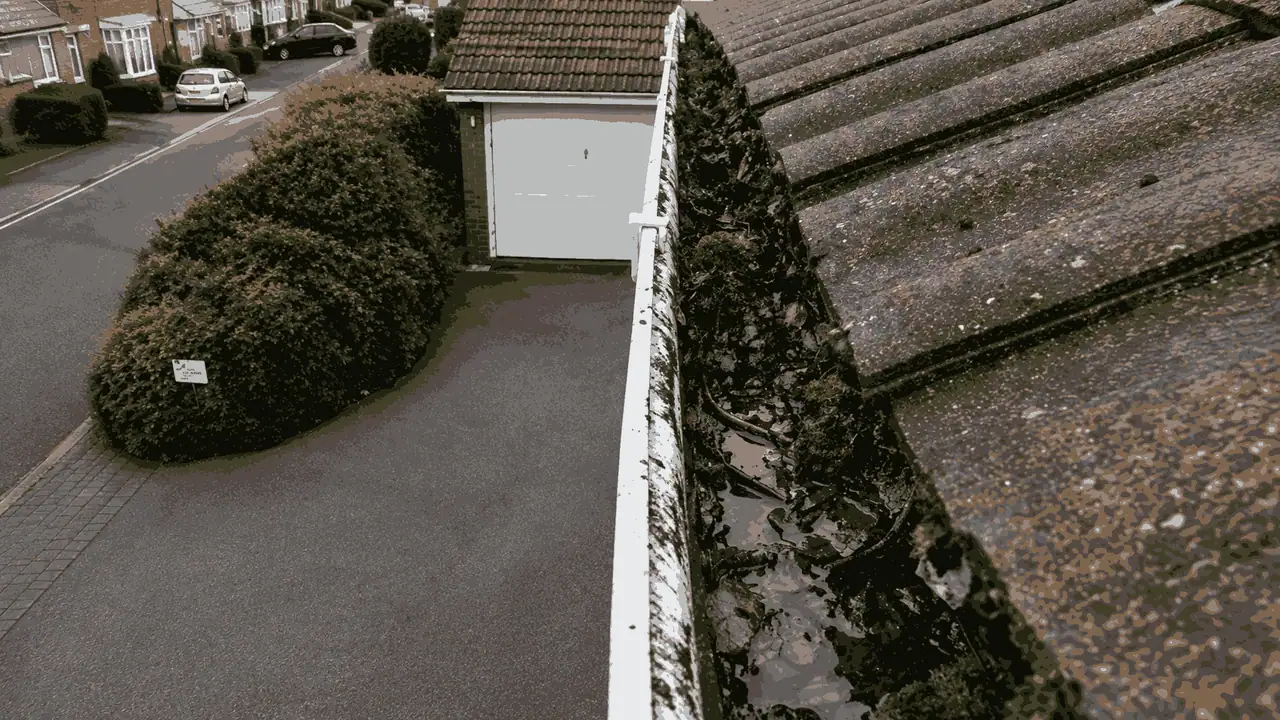
- Before and after photographs of every gutter run — produced in the clear dry conditions that make them most informative and most useful as a condition record. Delivered to you on completion of every job without exception.
- Written condition summary — every hidden defect found is documented in plain English with the photograph evidence, so you know exactly what was found, what was addressed, and what requires follow-up attention while lead time and conditions allow.
Book your summer inspection: 07421 433910
Email: support@wowgutters.co.uk
BOOK YOUR SUMMER INSPECTION
Free quote — no hidden charges. Before and after photos on every job across Birmingham and the West Midlands.