
Most homeowners across Birmingham book a gutter clean without really knowing what actually happens once the van pulls up. They know, roughly, that leaves and debris get removed. Beyond that basic understanding, the process is something of a mystery, which makes it genuinely difficult to judge whether a quote represents good value, whether a particular company is doing the job thoroughly, or whether the visit you just paid for actually addressed anything beyond what was immediately visible from the ground.
This article changes that. It's a complete, honest, stage-by-stage walkthrough of exactly what happens during a professional visit from WOW Gutters Ltd, from the moment we arrive at your property to the moment we leave and send through your documentation. Every stage is explained in full, so you know precisely what you're paying for, and so you can judge any gutter cleaning service — ours or anyone else's — against a genuine, informed standard rather than guessing at what "a good clean" should actually involve.
📞 WOW Gutters Ltd — Birmingham's professional gutter cleaning specialists: 07421 433910
📞 WOW Gutters Ltd — Birmingham's professional gutter cleaning specialists.
Call 07421 433910 — free quote, same-week availability.
💬 WhatsApp: wa.me/447421433910
Table of Contents
- Before Anyone Arrives: Why There's No Ladder in This Story
- Stage One: The Initial Walk-Around Assessment
- Stage Two: Ground-Level Equipment Setup
- Stage Three: Full Debris Extraction to Channel Floor Level
- Stage Four: Real-Time Structural Assessment
- Stage Five: Downpipe Flow Testing
- Stage Six: Fascia and Soffit Observation
- Stage Seven: Roof Surface Observation
- Stage Eight: Photographic Documentation
- Stage Nine: The Written Condition Summary
- Stage Ten: Delivery of Results
- Why Every Stage Matters — Not Just the Debris Removal
- How the Process Varies by Property Type
- What This Means for Your Peace of Mind
- FAQ: What to Expect From a Professional Gutter Clean
Before Anyone Arrives: Why There's No Ladder in This Story
The single biggest structural difference between our approach and a significant proportion of the gutter cleaning industry starts before the visit even begins, and it's worth explaining clearly because it shapes every single stage that follows.
Traditional gutter cleaning, whether carried out by a homeowner or a less well-equipped contractor, typically involves a ladder positioned against the property, with a person climbing up to work at height, reaching along the gutter run by hand, and clearing debris into a bucket or bag while balancing on the ladder. This approach carries genuine safety risk, as covered in detail in our gutter ladder safety reality check, and it also imposes a fundamental limitation on the quality of the work: a person on a ladder is primarily focused on their own balance and safety, which naturally limits how thoroughly they can inspect, assess, and document the condition of the gutter system while they're up there.
Our approach removes the ladder from the equation entirely. Every visit, on every property across Birmingham, Solihull, Sutton Coldfield, Wolverhampton, Walsall, Dudley, and the wider West Midlands, begins with our operative assembling an industrial-grade SkyVac vacuum system — not a domestic wet-vac with an extension hose attached, but purpose-built professional equipment with carbon-fibre reach poles extending to a full four storeys, operated entirely from ground level. No ladder is ever placed against your property, at any point, on any job, regardless of the property's height or complexity.
This single design decision is what makes every subsequent stage of the process both safer and more thorough than what a ladder-based approach could achieve, and it's worth keeping in mind as the context for everything described below.
Stage One: The Initial Walk-Around Assessment
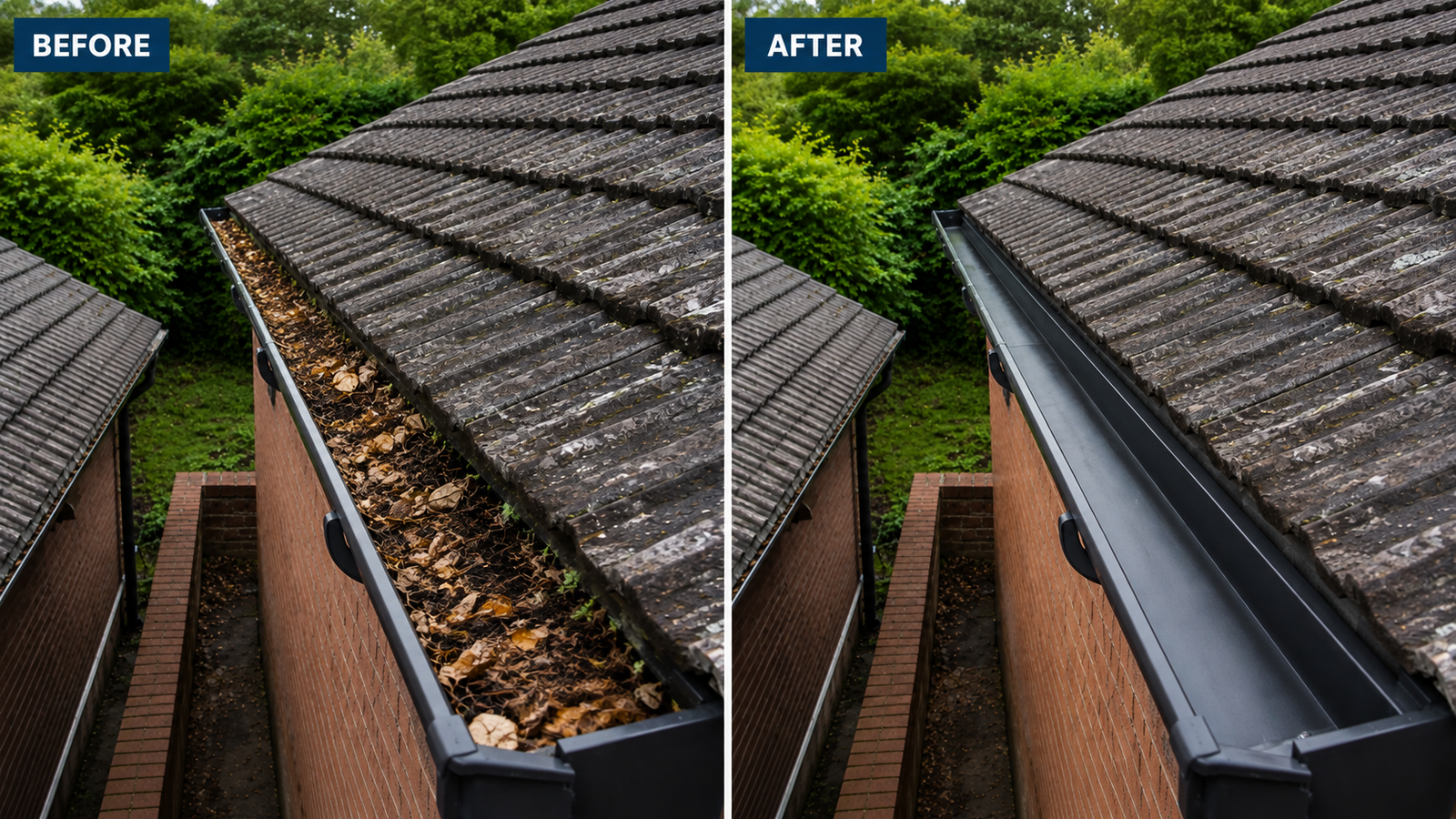
Before any equipment is switched on or any suction begins, our operative walks the full perimeter of your property, looking carefully at the gutter line from ground level. This isn't a formality — it's a genuine first-pass assessment that shapes how the rest of the visit is approached.
During this walk-around, we're looking for visible sagging or sections of gutter that appear to be sitting at an incorrect angle, staining on the wall directly beneath the gutter line that indicates a history of overflow, obvious plant growth at the gutter edge suggesting significant longstanding accumulation, and any sections that appear structurally compromised before any work has even begun. This initial visual read gives our operative a working sense of what to expect once the camera goes up, and it also identifies practical access considerations — nearby trees or hedges that might restrict pole movement, parked vehicles, overhead cables, or anything else that affects how the equipment needs to be positioned around each elevation of your property.
For larger or more complex properties — those with multiple rooflines, extensions, or outbuildings — this walk-around also establishes the sequence in which different sections will be tackled, ensuring the visit proceeds efficiently rather than doubling back on already-completed areas.
Stage Two: Ground-Level Equipment Setup
Once the initial assessment is complete, the reach pole is extended to the specific height required for your property — this could be as little as a single-storey extension, or as much as a full four storeys on larger detached properties common across areas like Sutton Coldfield and parts of Edgbaston. A high-definition camera head is fitted to the tip of the pole, feeding a live video image continuously back to a monitor that our operative watches throughout the entire job.
This camera is arguably the single most important piece of equipment in the entire process, because it's what allows every subsequent stage — extraction, structural assessment, fascia observation, roof surface checking — to happen with a level of visibility that simply isn't achievable from a ladder, where a person is working by feel and general visual impression rather than a clear, magnified, real-time image of exactly what's inside the gutter channel.
The vacuum unit itself is set up at ground level, connected via the reach pole, with suction power calibrated appropriately for the debris type expected — lighter settings for surface leaves and moss fragments, stronger extraction for compacted silt or waterlogged material.
Stage Three: Full Debris Extraction to Channel Floor Level
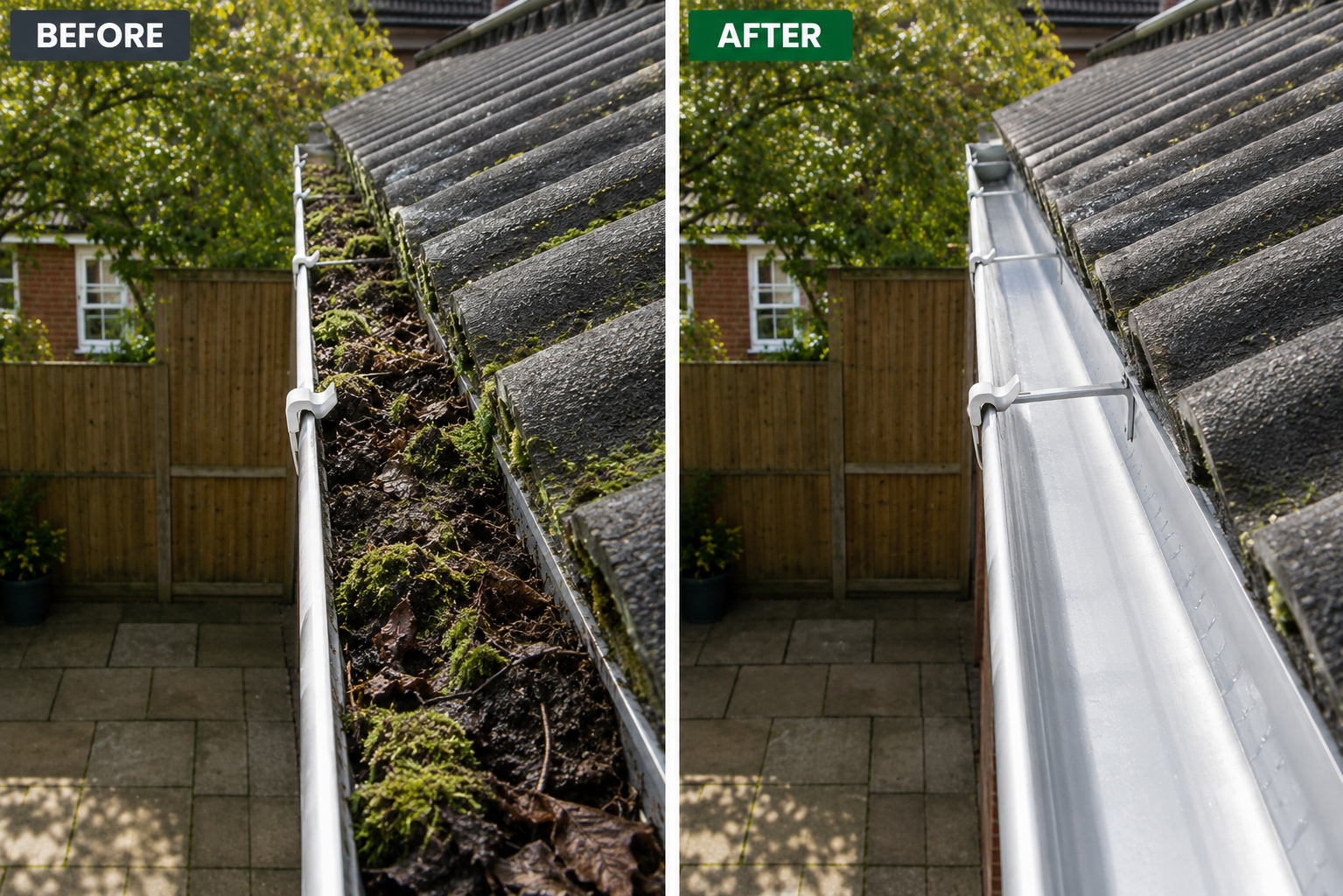
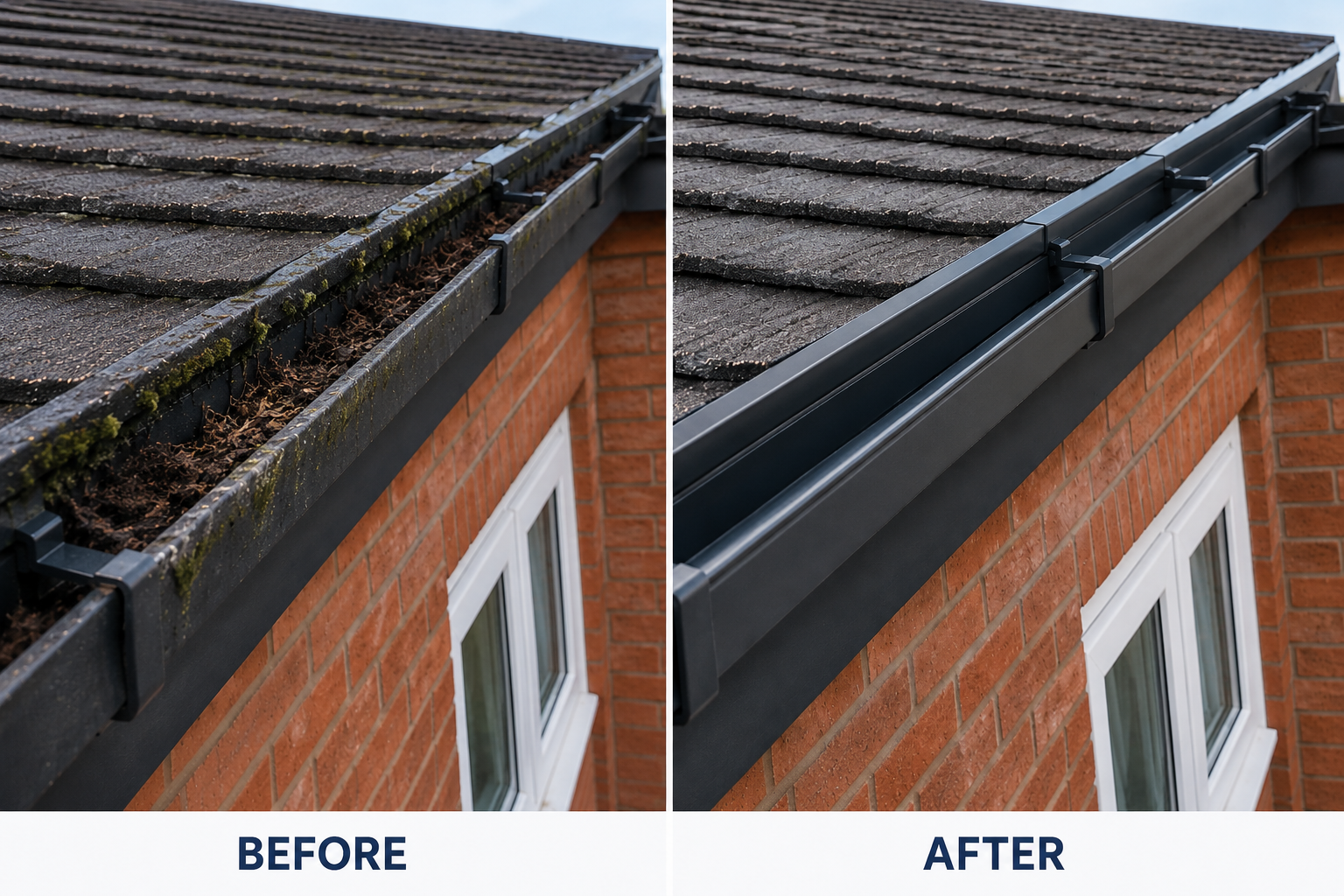
With the camera feeding a continuous live image, the vacuum begins extracting debris from the gutter channel, moving methodically along each run from one end to the other rather than skipping between sections or working in an inconsistent pattern. Depending on the time of year and the specific property, this debris might be light seasonal accumulation — moss fragments and early seed cases in summer — or it might be the main autumn leaf fall, or in more extreme and longstanding cases, compacted silt with established plant growth of the kind we've documented in some of our commercial case studies.
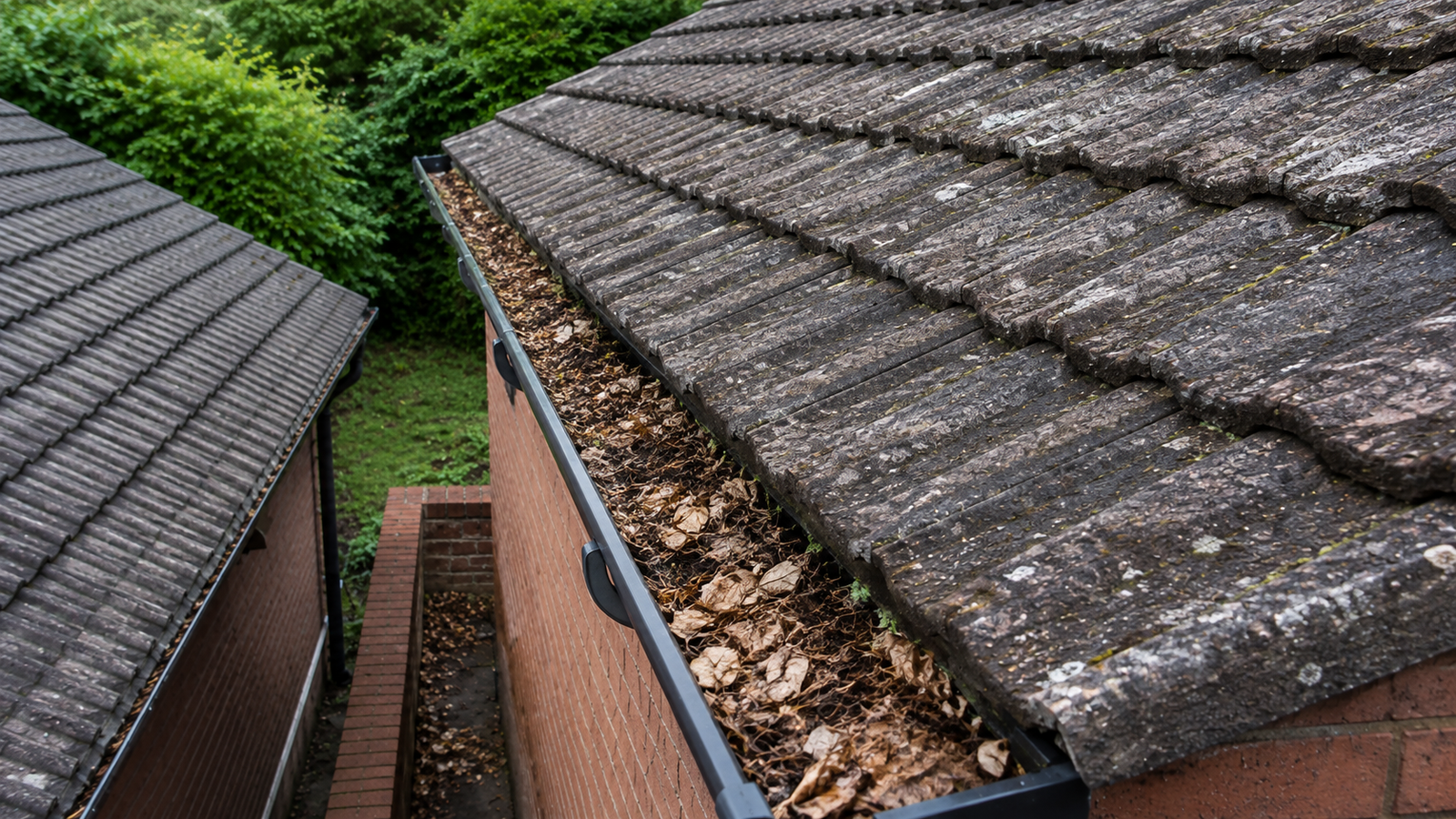
The crucial detail that separates thorough professional extraction from a surface-level clean is that our process continues to the actual floor of the gutter channel, not just the visible top layer of debris. A gutter can appear largely clear from a casual glance while still carrying a compacted layer of fine silt at its base — mineral particles washed from the roof surface over successive seasons of rainfall, gradually hardening into a layer that reduces the gutter's effective depth and drainage capacity without producing any obvious visible symptom. This silt layer is precisely what gets missed by less thorough cleaning approaches, whether DIY or professional, and it's a primary reason a gutter that "was cleaned last year" can still overflow unexpectedly the following autumn, seemingly without explanation.
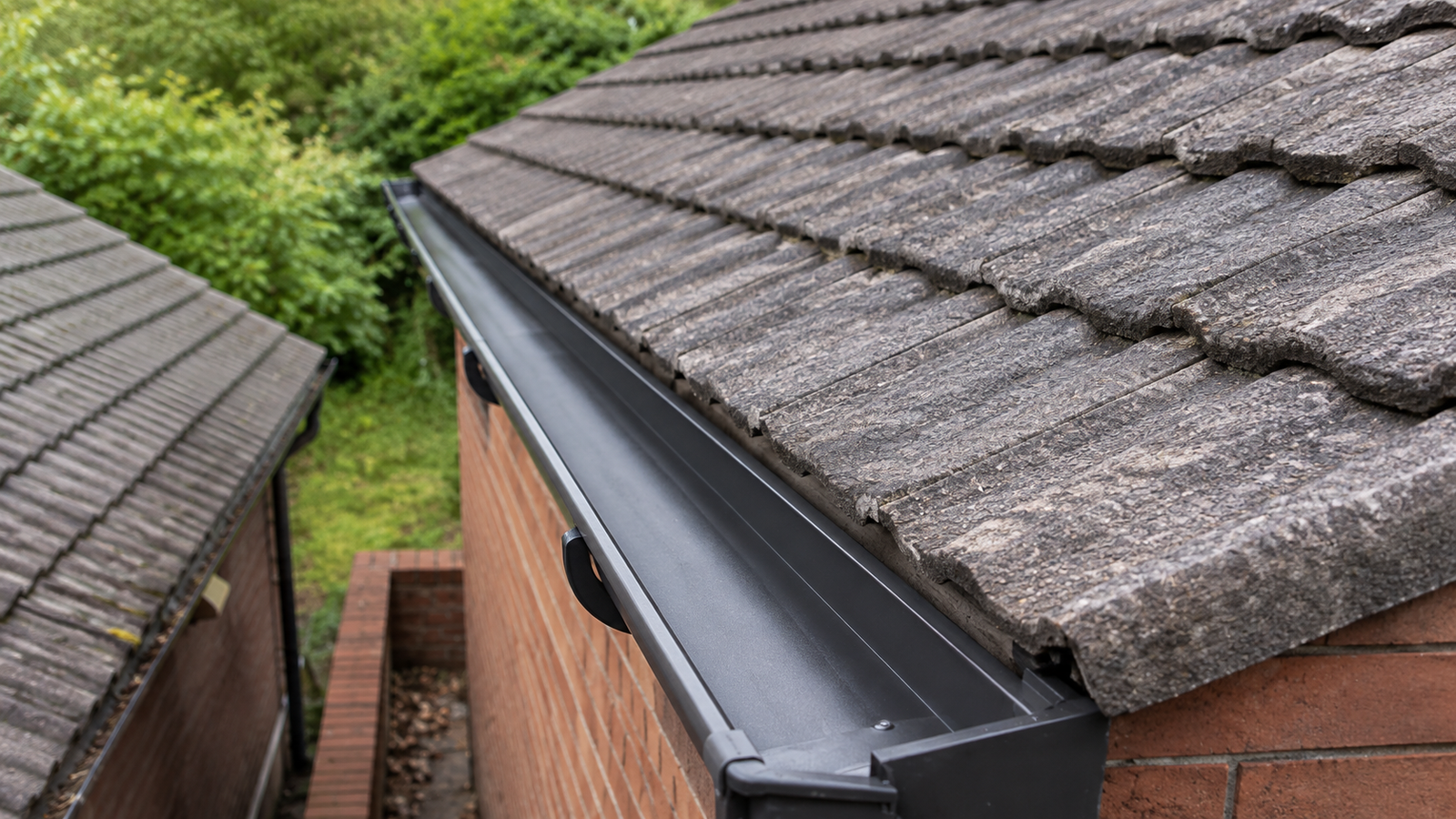
Our extraction process specifically targets this base layer, using the camera feed to confirm the channel floor is genuinely clear — bare metal or UPVC visible, not simply a thinner layer of debris than what was there before.
Stage Four: Real-Time Structural Assessment
While the camera is already positioned inside the gutter channel for the extraction process, our operative is simultaneously conducting a structural assessment of everything the camera reveals — an assessment that happens in parallel with the physical clearing work rather than as a separate additional step.
This assessment covers joint sealant condition along the full length of every run, checking for the kind of localised staining that indicates a failing seal; gutter fall angle, looking for any section that appears to be holding standing water at a specific point rather than draining freely toward the outlet, which indicates a bracket that has dropped or failed; and any visible cracks, splits, or physical defects in the channel material itself, whether cast iron, UPVC, or aluminium.
This stage is genuinely more accurate and thorough when carried out in dry conditions — which is why we consistently recommend summer bookings for the most comprehensive structural read on your gutter system. In dry weather, a failing joint shows as a precise, unambiguous stain on the fascia board directly behind it. In wet autumn conditions, that same signal gets masked by general surface moisture running down every surface during rainfall, making the same defect considerably harder to identify with confidence.
Every finding from this stage — whether a joint needs resealing, a bracket needs adjustment, or the channel itself shows signs of wear — is documented and included in the summary provided at the end of your visit, giving you a genuine structural picture of your gutter system rather than simply confirmation that the leaves have been removed.
Stage Five: Downpipe Flow Testing
Once the gutter channel itself is confirmed clear along its full length, every downpipe outlet connected to that run receives a flow test. This involves running water through the gutter at the highest point of each section and timing how long it takes to appear clearly at the ground-level outlet.
A fully clear downpipe carries water through to the outlet within a few seconds, producing a strong, continuous flow. A partially blocked downpipe — carrying debris or a partial obstruction somewhere along its length — trickles slowly, or the flow arrives with a noticeable delay. A completely blocked downpipe shows no flow at the outlet at all, despite water clearly entering the gutter above.
This test matters considerably more than it might initially seem, because a partially blocked downpipe can appear to function adequately during light summer rain — draining just enough to avoid any visible overflow — while completely failing under the volume and sustained duration of a heavy autumn downpour, at exactly the point when the gutter system needs its full capacity most. This is one of the most common hidden causes of an autumn overflow that seems to come from nowhere on a gutter that appeared to be functioning perfectly well throughout the summer months. See also our guide to whether blocked gutters cause damp.
Where a blockage is identified during this stage, we address it as part of the same visit rather than requiring you to book a separate call-out — full downpipe unblocking is included as standard whenever a restriction is found.
Stage Six: Fascia and Soffit Observation
With the camera positioned directly at the gutter line throughout the earlier stages, our operative is also in an ideal position to observe the condition of the fascia board directly behind the gutter, and the soffit board beneath it.
Early-stage fascia deterioration is genuinely findable at this point in the process if conditions are right — paint beginning to lift or bubble at specific locations, subtle discolouration distinct from normal weathering, and any slight softening apparent from the visual texture of the board surface. This kind of early detection matters enormously, because a fascia board caught at this stage typically just needs the underlying cause — usually a failing joint identified during Stage Four — addressed, allowing the board itself to dry out and stabilise. A fascia board left undetected for one or more additional seasons of moisture exposure progresses to the point where the timber has softened enough to require full replacement.
Where more significant fascia or soffit attention is clearly needed — visible rot, extensive discolouration, or sections that are already showing structural compromise — this is flagged clearly as part of your visit summary, with our dedicated fascia and soffit cleaning and repair service available either as an extension of the same visit or as a scheduled follow-up.
Stage Seven: Roof Surface Observation
From the elevated position our camera head occupies throughout the visit, sections of your roof surface become visible in a way that simply isn't achievable from ground level under any other circumstances. This incidental visibility is put to genuine use during every visit.
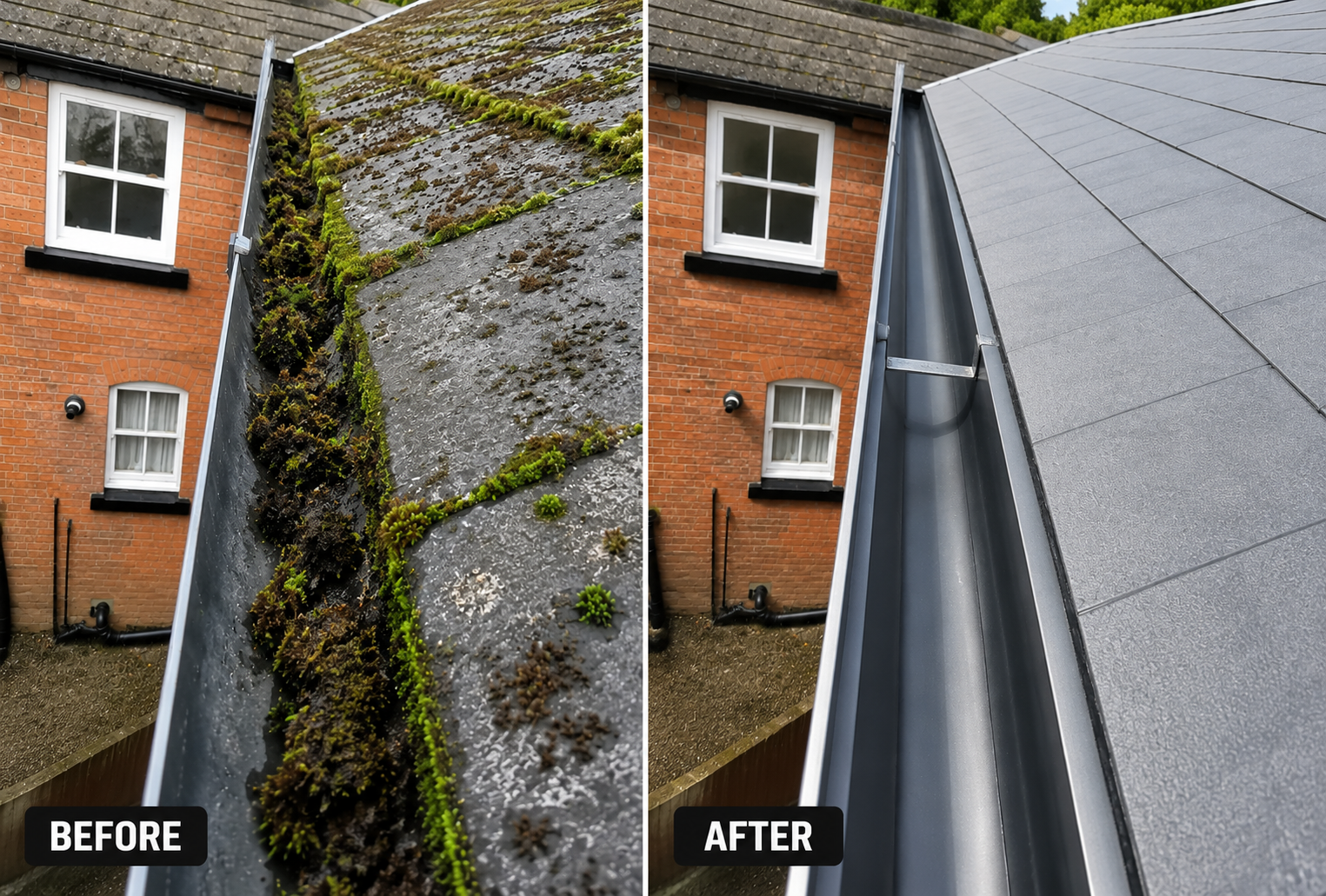
Moss coverage across the roof surface — its extent, thickness, and distribution across different sections — is observed and noted, along with any algae streaking, which indicates the specific paths water regularly takes across the roof and can highlight drainage patterns worth understanding. Any obviously slipped, cracked, or damaged roof tiles within the camera's field of view are also flagged, even though full roof inspection sits somewhat outside the core scope of a gutter clean.
Where significant moss coverage is identified, this observation informs whether our dedicated roof cleaning and moss removal service would be a worthwhile addition — treating moss at its source rather than simply continuing to clear the fragments it sheds into your gutters on every subsequent visit.
Stage Eight: Photographic Documentation
Throughout the entire visit, from the initial condition of each gutter run through to the final cleared result, before and after photographs are captured systematically. This isn't a single generic "job complete" photo taken at the very end — it's genuine documentation of the specific condition found in each section and the specific result achieved there.
This documentation matters for several distinct reasons. For homeowners, it provides a genuine visual record of your gutter system's actual condition, converting a vague assumption — "my gutters are probably fine, nothing's overflowed" — into concrete evidence one way or the other. For anyone planning to sell their property, this kind of maintenance documentation can support conversations with potential buyers or surveyors about the property's upkeep history. For landlords managing rental properties across areas like Selly Oak, Bournville, and Kings Heath, this photographic record forms an important part of maintenance compliance documentation, useful both for regulatory purposes and for addressing any tenant queries or damp-related concerns with genuine evidence rather than assurance alone.
Stage Nine: The Written Condition Summary
Once the physical work across every section of your property is complete, the visit concludes with a written summary covering what was found, what was removed, and any issues identified during the structural assessment stages that are worth follow-up attention — whether urgent or something to monitor and address at a more convenient time.
This written summary is deliberately plain-English rather than technical jargon, explaining findings in terms any homeowner can understand and act on. If a joint needs resealing, the summary explains where and why. If a bracket showed signs of wear, it's noted along with our assessment of urgency. If everything was found to be in genuinely good structural condition beyond the debris that was cleared, that's stated plainly too — we don't manufacture findings to justify additional work, and a clean bill of structural health is reported as such.
This summary is the specific element that distinguishes a genuinely thorough professional visit from a surface-level debris clear. It's the difference between paying for leaves to be removed and paying for an actual, evidence-based understanding of your gutter system's condition.
Stage Ten: Delivery of Results
Before and after photographs, along with the written condition summary, are compiled and sent to you on completion of the visit. You don't need to be present for any part of this process — a significant proportion of our customers across Birmingham and the wider West Midlands book their visit while at work, and simply review the full documentation once it arrives afterward, confident that the job was completed to the standard described throughout this article regardless of whether they were there to watch it happen.
📋 Know exactly what you're paying for.
Every stage of this walkthrough is carried out on every visit — real-time camera inspection, downpipe flow testing, fascia observation, and photographic documentation included as standard, not added extras.
📞 07421 433910 · 💬 wa.me/447421433910
Why Every Stage Matters — Not Just the Debris Removal
It's worth being explicit about why this process is structured across ten distinct stages, rather than simply "we remove the leaves and leave." Debris — the leaves, moss, and seed cases most homeowners think of when they picture a gutter clean — is genuinely only ever the surface-level symptom of what's happening in a gutter system, not the underlying cause of the damage that eventually results from neglect.
The structural issues that actually cause expensive damage — a failing joint tracking water down onto a fascia board, a partially blocked downpipe that overflows under heavy rain, a dropped bracket creating a permanent low point where water pools and corrosion accelerates — are entirely separate from the debris itself, and none of them are addressed by debris removal alone. A gutter cleaning service that only extracts visible leaves and moves on, without checking joint condition, testing downpipe flow, or assessing fascia condition, is completing roughly half of what a genuinely protective visit should involve — the immediately visible half, while leaving the structural half, which is actually what protects your property from serious and expensive water damage, completely unaddressed.
This is precisely why the ten-stage process described above exists in the form it does. Every stage beyond basic extraction is specifically designed to catch the underlying causes of the kind of damage that eventually shows up as a damp patch on an internal wall, a fascia board requiring full replacement, or a section of gutter that has pulled away from the building entirely — problems that, by the time they're visible, have already been developing quietly for months or years. Read more: Is Your West Midlands Home Quietly Storing Water Damage Right Now?
How the Process Varies by Property Type
Standard Birmingham semi-detached properties, common across areas like Erdington, Northfield, and Great Barr, typically take between 45 and 90 minutes for the complete process described above, depending on the total length of gutter run and the volume of debris found.
Larger detached properties, particularly across Sutton Coldfield and parts of Solihull, often have more complex rooflines with multiple pitches and elevations, meaning the process takes proportionally longer as the camera and vacuum system need repositioning for each separate section, and the structural assessment stage covers correspondingly more joints, brackets, and channel length.
Victorian and Edwardian terraces across Bournville, Selly Oak, Handsworth, and Sparkhill frequently carry original or early-replacement cast iron gutter systems, which receive particular attention during Stage Four given how commonly these older systems carry joint seals that have exceeded their intended service life. The structural assessment on properties of this type often identifies more findings than on newer housing stock, simply reflecting the age and material of the system involved rather than any difference in maintenance quality.
Commercial and warehouse sites follow a broadly similar overall structure but at considerably greater scale — extended time on site, often multiple operatives working systematically across a much longer gutter run, and in cases of severe longstanding accumulation, manual extraction methods that go beyond what standard vacuum extraction alone can achieve. See our warehouse box gutter case study for a documented example. Our commercial gutter cleaning service covers these larger sites across the region.
What This Means for Your Peace of Mind
The genuine value of understanding this process isn't simply satisfying curiosity about what happens behind the scenes. It's about being able to make an informed decision about the maintenance your property actually needs, and about being able to judge whether a service — ours or any other — is genuinely protecting your home or simply removing the most visible symptom while leaving the underlying structural risks completely unaddressed.
A homeowner who understands that a proper gutter clean should include structural assessment, downpipe testing, and photographic documentation is in a considerably stronger position to ask the right questions when booking any service, and to recognise the difference between a thorough visit and a rushed, surface-level one. This transparency is deliberate on our part — we want every customer to understand exactly what they're paying for, not simply to trust that "the leaves are gone" represents the full scope of what a proper visit should achieve.
FAQ: What to Expect From a Professional Gutter Clean
BOOK A WALKTHROUGH-STANDARD GUTTER CLEAN
Every one of the ten stages described in this article is carried out on every visit as standard. Ground-based vacuum system with real-time camera inspection. No ladders, ever. Downpipe flow testing, fascia and soffit observation, and photographic documentation included on every job without exception. Free quote · Before and after photos · Fully insured.
Book a Walkthrough-Standard Gutter Clean
Now that you know exactly what should happen during a genuinely thorough professional visit, you're in a strong position to expect — and receive — that standard every single time.
WOW Gutters Ltd provides professional gutter cleaning across Birmingham and the West Midlands, carrying out every one of the ten stages described in this article on every single visit as standard. Ground-based vacuum system with real-time camera inspection. No ladders, ever. Downpipe flow testing, fascia and soffit observation, and photographic documentation included on every job without exception. Fully insured professional team. For related reading on what a proper visit should achieve, see how professional gutter cleaning extends the life of your roofline and how hidden gutter damage is easier to spot in summer.
📞 Call: 07421 433910
📧 Email: support@wowgutters.co.uk
🌐 wowgutters.co.uk
📋 Get a free quote: wowgutters.co.uk/quote
Serving Birmingham, Solihull, Sutton Coldfield, Edgbaston, Harborne, Kings Heath, Moseley, Bournville, Erdington, Wolverhampton, Dudley, Walsall, West Bromwich, Coventry, Redditch, Bromsgrove, Worcester, Kidderminster and all West Midlands areas.
Related Guides
- Can You Clean Your Own Gutters Safely? A Birmingham Ladder Safety Reality Check
- Hidden Gutter Damage Is Easier to Spot in Summer
- Is Your West Midlands Home Quietly Storing Water Damage Right Now?
- How Dry Summer Weather Makes Gutter Inspections Easier
- The One Home Maintenance Task Birmingham Homeowners Consistently Miss Each Summer
- Why Every Birmingham Home Needs a Gutter Health Check This Summer
- How Professional Gutter Cleaning Extends the Life of Your Roofline
- Can Blocked Gutters Cause Damp?
- Downpipe Unblocking
- Fascia and Soffit Cleaning
- Roof Cleaning and Moss Removal
- Commercial Gutter Cleaning
- Commercial Warehouse Gutter Clearing Birmingham
- Warehouse Gutter Clearing Box Gutter Case Study