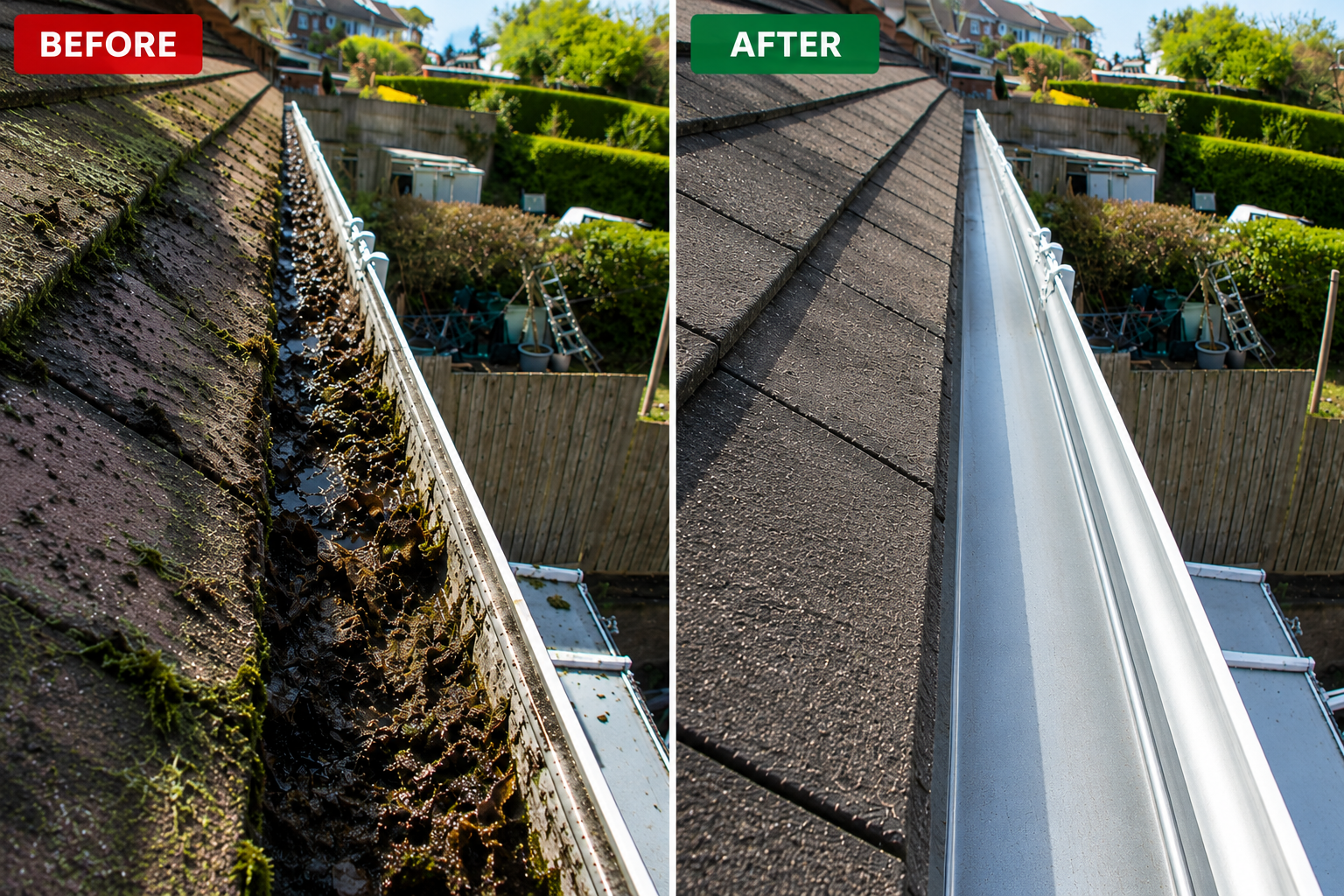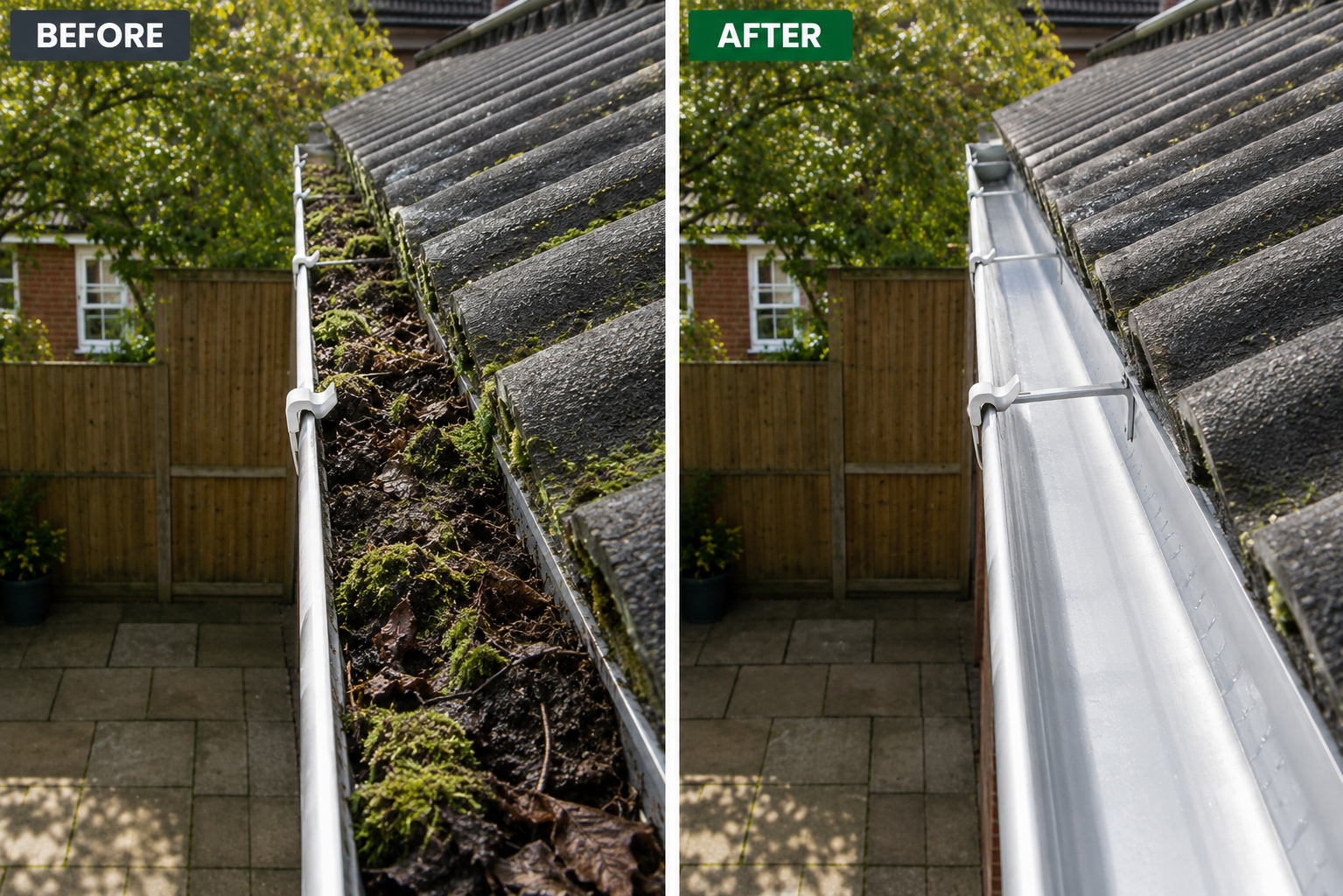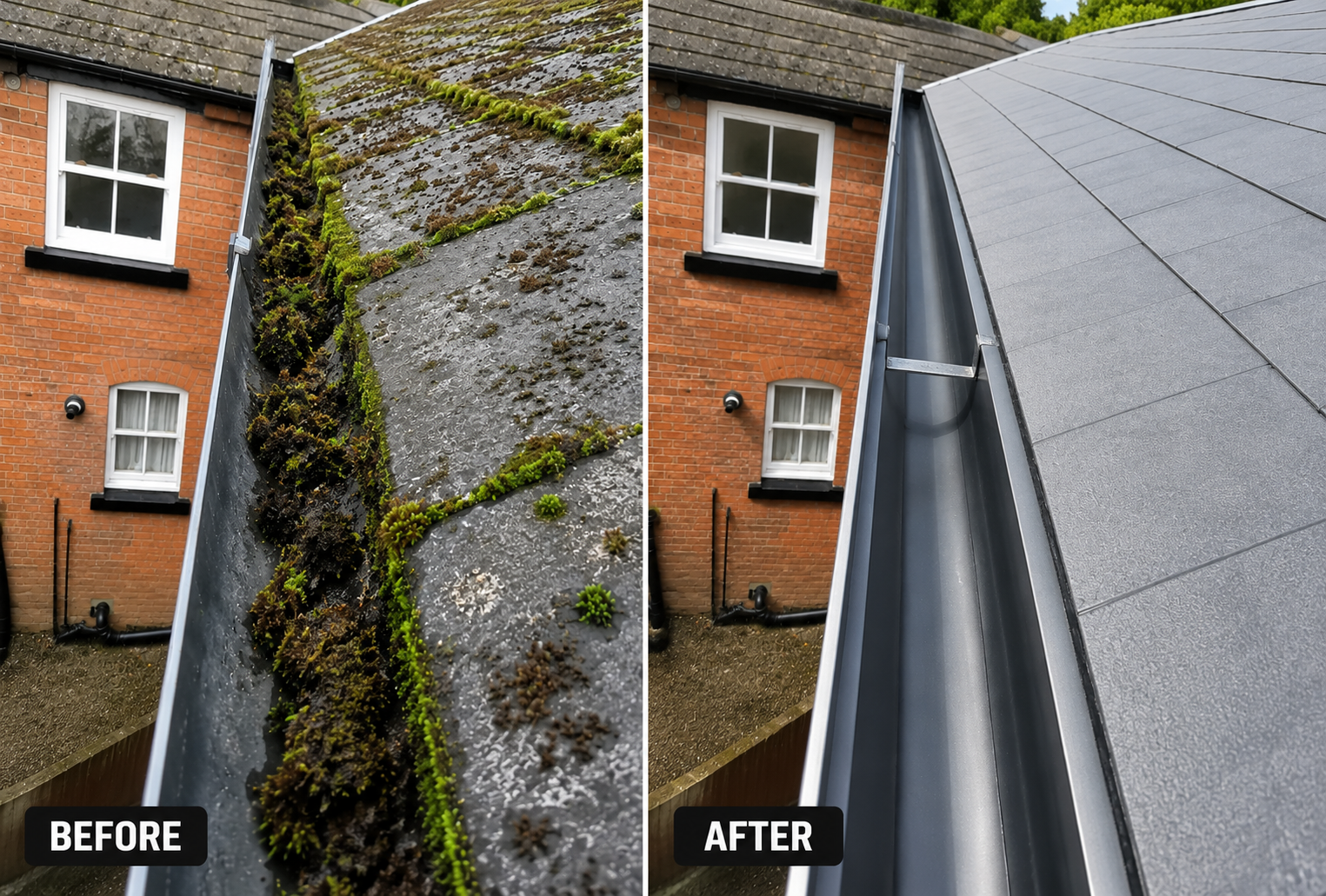

The semi-detached house is genuinely the single most common property type across Birmingham's residential suburbs, and it comes with a specific gutter maintenance challenge that detached and terraced properties simply don't face in quite the same way: a shared gutter section running directly above the party wall, jointly serving two separate households, two separate owners, two separate maintenance habits, and — very often — two genuinely different levels of attention paid to the roofline overall.
This article covers exactly what this shared boundary issue actually involves in practice, why it creates a genuine and recurring maintenance blind spot across Birmingham's semi-detached streets, what specifically can go wrong when it's overlooked, and how neighbours can approach it sensibly and practically, rather than letting it develop into either an unspoken source of tension or, more commonly, simply mutual neglect by unstated agreement.
📞 WOW Gutters Ltd — Birmingham's gutter cleaning specialists: 07421 433910
Free quote · Before and after photos on every job · Fully insured professional team
Why the Party Wall Gutter Section Is Genuinely Different
On a standard semi-detached property, the roof typically pitches down from a central ridge to two separate gutter runs — one along the front elevation, one along the rear — but at the specific point where the two halves of the semi-detached pair meet at the party wall, the gutter configuration frequently includes either a genuinely continuous shared section spanning both properties without any physical break, or two closely adjacent sections positioned so near to one another that debris behaviour and drainage performance on one side genuinely and measurably affects the other, even where a technical boundary or joint exists between them.
This shared or closely adjacent configuration means gutter condition on this specific section of the roofline isn't purely a matter of individual property maintenance in the way it is everywhere else on the building. Elsewhere on a semi-detached property, one household's gutter maintenance decisions affect only that household's own property, with no meaningful spillover to the neighbouring half. At the party wall junction specifically, this straightforward separation genuinely breaks down, and understanding exactly why matters considerably for any Birmingham semi-detached homeowner trying to make sensible maintenance decisions.
The underlying mechanism connects directly to the chain reaction of roofline damage described extensively throughout our detailed guidance on how professional gutter cleaning extends the life of a property's roofline — a blocked or structurally failing gutter section doesn't simply cause an isolated, contained problem at that exact point. It initiates a progression affecting fascia boards, external brickwork, and potentially internal walls, through the mechanism of water finding alternative escape routes once the gutter itself can no longer manage the volume it's receiving. On a shared party wall section, this progression genuinely doesn't respect the invisible property boundary line running through the middle of the shared gutter or fascia component, meaning damage originating from one household's neglect can, and frequently does, progress into the fabric of the neighbouring property.
Understanding Your Specific Semi-Detached Configuration
Before addressing the practical implications of this shared boundary issue, it's genuinely worth understanding which specific configuration applies to your own semi-detached property, given that not every semi-detached pair shares drainage in exactly the same way, and the practical implications differ meaningfully depending on the specific arrangement present.
Fully continuous shared gutter sections — where a single, unbroken length of guttering spans the party wall junction with no physical joint or separation at the boundary line itself — represent the configuration with the most direct and immediate connection between the two properties' maintenance standards. Any debris, structural issue, or drainage problem affecting this section genuinely affects both properties simultaneously and identically, given the physical continuity of the component itself.
Closely adjacent but technically separate sections — joined at or very near the boundary line by a standard gutter joint — represent a somewhat more common configuration on many Birmingham semi-detached properties, particularly those from the interwar and early post-war construction periods common across areas like Northfield, Great Barr, and Erdington. While technically separate, these sections remain close enough that debris migration, fall angle interaction, and joint condition at the connecting point genuinely create meaningful cross-property effects even without full physical continuity.
Shared downpipe outlets — where a single downpipe serves the drainage needs of both halves of the semi-detached pair regardless of whether the gutter sections feeding it are continuous or separate — represent perhaps the single most significant shared drainage element in terms of practical consequence, covered in detail in the dedicated section below.
Genuinely independent systems — where both the gutter sections and downpipes serving each half of the pair are entirely separate with no shared or closely adjacent components at all — do exist on some Birmingham semi-detached properties, particularly more recent construction where drainage design has specifically accounted for and avoided this kind of shared configuration. Properties with genuinely independent systems don't face the specific shared boundary issue described throughout this article to any meaningful degree, though it's worth confirming this is actually the case for your specific property rather than assuming independence without verification.
The Half-Maintained Gutter Problem in Detail
This is the specific pattern that plays out repeatedly, and genuinely predictably, across Birmingham's semi-detached streets wherever this property type dominates — which describes a substantial proportion of the city's residential suburbs, from Erdington and Northfield through to Great Barr, Kings Heath, and beyond. One household in a semi-detached pair books regular, professional gutter cleaning, following broadly the kind of seasonal schedule detailed throughout our Birmingham Gutter Maintenance Calendar. The neighbouring household simply doesn't, for whatever combination of entirely understandable reasons — differing views on the value of professional maintenance, cost sensitivity, differing awareness of the risks involved, or, very commonly, nothing more deliberate than simply never having got around to arranging it despite having every intention of doing so eventually.
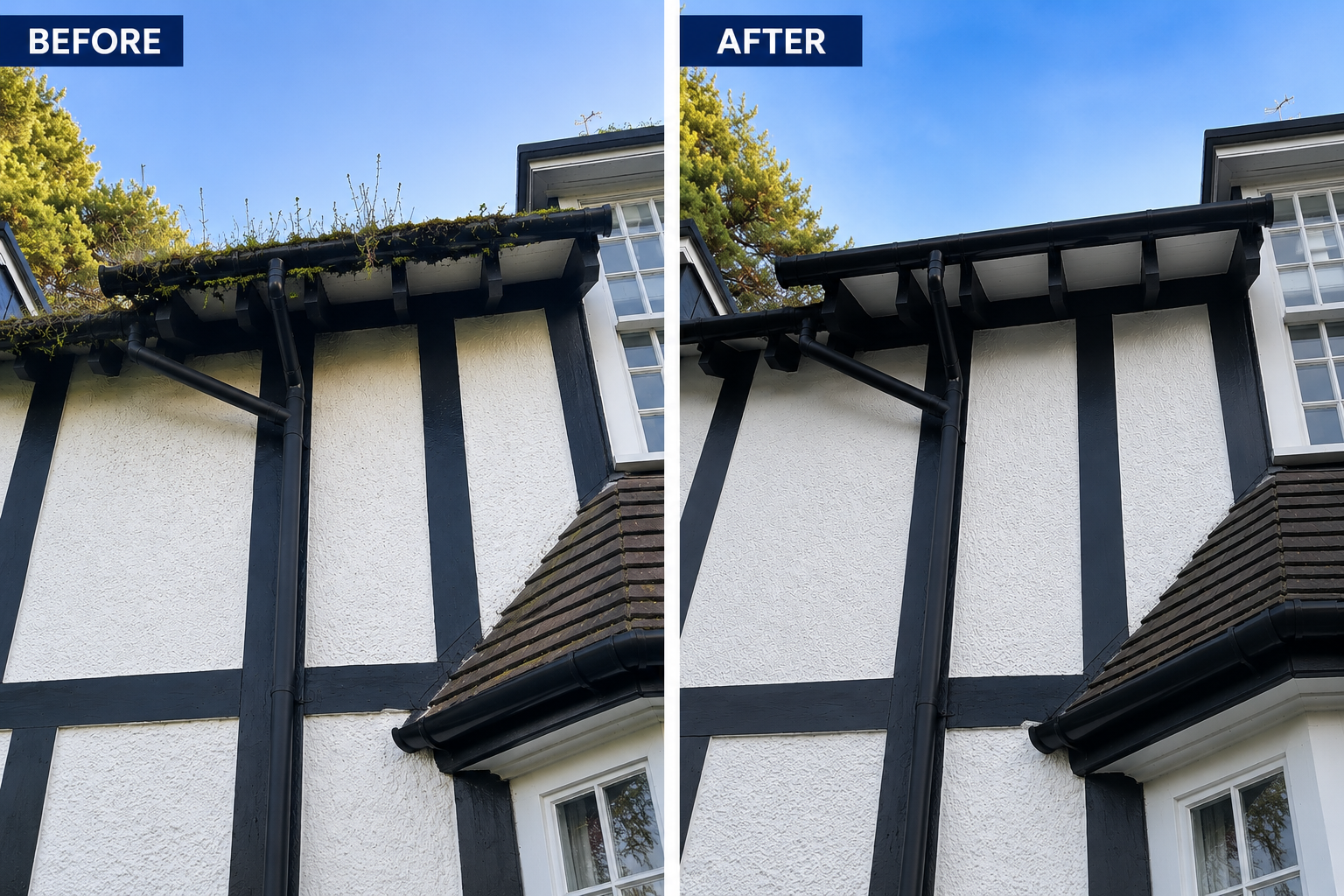
The genuine problem this creates is that debris, moisture, and structural stress don't respect the invisible boundary line running through a shared or closely adjacent gutter section in the way that property ownership boundaries respect legal documentation. As covered extensively throughout our detailed guidance on hidden gutter damage that's easier to spot in summer, a silt layer or compacted debris accumulation building up on the unmaintained side of a shared configuration can genuinely migrate toward, or otherwise affect, drainage performance on the maintained side, particularly wherever the gutter's fall angle happens to direct water flow across the shared boundary toward a downpipe outlet positioned on, or serving, the neighbouring property specifically.
This creates a genuinely frustrating and somewhat counterintuitive situation for the more conscientious household in the pair: despite doing everything reasonably expected of them in terms of regular, professional maintenance on their own side, they can still experience the practical consequences of accumulated debris and structural stress originating almost entirely from their neighbour's neglected side of a shared system, through mechanisms that aren't immediately obvious without understanding the shared drainage configuration in the first place.
Why Shared Downpipes Make the Problem Considerably Worse
A genuinely meaningful proportion of Birmingham's semi-detached housing stock, particularly the substantial volume of Victorian and interwar properties common across areas including Bournville, Selly Oak, and parts of Solihull, share a single downpipe outlet serving the gutter sections of both halves of the semi-detached pair, rather than each half having its own independent drainage outlet running down to ground level separately.
As detailed extensively throughout our dedicated guide on why downpipes keep blocking again despite repeated clearing attempts, a shared downpipe outlet that becomes restricted or blocked by debris originating primarily from one property's neglected gutter section will genuinely restrict drainage for both properties simultaneously, entirely regardless of how thoroughly the other household maintains their own individual gutter section. This is precisely because the restriction occurs downstream of both properties' respective contributions, at the single shared point where both drainage flows converge before continuing to ground level.

This shared downpipe configuration means a genuinely diligent homeowner who books regular, thorough professional gutter cleaning on schedule, following every reasonable maintenance principle, can still experience the overflow symptoms and resulting fascia and external wall damage described comprehensively throughout our guidance on whether blocked gutters can cause damp, purely as a consequence of their neighbour's side of a shared downpipe system having become restricted through accumulated debris the diligent homeowner had genuinely no direct control over or even necessarily any awareness of. This is a genuinely frustrating situation that most homeowners never anticipate or understand the mechanism behind until it has already actually happened to them, at which point identifying the true underlying cause — a shared, partially blocked downpipe rather than any deficiency in their own maintenance — becomes considerably more valuable information than most homeowners realise they need until they're actually facing the problem directly.
Fascia Board Damage That Crosses the Boundary Line
Beyond the shared drainage mechanisms described above, a further and somewhat less obvious way the boundary issue manifests involves the fascia board itself — the horizontal board running behind the gutter that provides the fixing point for gutter brackets, as covered extensively throughout our detailed guidance on how professional gutter cleaning protects the roofline.
On many Birmingham semi-detached designs, particularly older properties with original timber fascia boards, this component frequently runs as a genuinely continuous single piece of timber across the party wall junction, rather than being installed as two entirely separate boards meeting precisely at the boundary line with a clean physical break between them. This construction detail means moisture damage originating from a failing gutter joint or overflow condition on one side of the boundary doesn't necessarily stay neatly confined to that exact section of the board.
Timber moisture genuinely spreads along the length of a continuous board over time, through the natural process of moisture migration within wood fibre, meaning a failing joint and associated water ingress originating clearly on one household's side of the property boundary can, over an extended period, genuinely contribute to fascia board softening and deterioration extending into the section technically serving the neighbouring property, entirely independent of any drainage issue and purely through this timber moisture migration mechanism. This represents a genuinely distinct pathway through which one household's gutter neglect affects the neighbouring property, separate from and additional to the shared drainage mechanisms described in the preceding sections.
The Legal and Practical Reality of Shared Drainage
It's worth addressing directly, though without straying into providing specific legal advice that would require a qualified solicitor's input for any genuine dispute, the general legal and practical framework surrounding shared drainage components on semi-detached properties, since this context usefully informs how homeowners typically navigate this shared boundary issue in practice.
Shared or jointly-used drainage components, including gutters and downpipes serving both halves of a semi-detached pair, are generally understood to create a shared maintenance responsibility between the two property owners, broadly analogous to the shared responsibility that typically applies to the party wall itself under general property law principles, though the specific legal position can vary depending on the exact property titles and any specific covenants or agreements that may exist for a particular pair of properties. This general principle means that, in most practical circumstances, both households genuinely share some level of responsibility for maintaining shared drainage components in reasonable working order, rather than either household being able to entirely disclaim responsibility purely on the basis that the shared component happens to sit primarily on, or serve primarily, the neighbouring property.
In practice, however, formal legal enforcement of this shared responsibility is genuinely rare for gutter maintenance specifically, given the relatively modest financial stakes involved compared with the cost, time, and relationship strain that formal legal action would typically require. The overwhelming majority of Birmingham semi-detached households navigate this shared boundary issue through informal, practical cooperation and direct neighbourly conversation rather than through any formal legal mechanism, which is precisely why the practical approach described in the following sections represents the genuinely realistic path most homeowners should pursue rather than defaulting immediately to a more formal or adversarial approach.
How to Approach the Conversation With a Neighbour Sensibly
The most genuinely effective way to address the shared boundary issue described throughout this article is straightforward, practical, direct conversation with your neighbour, rather than allowing the situation to develop gradually into either an unspoken source of underlying tension or, as happens very commonly, simply mutual neglect maintained through an unstated, never-explicitly-agreed assumption that "someone else will presumably deal with it eventually."
Raising the topic directly and non-confrontationally — mentioning, for instance, that you're planning to book a professional gutter clean and asking whether your neighbour would like to coordinate the timing, or simply asking whether they're aware the two properties share a gutter section or downpipe — is considerably more effective at producing a genuinely positive outcome than waiting for a visible problem, such as overflow or fascia staining, to force the issue into the open under considerably less favourable circumstances for a constructive conversation.
Coordinating a genuinely joint booking, where both households arrange for the same visit, or at minimum closely scheduled consecutive visits, to address the shared or adjacent gutter section together, is frequently genuinely more cost-effective overall than two entirely separate, uncoordinated arrangements would be, and critically, it ensures the shared or adjacent section and any shared downpipe outlet get addressed comprehensively as a complete system, rather than only being partially addressed from one side while the other side of the same shared configuration remains untouched and continues contributing to whatever problem prompted the maintenance conversation in the first place. This kind of coordination is precisely the scenario that a contractor genuinely experienced with Birmingham's substantial semi-detached housing stock can meaningfully help facilitate, having encountered this exact configuration and conversation repeatedly across the region's residential streets.
What to Do If Coordination Genuinely Isn't Possible
Where a neighbour genuinely isn't willing, or for whatever reason isn't able, to coordinate on shared gutter maintenance despite reasonable attempts to raise the topic constructively, it remains genuinely worthwhile to have your own side of any shared or adjacent gutter section properly, professionally maintained regardless of the neighbouring property's maintenance status, rather than abandoning your own maintenance on the basis that "there's no point if they won't cooperate."
Beyond maintaining your own side regardless, it's genuinely worth specifically asking a professional gutter cleaning contractor to assess and confirm whether the downpipe serving your particular property is independent or shared with the adjoining property, as covered throughout our detailed guidance on what happens during a professional gutter clean. A thorough professional visit genuinely includes downpipe flow testing that can identify whether any restriction affecting your property is originating from debris within your own gutter section, or whether it's originating further along a shared system from material that has entered via the neighbouring property's side — providing you with genuinely concrete, evidence-based information about the actual source of any recurring drainage problem, rather than continuing to operate on uncertainty or assumption about where a persistent issue is actually originating from.
This information, even in a scenario where your neighbour genuinely won't coordinate on joint maintenance, is still genuinely valuable in its own right — it allows you to make an informed decision about whether further action, whether a direct conversation armed with concrete evidence, or in more persistent cases genuinely seeking more formal advice regarding shared drainage responsibility, might be warranted, rather than continuing to experience an unresolved recurring problem without understanding its actual underlying cause.
Which Birmingham Areas Face This Issue Most Commonly
While the shared boundary issue described throughout this article applies to any semi-detached property regardless of specific location, the sheer prevalence of this housing type across particular Birmingham areas means the practical significance of understanding and addressing this issue varies considerably by location.
Areas including Erdington, Northfield, Great Barr, and Kings Heath, characterised by substantial interwar and early post-war semi-detached development, represent some of the highest concentrations of this specific property type across the city, meaning the shared boundary issue affects a genuinely significant proportion of properties across these particular areas. Victorian and Edwardian semi-detached properties, common across parts of Bournville, Selly Oak, and Solihull, frequently feature the older cast iron gutter and downpipe systems that, as covered extensively throughout our guidance on how professional gutter cleaning extends roofline life, carry joint seals considerably more likely to be approaching or beyond their intended service life, adding an additional layer of urgency to properly understanding and addressing any shared drainage configuration present on properties of this specific age and type.
What a Professional Assessment Can Tell You
Given everything described throughout this article, a proper professional assessment of a semi-detached property's specific gutter and downpipe configuration provides genuinely valuable, concrete information that goes considerably beyond what either household could reasonably determine through casual visual inspection alone.

A thorough visit identifies precisely whether the gutter sections at the party wall junction are genuinely continuous, closely adjacent but technically separate, or fully independent, providing clarity about exactly which shared boundary configuration applies to your specific property rather than requiring guesswork based on general assumptions about semi-detached properties broadly. Downpipe flow testing, carried out as standard on every professional visit, confirms whether drainage outlets are independent or shared, and can identify the specific location of any restriction within a shared system. And real-time camera inspection of the full shared or adjacent section provides genuine visual evidence of condition on both sides of the boundary, useful both for your own maintenance planning and, where relevant, for any constructive conversation with a neighbour about the shared component's actual condition.