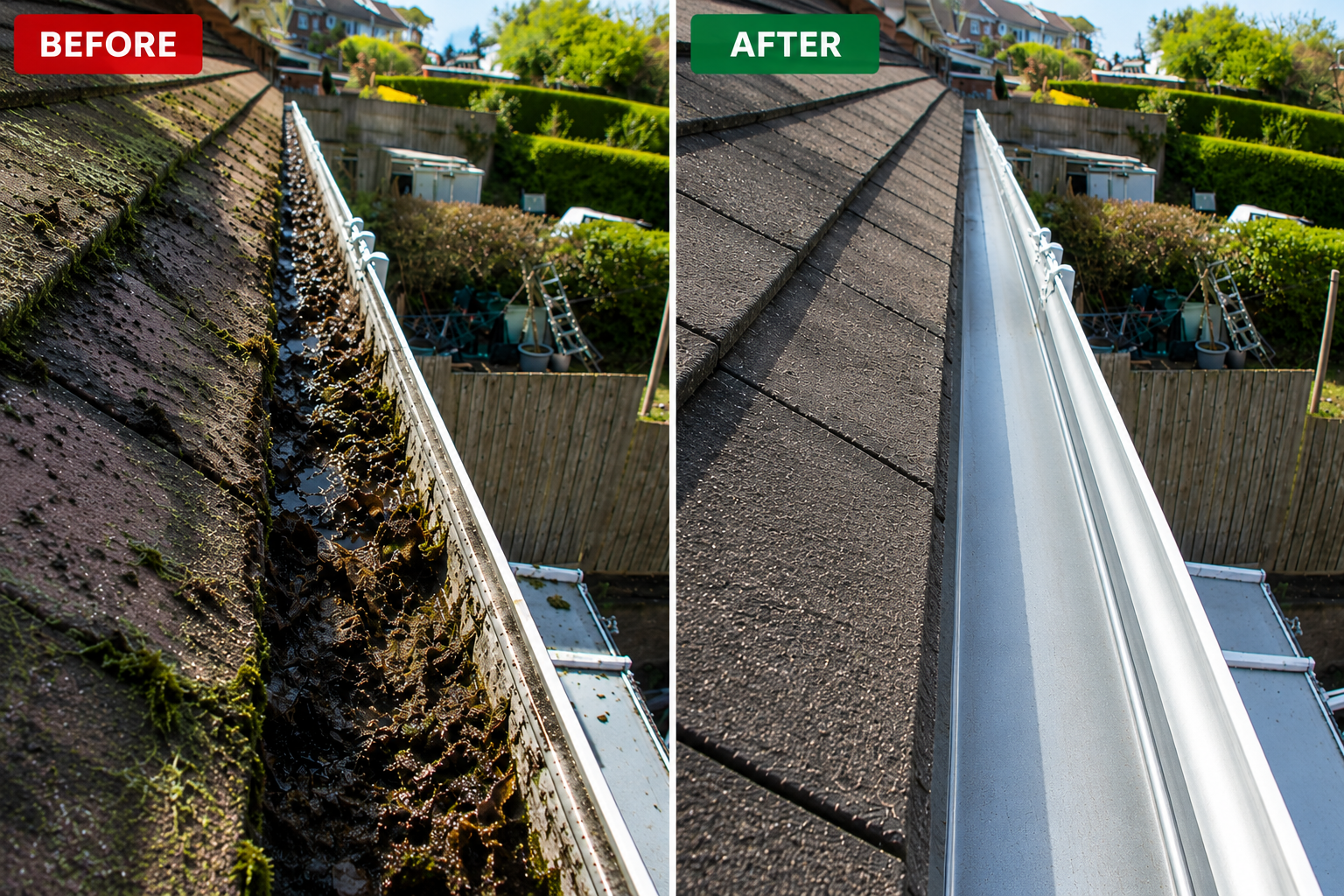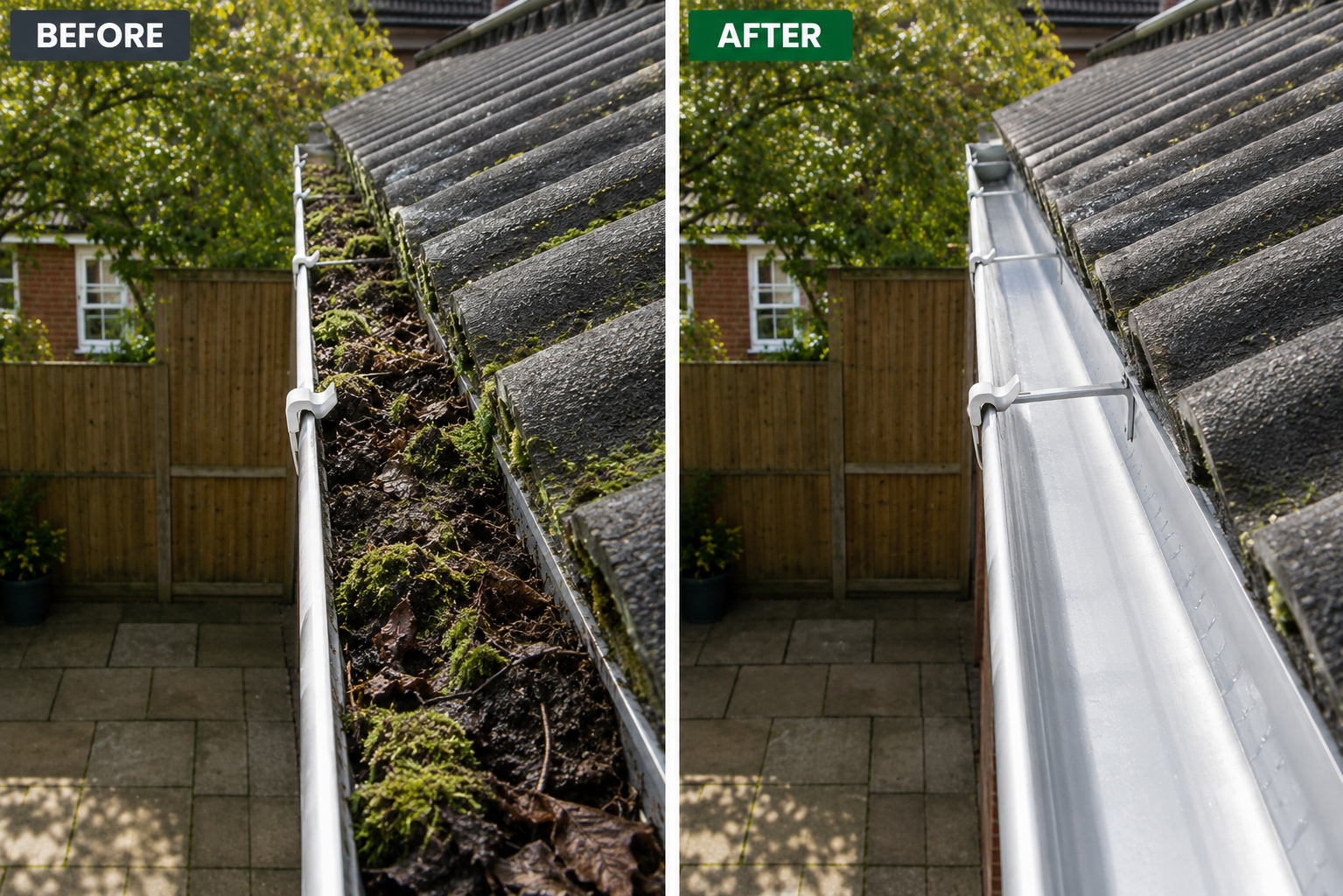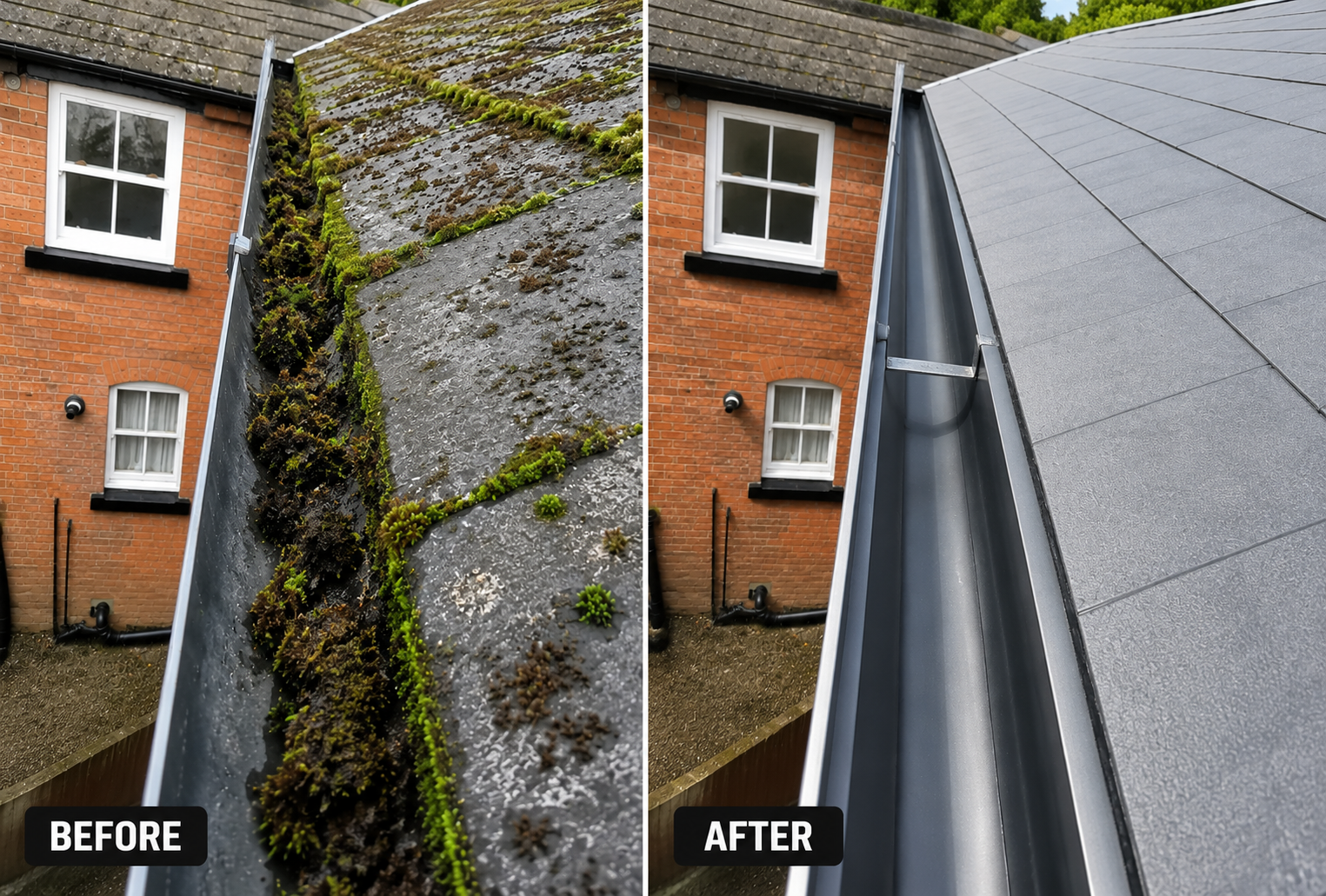

If you can see green or dark patches on your roof from the pavement outside your Birmingham property, something is actively happening to your gutters right now — not eventually, not next season, but continuously, with every rainfall event, whether it's visible from ground level or not.
Roof moss and gutter health are far more directly and continuously connected than most homeowners realise, and the relationship between the two runs in both directions in ways that most generic maintenance advice tends to gloss over or treat as two entirely separate concerns. This article explains exactly what visible roof moss is doing to your gutters at this very moment, why the two problems compound each other rather than existing independently, why Birmingham's specific climate makes this worse than it would be in drier parts of the UK, and what genuinely needs to happen to break the cycle rather than simply treating the symptoms repeatedly without addressing the underlying mechanism.
WOW Gutters Ltd — Birmingham's gutter cleaning and roof moss specialists
07421 433910The Direct Mechanism: Moss Sheds, Gutters Receive
Roof moss doesn't stay put on the roof surface where it originally establishes. It's a living organism, actively growing, spreading, and continuously shedding small fragments — a process that intensifies noticeably during and immediately after rainfall, when moss that has absorbed a meaningful amount of water becomes heavier, more saturated, and correspondingly more prone to detaching from the roof surface it's attached to. Every fragment that detaches has somewhere to go, and on a standard pitched roof, that somewhere is directly down into the gutter channel positioned along the eave below.
This shedding process is fundamentally different in character from most other gutter debris sources homeowners are more familiar with. Leaf fall from deciduous trees follows a recognisable, largely concentrated seasonal pattern — a defined period in autumn when the bulk of the debris arrives, with the rest of the year comparatively quiet. As our detailed breakdown of how tree cover changes your gutter cleaning schedule explains, even the most seasonal tree species produce their debris in defined windows. Moss doesn't behave this way at all. It sheds continuously across the entire calendar year, with every rain shower depositing a fresh contribution, every freeze-thaw cycle through winter loosening and detaching further fragments, and every dry spell that follows a wet period causing moss to become brittle and crack apart in ways that deposit yet more material into the gutter below.
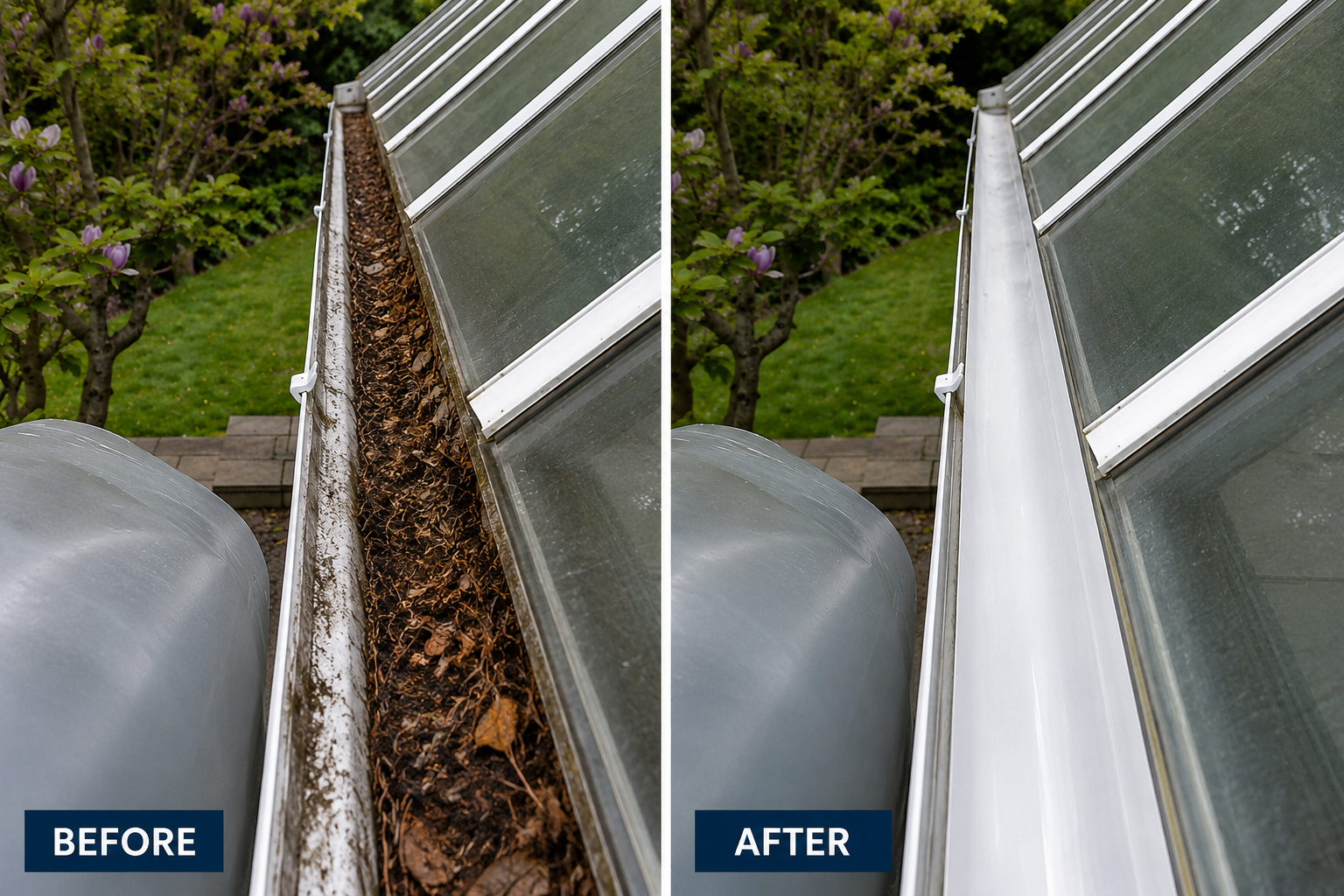
The practical consequence of this year-round, continuous shedding pattern is that a property with meaningful visible roof moss coverage is depositing material into its gutters constantly, throughout every month of the year, in a manner that a standard twice-yearly gutter cleaning schedule genuinely struggles to keep pace with. Two visits a year, timed appropriately for leaf fall and winter accumulation, are well suited to managing a seasonal debris source. They're considerably less well suited to managing a continuous one, which is precisely why moss-affected properties frequently find their gutters accumulating problematic volumes of debris between scheduled visits in a way that comparable properties without moss coverage simply don't experience to the same degree.
What Moss Fragments Actually Do Once They're in the Gutter
Once shed moss reaches the gutter channel, it doesn't behave as simple inert debris passively waiting to be cleared during the next scheduled visit. It actively contributes to several distinct mechanisms of gutter deterioration that operate simultaneously and reinforce one another over time.
Moss fragments contribute directly and disproportionately to the silt layer that builds progressively at the base of a gutter channel across successive seasons — the compacted mineral and organic material that reduces the gutter's effective drainage capacity without producing any visible overflow symptom until that reduced capacity is finally exceeded by a genuinely heavy rainfall event. This silt layer is often invisible from a casual glance at the gutter, because a gutter can appear reasonably clear on the surface while carrying a considerable depth of compacted silt beneath what's immediately visible, and moss fragments, given their small size and tendency to break down into finer particulate matter relatively quickly compared with larger debris like intact leaves, contribute to this hidden accumulation more efficiently than most other common debris sources.
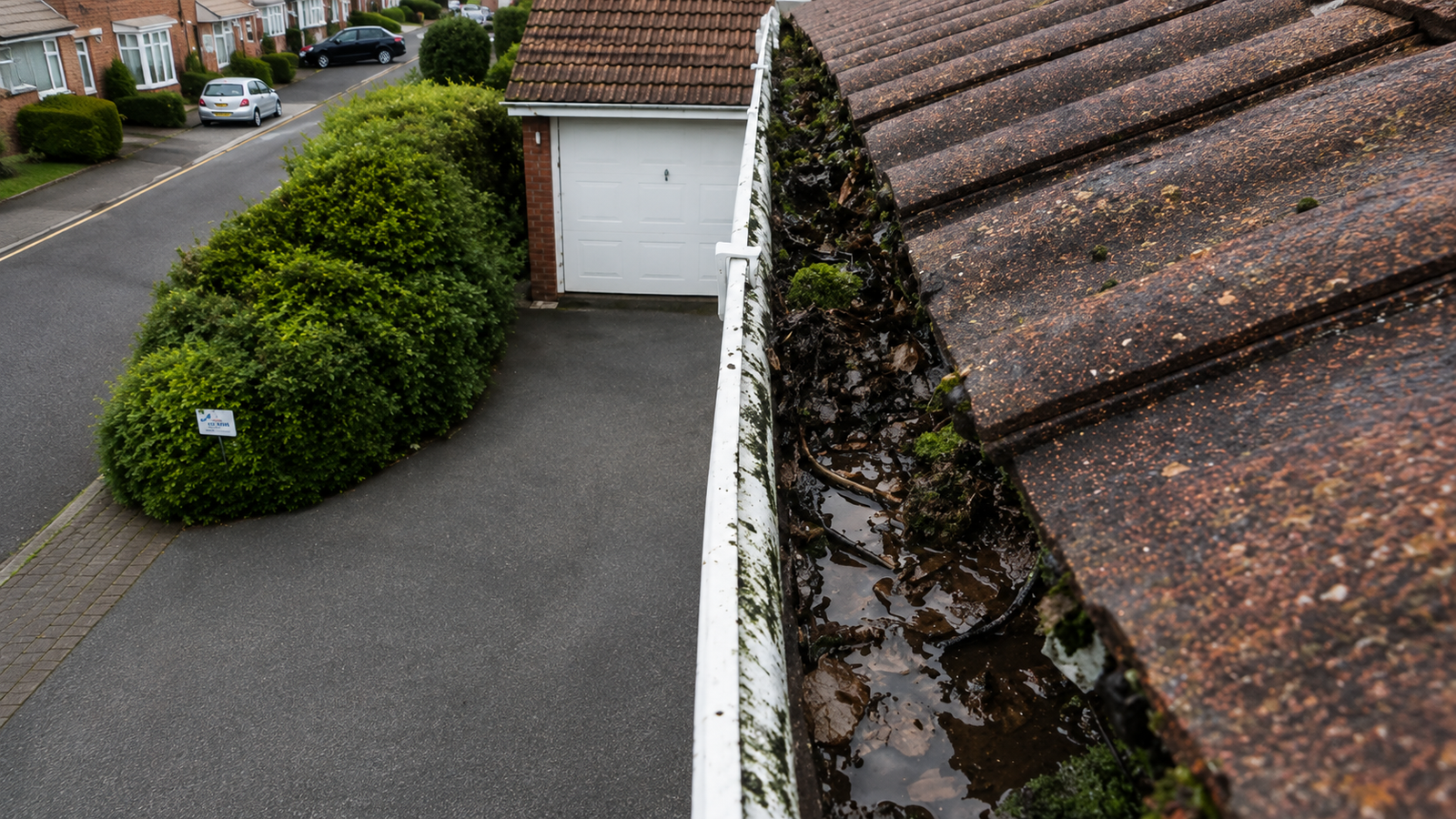
Moss fragments also tend to lodge at downpipe inlets more readily than drier, bulkier debris such as intact leaves, given their relatively small individual size combined with their tendency to retain moisture and clump together into denser masses when wet. This clumping behaviour is precisely the mechanism behind a specific and common category of downpipe restriction — a partial blockage that functions adequately enough during light rainfall to avoid producing any visible overflow symptom, but that fails completely and suddenly under the volume and sustained duration of heavier autumn or winter rainfall, at exactly the point when the gutter system's full drainage capacity is genuinely needed most. When this restriction becomes a complete blockage, it's the kind of problem our downpipe unblocking service regularly clears across Birmingham.
WOW Gutters Ltd — Birmingham's gutter cleaning and roof moss specialists
07421 433910The Compounding Cycle That Most Advice Never Explains
This is the part of the moss-and-gutter relationship that most generic maintenance guidance genuinely fails to address, and it's arguably the single most important thing to understand if you're dealing with visible roof moss on a Birmingham property: moss in a gutter doesn't simply sit there passively as debris. It actively creates conditions that encourage further moss growth, both within the gutter channel itself and, in certain circumstances, on the roof surface directly above the affected section.
Moss retains moisture considerably more effectively than most other types of gutter debris, owing to its physical structure and its biological function of absorbing and holding water. Once established within a gutter channel, even in what might initially seem like a relatively small quantity, moss keeps the immediately surrounding area of the channel consistently damp for extended periods, well beyond how long that section would otherwise remain wet following a typical rainfall event. This sustained dampness is precisely the environmental condition under which moss itself thrives most successfully and continues to spread and establish further.
This creates a genuinely self-reinforcing cycle that, left unaddressed, tends to accelerate rather than remain static over time. Roof moss sheds fragments continuously into the gutter below. Those shed fragments retain moisture within the gutter channel and encourage further moss establishment directly within that space, adding to the existing accumulation. This combined and growing accumulation progressively worsens the gutter's drainage performance, leading to increased standing water within the channel, which in turn creates even more favourable conditions for further moss growth both within the gutter and, in some cases, spreading back toward the roof edge itself. Each stage of this cycle feeds directly into the next, which is precisely why a property with untreated, established roof moss tends to see its overall gutter condition deteriorate considerably faster over time than a comparable property without moss coverage, even when both properties nominally follow the same gutter cleaning schedule.
Why Birmingham's Climate Makes This Genuinely Worse
Birmingham's climate carries a specific characteristic that makes this compounding cycle more pronounced here than it would be in drier parts of the UK: consistent, relatively evenly distributed rainfall across most months of the year, rather than a more pronounced wet-dry seasonal split found in some other regions.
This consistency is precisely the kind of climate condition that favours sustained moss growth rather than the more variable conditions that would naturally limit and interrupt it. In a genuinely drier climate, extended dry spells would periodically stress and set back moss growth considerably, creating natural breaks in the cycle described above. Birmingham's more consistent rainfall pattern means these natural interruptions occur less frequently and are typically shorter in duration, allowing moss to establish and spread with fewer significant setbacks across a typical year.
Properties across parts of Wolverhampton, Walsall, and north Birmingham with predominantly north-facing roof slopes face a particularly elevated version of this risk. North-facing surfaces receive meaningfully less direct sunlight than south-facing equivalents throughout the day, and correspondingly remain damp for considerably longer after each rainfall event before the surface has the opportunity to dry out fully. This extended dampness is exactly the sustained moisture condition moss requires to establish most aggressively, meaning north-facing roof sections across these areas frequently carry noticeably heavier moss coverage than comparable south-facing sections on the very same property, purely as a function of orientation and the resulting sunlight exposure difference.
Beyond Direct Debris: How Moss Changes Water Behaviour on the Roof
Beyond the direct mechanical contribution of continuously shed fragments, established roof moss fundamentally changes how water actually behaves as it moves across the roof surface, in ways that indirectly but genuinely affect gutter performance beyond the debris volume alone.
A clean, moss-free tile or slate surface allows water to flow relatively smoothly and predictably down toward the gutter edge, following consistent, well-understood paths determined largely by the roof's pitch and the tile or slate layout itself. Established moss growth alters this smooth flow path considerably, creating a more textured, irregular surface that slows water movement in the areas where moss is present and can actively redirect the flow of water toward unexpected points along the roof edge that differ from where it would naturally travel on an equivalent moss-free surface.
The practical consequence is that gutters on a moss-affected roof can receive a genuinely uneven distribution of water during rainfall events — a heavier concentration arriving at specific points where moss growth has redirected the natural flow path, and correspondingly lighter volumes at other points along the same gutter run. This uneven distribution creates localised overloading at specific gutter sections, even in situations where the overall rainfall volume across the whole roof would be entirely manageable for a properly functioning, moss-free roof surface distributing water evenly along the full gutter length.
This kind of localised, concentrated overloading at specific points is precisely the sort of sustained stress that accelerates joint failure and bracket wear at the specific sections affected, even on a gutter system that would otherwise be perfectly adequately sized and structurally sound for the property it serves. A homeowner assessing their gutter's general condition and concluding it's "adequate for the property" may be entirely correct about the system's overall design capacity while still experiencing genuine, accelerating localised failure at the specific points where roof moss has been redirecting water flow for an extended period without anyone identifying the underlying cause. This mechanism sits behind much of the hidden gutter damage that our piece on why hidden gutter damage is easier to spot in summer describes in practical detail.
Which Birmingham Properties Face the Highest Risk
While the moss-and-gutter cycle described throughout this article applies to any property with meaningful roof moss coverage, several characteristics common across specific Birmingham property types and locations elevate this risk considerably above the general baseline.
North-facing roof slopes, as discussed above, across areas including parts of Wolverhampton, Walsall, and north Birmingham face elevated risk purely as a function of reduced sunlight exposure and correspondingly extended surface dampness after rainfall.
Properties beneath or adjacent to mature tree canopy, common across Edgbaston, Harborne, Moseley, and Sutton Coldfield, face a compounding effect where tree-related shading further reduces the sunlight reaching the roof surface, extending dampness duration in a manner similar to but often more pronounced than orientation alone, while simultaneously contributing the kind of organic debris discussed in our breakdown of tree species and gutter scheduling that provides additional organic material supporting moss establishment.
Older Victorian and Edwardian properties across Bournville, Selly Oak, and Handsworth, frequently featuring slate roofing with a naturally more textured surface than smoother modern roofing materials, provide more physical purchase points for initial moss spore establishment than very smooth modern tile surfaces, meaning these older properties often develop meaningful moss coverage more readily than comparable newer construction.
Properties where gutters haven't been cleared in an extended period, regardless of specific location, face an accelerated version of the compounding cycle described throughout this article, simply because the existing accumulated moss and moss-derived silt within the gutter has had considerably longer to establish and reinforce the cycle before any intervention occurs. This is precisely why a proper summer gutter health check catches the problem earlier, when it's still straightforward to resolve.
WOW Gutters Ltd — Birmingham's gutter cleaning and roof moss specialists
07421 433910Signs the Cycle Is Already Underway on Your Property
Several indicators, some visible from ground level without any specialist equipment, suggest the moss-to-gutter cycle described in this article is already active and progressing on a given property.
- Visible moss coverage on the roof surface itself, viewable from the street or from a neighbouring elevated vantage point, is the most obvious starting indicator, though the extent of visible roof coverage doesn't always correlate precisely with how far the cycle has already progressed into the gutter system itself.
- Moss or algae growth directly within a visible section of gutter — rather than solely on the roof surface above it — is a considerably stronger indicator that the cycle has already established itself firmly within the gutter channel, representing a more advanced stage than roof-surface moss alone.
- A gutter that fills with debris noticeably faster between scheduled cleaning visits than the property's known tree coverage alone would reasonably explain often points to moss as a significant, sometimes primary, contributing factor that hasn't been properly identified or accounted for.
- Persistent dampness or slow-draining sections within a gutter that don't correspond to any obvious structural cause like a dropped bracket can indicate that moss-related debris accumulation is already restricting flow at that specific point.
Breaking the Cycle: What Genuinely Needs to Happen
Addressing this properly and effectively requires tackling both ends of the cycle simultaneously, rather than treating the roof moss and the gutter accumulation as two entirely separate, independently timed problems to be dealt with in isolation from one another.
Treating the moss at its source on the roof surface itself, using appropriate biocide application — the approach used by our roof cleaning and moss removal service — addresses the origin of the continuous fragment-shedding process described throughout this article. This treatment is considerably more effective when applied in dry summer conditions, because dry moss tissue absorbs biocide treatment more thoroughly and completely than moss that's currently saturated with water, producing a more reliable and complete kill of the existing growth before it has further opportunity to shed additional fragments into the gutter below.
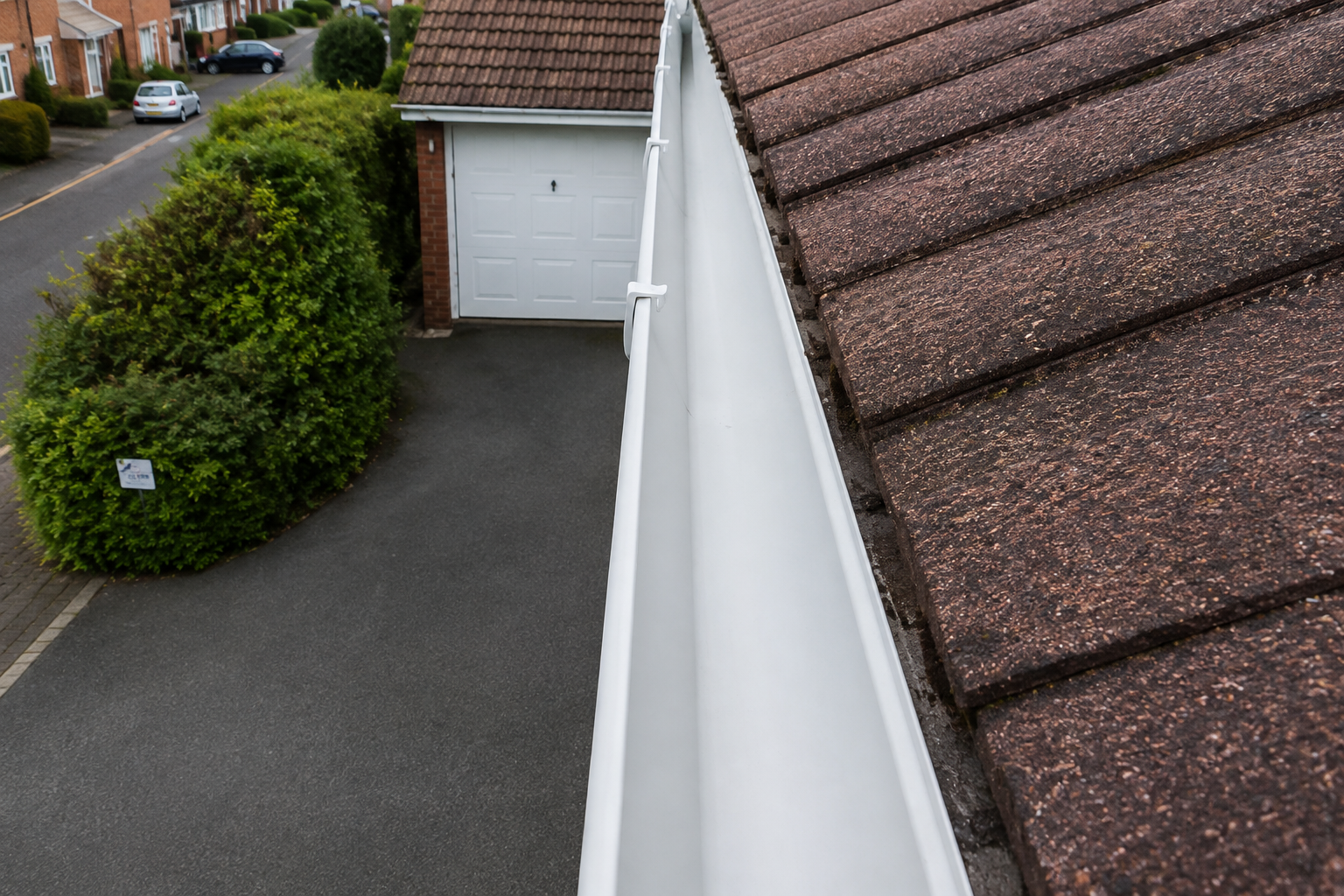
Simultaneously, and just as importantly, the gutter clearance itself needs to properly remove the moss and moss-derived silt material that has already accumulated within the channel — extraction genuinely reaching the channel floor rather than simply addressing the visible surface layer of debris. Treating the roof-level moss source without properly clearing what has already accumulated and established within the gutter leaves the existing cycle-reinforcing material firmly in place, meaning the gutter continues retaining moisture and supporting further localised moss growth even after the original roof-level source has been successfully treated. Conversely, clearing the gutter thoroughly without addressing the roof moss source means the entire cycle simply restarts as soon as the next round of fragments inevitably sheds down from the untreated roof surface above.
The genuinely effective approach combines both elements within the same overall maintenance visit or closely coordinated visits — roof moss treatment addressing the continuous source, and thorough gutter clearance addressing what has already accumulated and established within the channel itself, breaking the cycle at both points simultaneously rather than repeatedly treating one symptom while leaving the other actively working to undo the benefit.
Why Timing Matters for Treatment Effectiveness
The timing of both elements of this combined approach genuinely affects how well the overall intervention works, and getting this timing right produces meaningfully better long-term results than addressing the same problem at a less optimal point in the calendar year.
Summer represents the most effective window for roof moss biocide treatment specifically, because the drier ambient conditions allow the treatment to be absorbed by moss tissue more completely than would be possible during a wetter period, and because treating in summer gives the dead, treated moss several months to dry out, break down, and largely wash clear from the roof surface before autumn's heavier rainfall arrives, meaning considerably less dead moss material sheds into the gutter during the treatment's breakdown period than would be the case with treatment applied later in the year.
Gutter clearance carried out alongside or shortly after this summer roof treatment addresses the existing accumulated material while conditions remain favourable for thorough extraction, and importantly, gives the newly cleared gutter a genuine opportunity to remain relatively clear through the following months as the treated roof moss above it dies back and sheds progressively less fresh material than it would have while still actively growing and thriving. This is one of the reasons late summer features so prominently in our late summer gutter maintenance guidance and in the broader Birmingham gutter maintenance calendar.
BREAK THE MOSS-GUTTER CYCLE FOR GOOD
Professional roof moss treatment combined with thorough gutter clearance across Birmingham and the West Midlands — tackling both ends of the cycle in the same coordinated visit rather than treating symptoms repeatedly. Ground-based vacuum system. No ladders. Before and after photos on every job. Fully insured.
What This Costs If Left Unaddressed
The compounding nature of the cycle described throughout this article means the cost of addressing it grows considerably the longer it's left unaddressed, in a way that's worth being explicit about rather than treating as a vague general warning.
A property with early-stage roof moss and correspondingly modest gutter accumulation typically requires a comparatively straightforward combined treatment and clearance visit to break the cycle at a manageable stage. A property where the cycle has been allowed to progress over multiple untreated years faces a considerably more involved intervention — potentially requiring more extensive roof treatment given the greater established moss coverage, more thorough and time-consuming gutter extraction given the deeper accumulated silt and moss-derived debris layer, and in more severe cases, the kind of structural gutter damage described in our guidance on how professional gutter cleaning protects the roofline, where sustained moisture exposure has already begun affecting fascia board condition and bracket integrity beyond simply the gutter's drainage function.
Addressing the cycle at an earlier stage, before it has had extended time to compound and reinforce itself, is consistently more cost-effective than addressing the same underlying problem once it has progressed considerably further, which is precisely why identifying the signs described earlier in this article and acting on them promptly represents better value than waiting for the problem to become more visibly obvious from ground level. Many of the signs are best caught during the kind of summer signals your gutters are giving you that homeowners commonly miss.