
Block management brings a genuinely different set of gutter maintenance considerations from those facing a single owner-occupied home, and the overwhelming majority of generic gutter cleaning guidance available online simply isn't written with property managers, resident management companies, or managing agents in mind. Multiple leaseholders with legitimate expectations. Shared service charge budgets that require justification and transparency. Health and safety obligations extending across communal areas. Documentation requirements for annual general meetings and, where major works are involved, section 20 consultation processes. None of this is meaningfully addressed by the homeowner-focused advice that dominates most gutter maintenance content.
This is a genuine working checklist, built specifically for anyone managing residential blocks, commercial units, or mixed-use developments across Birmingham and the wider West Midlands. It covers exactly what needs to be in place for gutter and roof drainage maintenance to satisfy both the practical building protection needs common to any property and the additional accountability, documentation, and liability considerations that come specifically with managing a shared building on behalf of leaseholders, directors, or freeholders.
WOW Gutters Ltd — Commercial and block management gutter maintenance across Birmingham & the West Midlands: 07421 433910
WOW Gutters Ltd — block, commercial and mixed-use gutter maintenance specialists across the West Midlands
07421 433910Why Block Management Gutter Maintenance Is a Genuinely Different Job
A single homeowner deciding whether to book a gutter clean is making a straightforward, low-consequence personal decision. If they delay, forget, or choose a less thorough service, the downside risk is contained largely to their own property and their own finances. A property manager making an equivalent decision on behalf of a residential block or commercial building is navigating an entirely different set of considerations simultaneously: budget approval processes, service charge implications that affect every leaseholder's annual costs, resident expectations about building presentation and maintenance standards, and — critically — genuine liability exposure if maintenance is neglected and subsequently causes damage that affects one or more units.
This fundamentally changes what “good enough” maintenance actually looks like in a block management context. A private homeowner can reasonably accept a degree of risk in exchange for lower cost or less frequent attention to their own property, because the consequences of that decision fall entirely on them. A property manager responsible for a communal building genuinely cannot accept the same risk profile on behalf of others, given that the consequences of neglected maintenance multiply considerably when a preventable issue like penetrating damp affects multiple units simultaneously rather than a single dwelling, or when a structural gutter failure creates a genuine safety hazard in a shared communal area used by numerous residents and visitors.
Beyond the direct consequences of neglected maintenance, property managers also carry a distinct professional and often contractual obligation to demonstrate reasonable diligence in how the building is maintained. This obligation exists independently of whether any specific problem ever actually materialises — a property manager who cannot demonstrate a documented, defensible maintenance approach is in a considerably weaker position if a dispute arises, regardless of whether the underlying maintenance was actually adequate in practice.
The Full Checklist: What Needs to Be in Place
1. A Documented, Defensible Maintenance Schedule
Unlike a single homeowner who might reasonably book gutter cleaning on an ad-hoc basis whenever it occurs to them, block management genuinely requires a documented, consistently applied schedule that can be referenced, justified, and defended if questioned by leaseholders, directors, or auditors. This should follow at minimum the twice-yearly baseline appropriate for most standard properties, with adjustments made for buildings near significant tree coverage, buildings with north-facing roof sections prone to moss establishment, or buildings with a documented history of drainage issues that warrant more frequent attention than the general baseline suggests.
This documentation matters directly for two distinct purposes. First, it supports accurate service charge budgeting, allowing the maintenance cost to be planned and communicated to leaseholders as a predictable, recurring line item rather than an unpredictable ad-hoc expense that appears without warning. Second, and equally important, it provides genuine evidence of reasonable diligence if a leaseholder later raises a dispute connected to water damage, dampness, or any other issue that could plausibly be linked to inadequate gutter maintenance — a property manager who can point to a consistent, documented schedule is in a considerably stronger position than one who can only describe an informal, undocumented approach.
2. Photographic Evidence for Every Single Visit
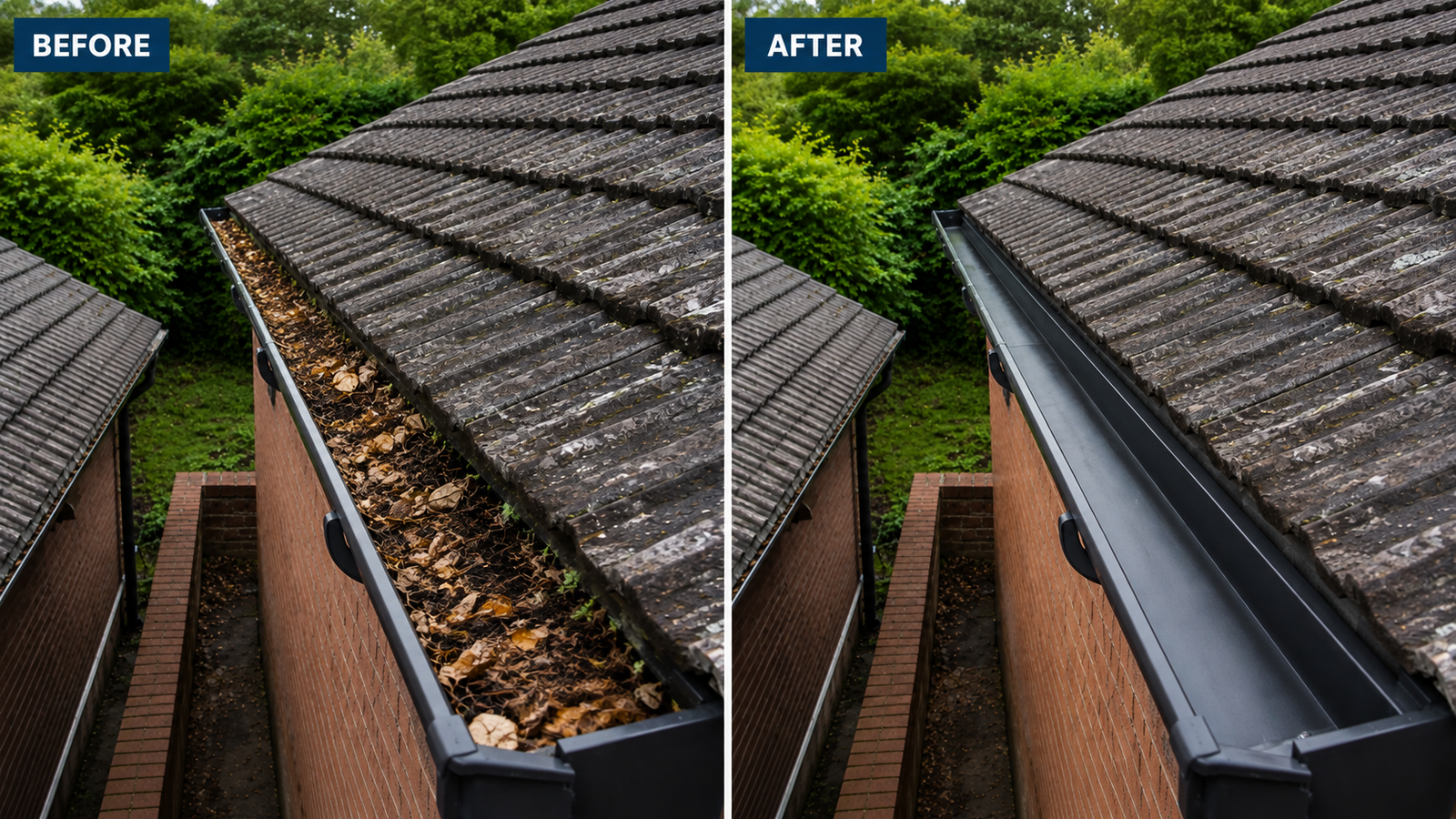
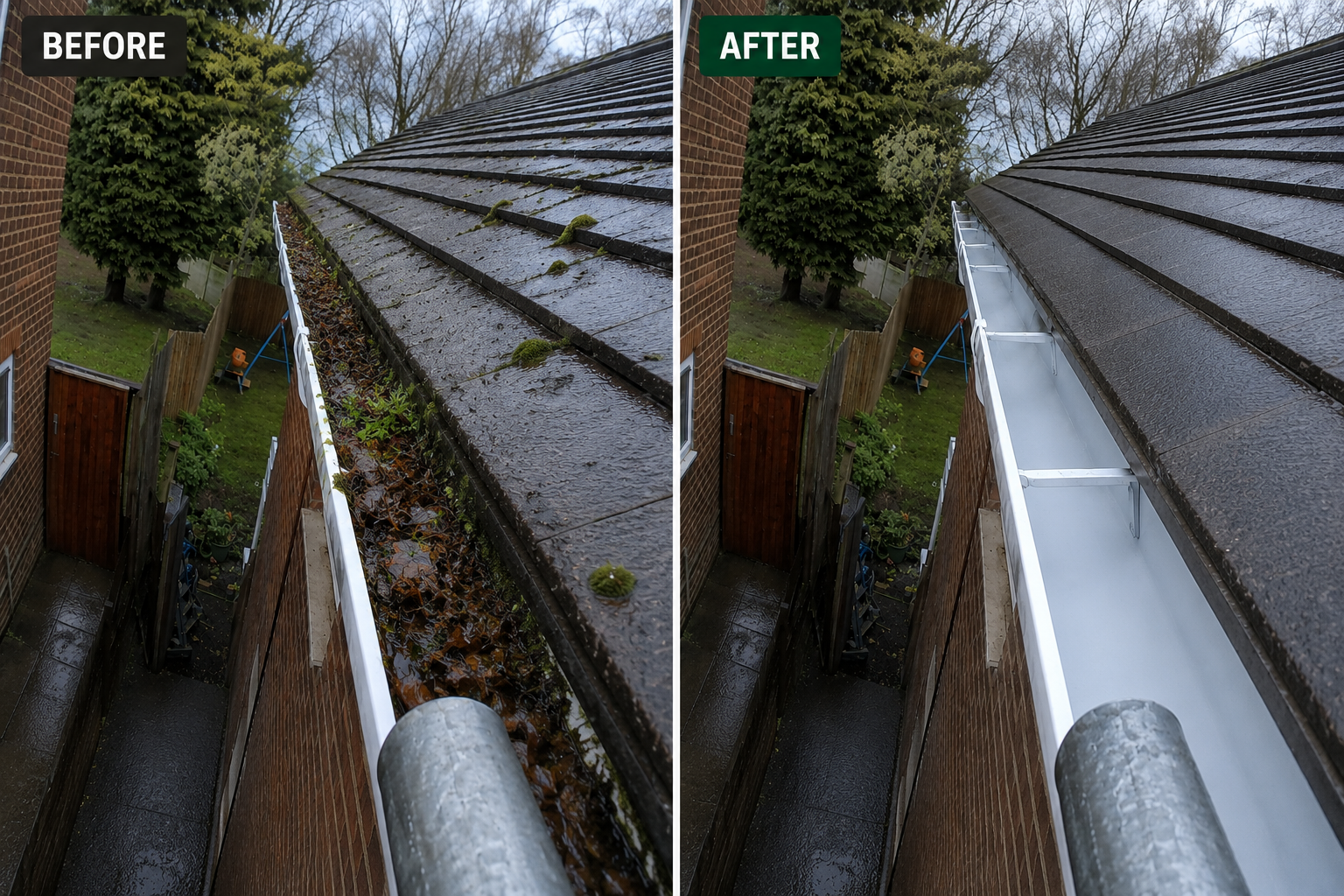
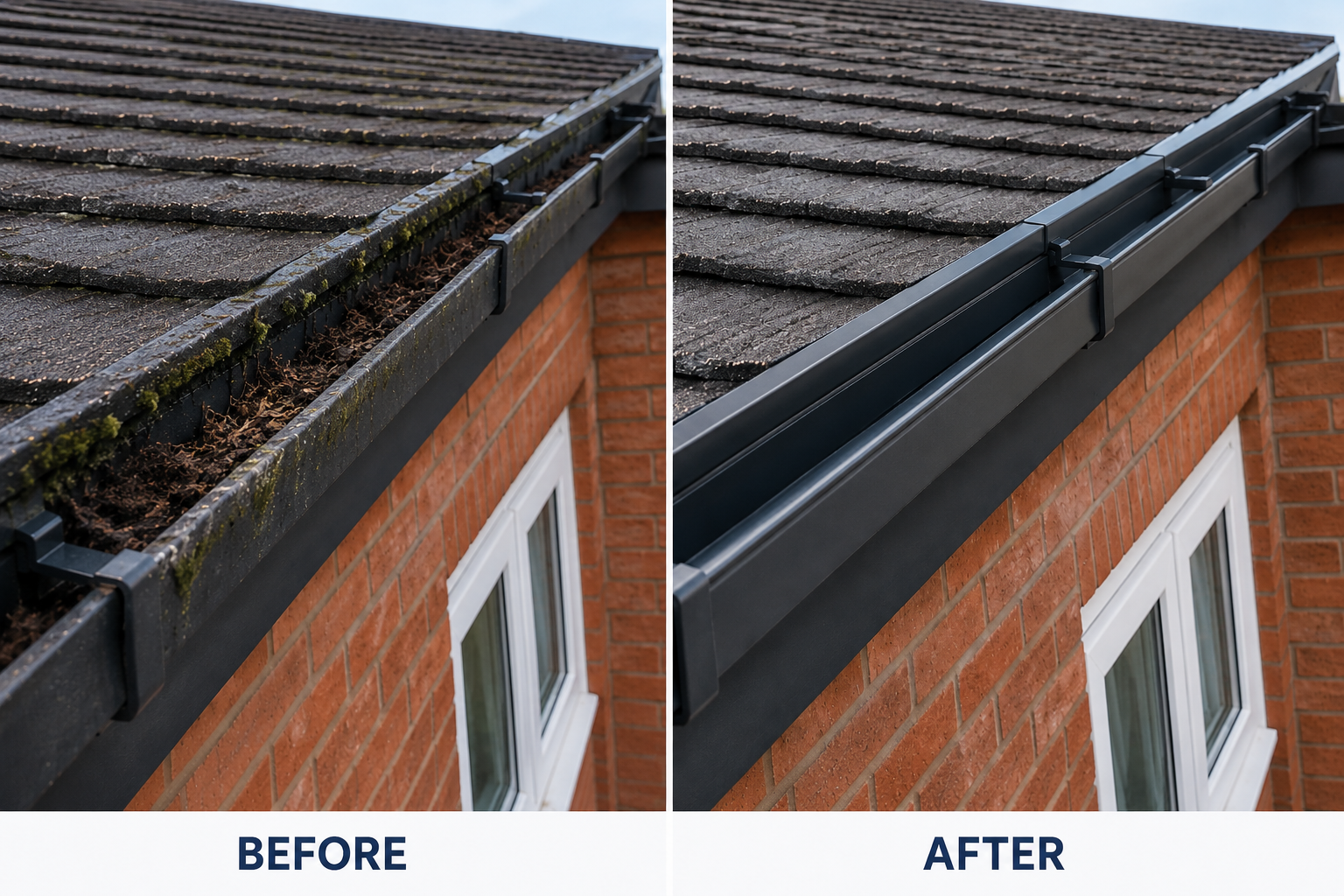
Every maintenance visit needs to produce a genuine, retrievable record — not simply a completed job ticket confirming that a contractor attended and carried out unspecified work. Before and after photographs of every gutter run, taken as standard on every visit rather than only when specifically requested, provide exactly the kind of concrete evidence a property manager genuinely needs for several distinct purposes: supporting AGM reporting where maintenance activities and expenditure need to be explained to leaseholders or shareholders, justifying service charge expenditure with tangible evidence of work actually completed rather than simply trusting a contractor's invoice description, and building a genuine historical record of the property's condition over time that can inform future maintenance planning and budgeting decisions.
This photographic standard should be treated as a genuine requirement when selecting or reviewing a gutter maintenance contractor for block management purposes, not an optional extra that some providers happen to offer. A contractor unwilling or unable to provide this documentation as standard practice is genuinely unsuitable for block management work, regardless of how competitively priced their service might otherwise appear. To understand exactly what this level of documentation looks like on the ground, see our walkthrough of what happens during a professional gutter clean.

3. Structural Condition Assessment, Not Simply Debris Removal
A block roof represents a significantly larger capital asset than a single residential dwelling, and the structural issues that affect any gutter system — failing joint sealant, corroding brackets, gutter sections running at an incorrect fall angle — carry proportionally larger repair costs when they occur at block scale rather than on a single house. A single fascia board replacement on a house might cost several hundred pounds; the equivalent failure across a substantial section of a block's roofline, potentially requiring scaffolding access and affecting multiple units, represents a considerably larger capital expense that most service charge budgets are genuinely unprepared to absorb without advance warning.
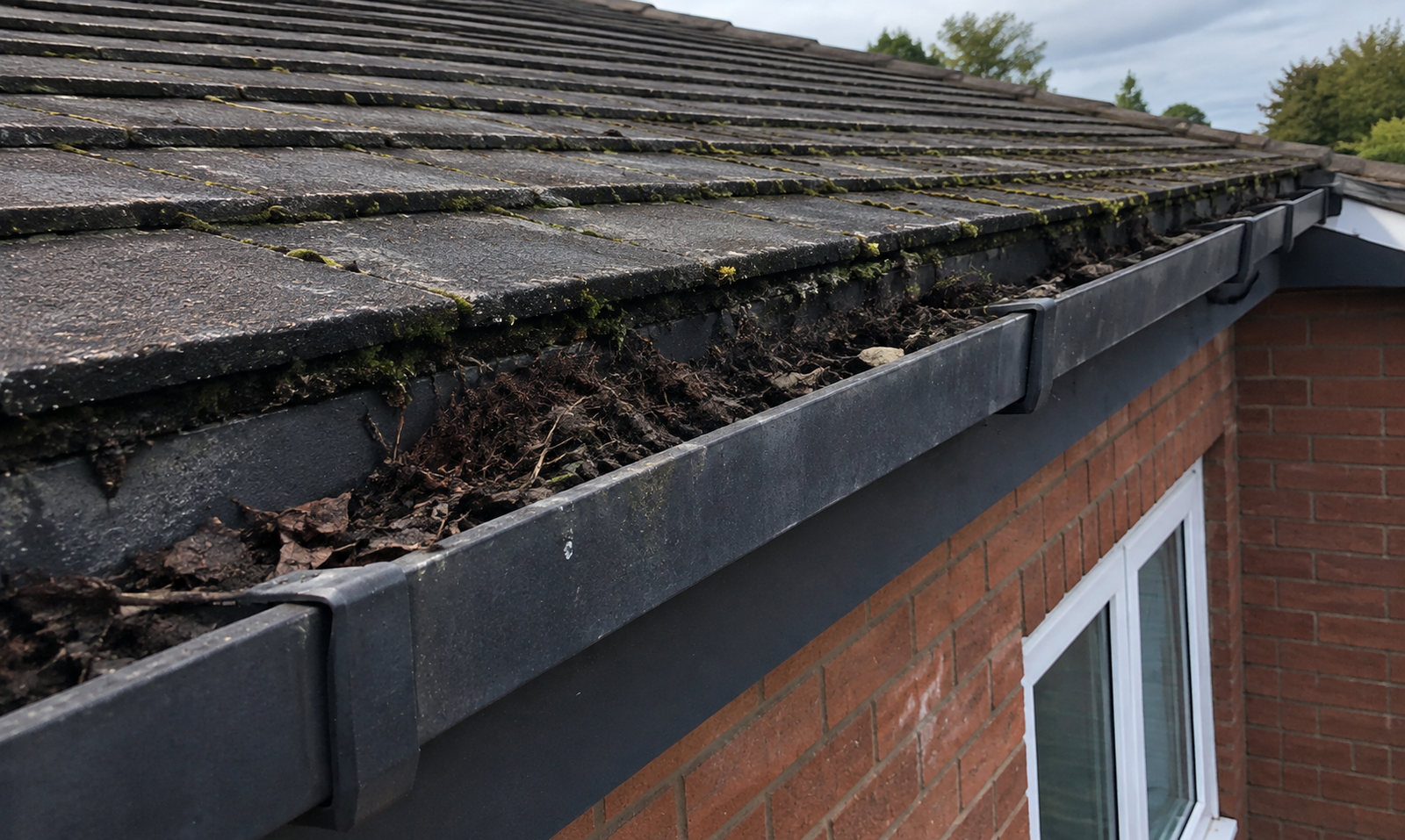
A maintenance contract that only removes visible debris without conducting any genuine structural condition assessment is fundamentally insufficient for a property manager's purposes, leaving the block exposed to exactly the kind of accumulated, compounding damage that begins as a minor, inexpensive joint failure and progresses over successive unaddressed seasons into a genuinely significant capital repair requirement. Proper block management gutter maintenance needs to include real-time inspection of joint condition, bracket integrity, and gutter fall angle as standard practice, with findings documented and reported clearly enough that a property manager can plan and budget for any identified repairs before they escalate further, rather than discovering the full extent of a problem only once it has already caused visible damage. This is precisely how professional gutter cleaning extends the life of your roofline.
4. Comprehensive Downpipe Testing Across Every Drainage Point
On a block with multiple units, downpipe failures affect specific flats disproportionately depending on their position relative to the affected drainage run — a partial blockage that might seem relatively minor when assessed purely at building level can produce a genuinely significant, disruptive leak affecting one specific leaseholder's ceiling or wall, entirely independent of how the rest of the building's drainage is performing. This uneven distribution of consequence makes comprehensive flow testing across every single outlet on the property a genuine necessity for block management purposes, rather than a nice-to-have refinement that might reasonably be skipped to save time or cost.
Property managers should specifically confirm that any gutter maintenance contract includes flow testing on every downpipe outlet across the full property, not simply a general visual assessment of the overall gutter condition, given how significantly the consequence of a missed partial blockage can affect an individual leaseholder even when the building's drainage performs adequately in aggregate.
5. Safe Access Arrangements That Don't Create Their Own Liability
Block buildings frequently present considerably more complex access challenges than a single house — multiple storeys well beyond standard domestic ladder reach, shared communal grounds with restricted vehicle or equipment access, and sometimes structural or planning constraints affecting scaffolding or cherry picker use. Ladder-based gutter clearing approaches carry genuine safety risk in any context, but this risk becomes a significantly more serious liability concern when the work is being commissioned on behalf of a managed property rather than representing a private homeowner's own personal risk decision about their own building.
A property manager commissioning ladder-based work on a block, particularly work carried out at heights genuinely exceeding what standard domestic ladder equipment can safely reach, is taking on liability exposure that a ground-based access solution removes entirely. Industrial-grade vacuum systems with reach poles extending to four storeys, operating completely from ground level without any ladder placed against the building at any point, eliminate this specific category of liability concern altogether — a consideration that should factor directly into contractor selection for any block management context, given the multi-storey nature of most block properties. For a fuller comparison of why this matters, see our safety-focused guide: can you clean your own gutters safely?
6. Flat Roof and Communal Balcony Drainage Coverage
Many blocks, particularly newer developments, conversions, and mixed-use buildings, incorporate flat roof sections, balcony drainage systems, and parapet gutters that require a genuinely different maintenance approach from standard pitched roof gutters. These systems face distinct risks — particularly ponding, where standing water remains on a flat surface for extended periods rather than draining promptly, which accelerates degradation of the waterproofing membrane beneath in a way that has no direct equivalent in pitched roof gutter maintenance.
Property managers overseeing mixed-construction buildings, or buildings incorporating balcony drainage serving individual units, need a contractor genuinely capable of addressing both pitched roof gutters and flat roof drainage systems competently, rather than a provider focused exclusively on standard pitched roof gutters who may overlook or under-assess the flat roof or balcony drainage elements that a significant proportion of modern and converted block developments actually include. Our guide to flat roof gutters in Birmingham covers exactly what these systems require.
7. Moss and Roof Surface Awareness Across the Whole Property
On larger block roofs, the compounding relationship between roof moss and gutter deterioration can affect considerably larger surface areas than would be found on a single residential roof, and given the greater scale involved, catching this cycle at an early stage through proper roof surface assessment represents proportionally greater cost savings for a block than the equivalent early intervention would represent on a single dwelling. A block roof with extensive, long-established moss coverage across a significant proportion of its surface area represents a considerably larger and more expensive remediation project than the same underlying issue caught and addressed at an earlier stage would have required.
Property managers should ensure their gutter maintenance provider includes roof surface observation as standard practice during every visit, flagging significant moss coverage or other roof surface concerns as part of the routine reporting process, rather than treating roof condition as an entirely separate concern requiring its own independent assessment and budget line. The mechanism at work here is explained in detail in our article on moss on your roof and what it is doing to your gutters.
8. A Contractor Genuinely Experienced With Commercial-Scale Access and Timing
Block properties often require maintenance work scheduled around resident access considerations, communal area usage patterns, and in some cases coordinated notice periods required under specific lease terms or management agreements. A contractor experienced with commercial and block-scale gutter cleaning is considerably better positioned to manage this kind of coordination smoothly than one primarily accustomed to single residential property visits, where scheduling complexity is minimal by comparison.
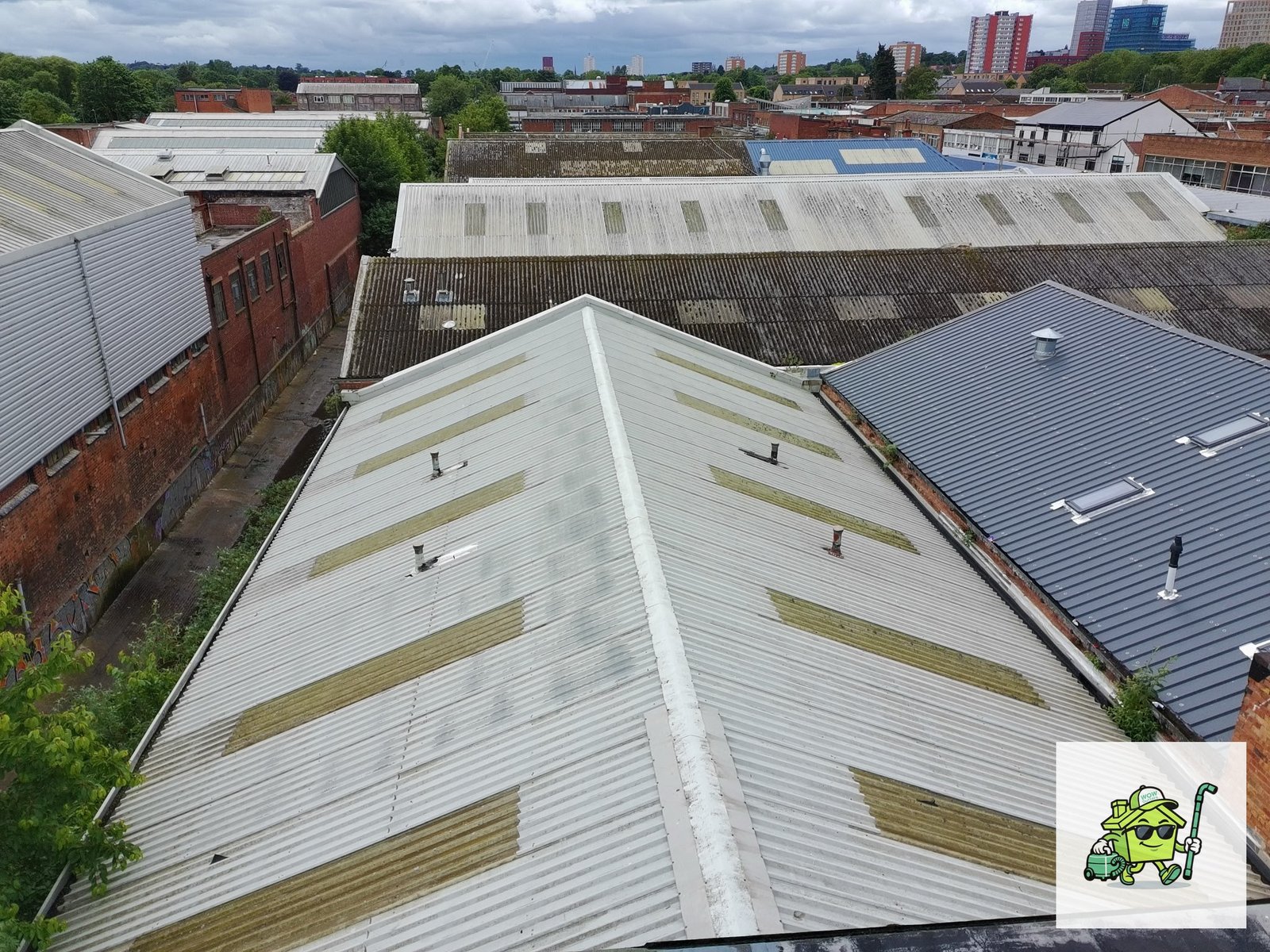
This experience matters practically in ways that extend beyond simple competence at the physical clearing work itself — genuine familiarity with providing appropriate resident notice, working around communal access restrictions, and communicating clearly with property management contacts throughout the process, rather than requiring the property manager to manage these coordination details entirely themselves on top of the contractor's core technical work. Commercial teams work on larger and more complex drainage systems too, from commercial warehouse gutter clearing in Birmingham to box gutter systems captured in our warehouse case study.
BLOCK MANAGEMENT GUTTER MAINTENANCE, DONE DEFENSIBLY
Documented scheduling, AGM-ready before and after photographs on every visit, genuine structural condition assessment, downpipe testing across every outlet, and ground-based access eliminating ladder-related liability — professional gutter and roof drainage maintenance for blocks, commercial properties and mixed-use developments across Birmingham and the West Midlands. Fully insured.
Service Charge and Budget Considerations Specific to Gutter Maintenance
Gutter and roof drainage maintenance represents a recurring, predictable service charge line item that benefits considerably from being planned and communicated proactively rather than appearing as an unexpected or poorly explained expense within the annual accounts. Establishing a documented, consistent schedule, as described in the checklist above, directly supports this proactive budgeting approach, allowing the expected annual cost to be built into service charge projections with genuine confidence rather than estimated loosely.
Beyond the routine maintenance cost itself, property managers should factor in the potential for identified structural repairs — a failing joint, a corroding bracket, an early-stage fascia board concern — to require separate budget consideration, potentially through a reserve fund allocation or, for more significant identified works, a formal section 20 consultation process depending on the anticipated cost and the specific lease terms governing the building. Building this possibility into the overall maintenance budgeting approach from the outset, rather than treating every identified repair as an unplanned emergency requiring urgent, poorly consulted action, produces considerably better outcomes for both the property manager's workload and the leaseholders' experience of the process.
Liability Exposure Property Managers Need to Understand
Property managers carry a distinct duty of care obligation regarding the communal areas and shared building fabric they're responsible for, and gutter maintenance sits squarely within this obligation given the direct connection between neglected drainage and the kind of water damage, dampness, and in more severe cases structural deterioration that can affect multiple units simultaneously within a single building.
This liability exposure operates on two related but distinct levels. First, there's the direct financial and reputational consequence of genuinely neglected maintenance causing actual damage — a scenario that can result in significant remediation costs, disputes with affected leaseholders, and potential insurance implications depending on the specific circumstances and policy terms involved. Second, and arguably equally important from a professional risk management perspective, there's the exposure created by an inability to demonstrate reasonable diligence even in situations where the underlying maintenance was actually adequate — a property manager who cannot produce documented evidence of a consistent maintenance schedule and genuine work completed is in a considerably weaker position when questioned or challenged, regardless of the actual underlying quality of the maintenance that was carried out.
Addressing both dimensions of this liability exposure points toward the same practical conclusion: a documented, consistent, genuinely thorough maintenance approach, supported by comprehensive photographic and written evidence for every visit, represents the most effective risk management strategy available to a property manager for this specific category of building maintenance responsibility.
Documentation Standards for AGM and Leaseholder Reporting
Beyond the general case for documentation made throughout this checklist, it's worth being specific about what genuinely useful gutter maintenance documentation looks like for the specific purposes of AGM reporting and ongoing leaseholder communication.
Effective documentation should include before and after photographs of every gutter run addressed during a visit, not a single representative photograph intended to stand in for the whole property. It should include a written summary of any structural findings — joint condition, bracket integrity, any areas requiring follow-up attention — expressed in plain language that a non-technical audience of leaseholders or directors can genuinely understand without requiring specialist knowledge to interpret. And it should be delivered in a format that can be readily incorporated into AGM presentation materials or circulated directly to leaseholders as evidence of maintenance activity, rather than requiring significant additional work from the property manager to translate a technical contractor report into something suitable for a general audience.
This standard of documentation directly supports the broader governance and transparency expectations that leaseholders and directors increasingly hold property managers to, and selecting a maintenance contractor who provides this standard as routine practice, rather than as a special request requiring additional negotiation, meaningfully reduces the property manager's own administrative burden while simultaneously improving the quality of information available for reporting purposes.
Why Timing Still Matters Considerably at Block Scale
The seasonal timing considerations that apply meaningfully to individual residential properties apply equally, and in some respects even more significantly, to block management scheduling. Dry summer conditions produce considerably more accurate structural findings during any inspection carried out as part of a gutter maintenance visit, which matters proportionally more at block scale given that any identified repairs at this scale may need to progress through a service charge approval process or, for larger identified works, a formal section 20 consultation before work can actually proceed — a process that itself takes meaningful time, making early identification of any structural concerns genuinely valuable in a way that simple debris clearance timing doesn't capture on its own. As our article on hidden gutter damage explains, dry conditions are exactly when structural issues become easiest to spot.
Booking maintenance visits early in the season, well ahead of the general autumn demand spike that affects contractors across the entire sector, is particularly important for block management specifically, given that scheduling around resident notice periods and communal access coordination requires considerably more lead time than a single homeowner's straightforward booking decision. A property manager attempting to book urgent block-scale gutter maintenance during the height of the autumn rush, when contractor availability across the region has already been substantially consumed by residential bookings, faces a genuinely more difficult scheduling challenge than the same request made proactively during summer, while availability and scheduling flexibility both remain considerably greater. This is the same logic behind our advice to beat the autumn rush, only more so at block scale. Properties near significant tree coverage should follow the scheduling guidance set out in our guide to how tree cover changes your gutter cleaning schedule.
Managing Mixed-Construction Buildings
A meaningful proportion of block and mixed-use properties across Birmingham and the wider West Midlands combine multiple roof and drainage system types within a single building — pitched roof sections over the main structure, flat roof sections over extensions, communal balcony areas with their own dedicated drainage, and in some cases parapet gutters bordering flat roof sections used for plant equipment or communal amenity space.
Property managers overseeing this kind of mixed-construction building need to ensure their maintenance approach genuinely accounts for every distinct drainage system present, rather than defaulting to a standard pitched-roof-focused visit that may overlook flat roof or balcony drainage elements entirely. This requires either a single contractor with genuine competence across all the relevant system types, or explicit confirmation that a chosen contractor's scope of work has been specifically defined to include every drainage element the building actually incorporates, rather than assuming a general “gutter clean” booking automatically captures every system present on a genuinely mixed-construction property.
Coordinating Access Across Occupied Residential Blocks
Unlike a single vacant or owner-present house, occupied residential blocks require genuine coordination around resident access, communal area usage, and appropriate notice periods before maintenance work begins. This coordination burden falls primarily on the property manager, but a contractor experienced with block-scale work can meaningfully reduce this burden through proactive communication and flexible scheduling that accounts for these considerations from the outset rather than requiring the property manager to manage every logistical detail independently.
Genuinely useful coordination practices include providing sufficient advance notice for the property manager to circulate appropriate resident communication before work begins, working flexibly around communal access restrictions such as restricted vehicle access to shared grounds or specific timing windows agreed with the building's management, and maintaining clear, responsive communication with the property manager throughout the process rather than requiring repeated follow-up to confirm scheduling or progress.
What Good Contractor Selection Looks Like for Block Management
Bringing together everything covered throughout this checklist, property managers evaluating gutter maintenance contractors for block, commercial, or mixed-use property responsibilities should specifically confirm several things before commissioning work: a documented, consistent scheduling approach rather than purely ad-hoc booking; comprehensive photographic documentation as standard practice on every visit, not an optional extra; genuine structural condition assessment included as part of every visit, not simply debris removal; downpipe flow testing across every outlet on the property; ground-based access equipment capable of reaching the full height of the building without ladder use; competence across both pitched roof gutters and any flat roof or balcony drainage systems the building incorporates; and genuine experience coordinating access and scheduling across occupied residential or mixed-use buildings rather than exclusively single-property residential experience.
A contractor meeting all of these criteria represents a genuinely lower-risk, more defensible choice for block management purposes than one meeting only some of them, even where the latter might initially appear more competitively priced on a simple per-visit cost comparison that doesn't account for the fuller scope of what block management maintenance genuinely requires.