
Some commercial gutter jobs are a straightforward clear. Some tell you exactly how long a building has gone without proper maintenance.
This was the second kind. A large distribution warehouse — solar panels across sections of the roof, a box gutter system running the full length of the building, shipping containers and pallet stacks in the yard below — with a central gutter channel that had reached the point where wheat and grass were rooted and actively growing along multiple sections of its length. Not moss. Not surface debris. Established plants, with root systems, drawing moisture from a base layer of compacted silt that had been building for years.
This is what happens to a commercial box gutter system when it goes unmaintained for an extended period, what it takes to put right, and why routine professional gutter clearing is the cheapest insurance a warehouse or distribution site can buy.
📞 WOW Gutters Ltd — Commercial Gutter Clearing Birmingham & West Midlands: 07421 433910
Table of Contents
- The Site: A Large-Scale Distribution Warehouse
- What We Found in the Box Gutter
- Why Grass Was Growing in a Metal Gutter Channel
- How the Clear Was Carried Out
- Twenty Buckets of Evidence
- What This Level of Neglect Costs a Business
- Commercial Box Gutter Maintenance: What Warehouse Operators Need to Know
- FAQ: Warehouse and Commercial Gutter Clearing
The Site: A Large-Scale Distribution Warehouse
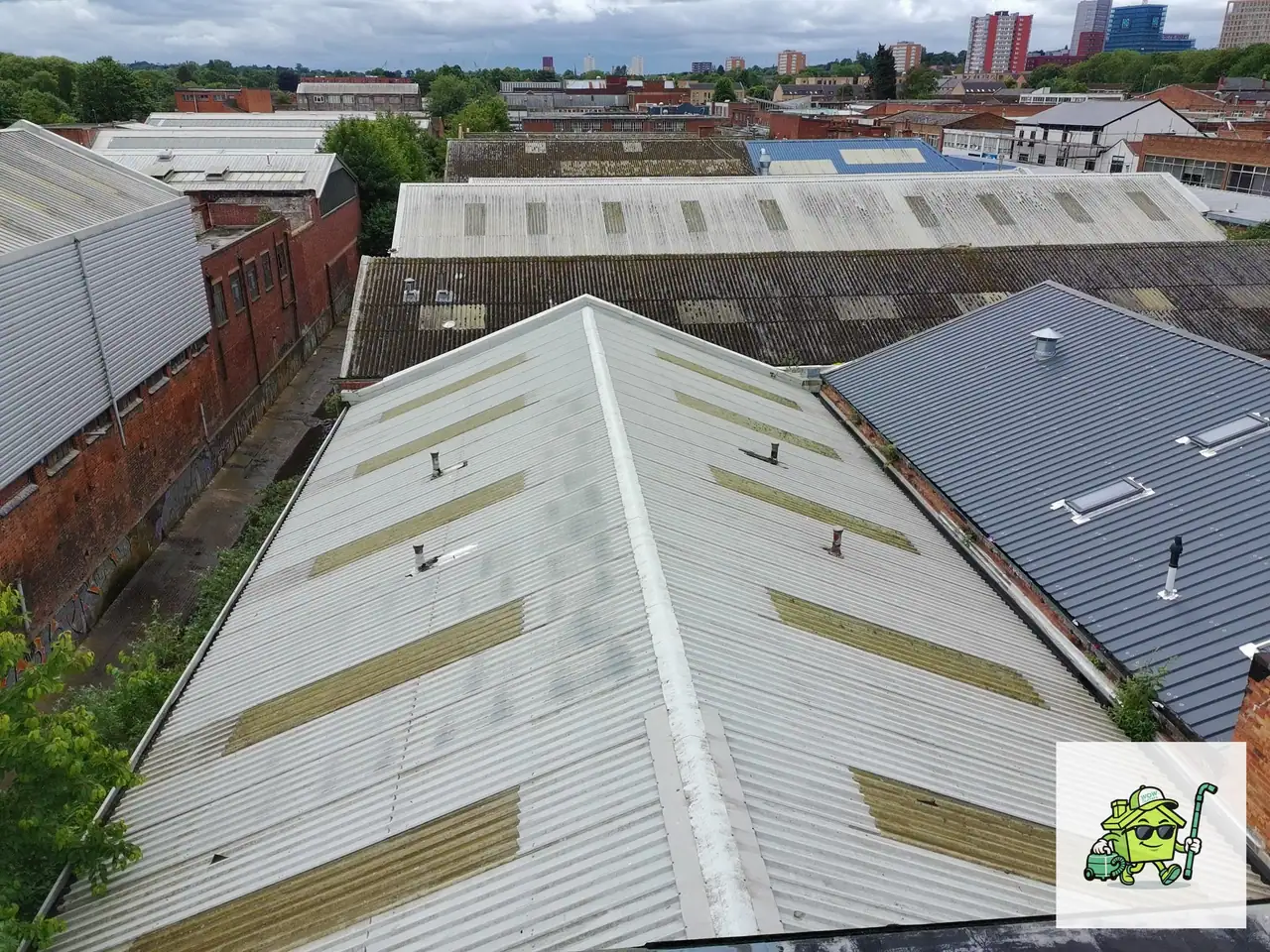
This job was carried out on a substantial commercial warehouse and distribution site — the kind of large-footprint industrial building common across logistics hubs in the West Midlands, with shipping containers and pallet storage in the surrounding yard, articulated lorries moving through the site, and solar panel arrays covering sections of the roof.
The roof itself runs to a considerable length, drained by a central box gutter system — a wide, flat-bottomed channel running along the ridge line between two roof pitches, designed to collect and carry a significant volume of rainwater to outlets positioned along its length. Box gutters like this are standard on large industrial and warehouse buildings precisely because they can handle high water volumes efficiently — provided they are kept clear.
This one had not been kept clear. Not recently, and by the evidence we found once we were up there, not for a considerable time before that either.
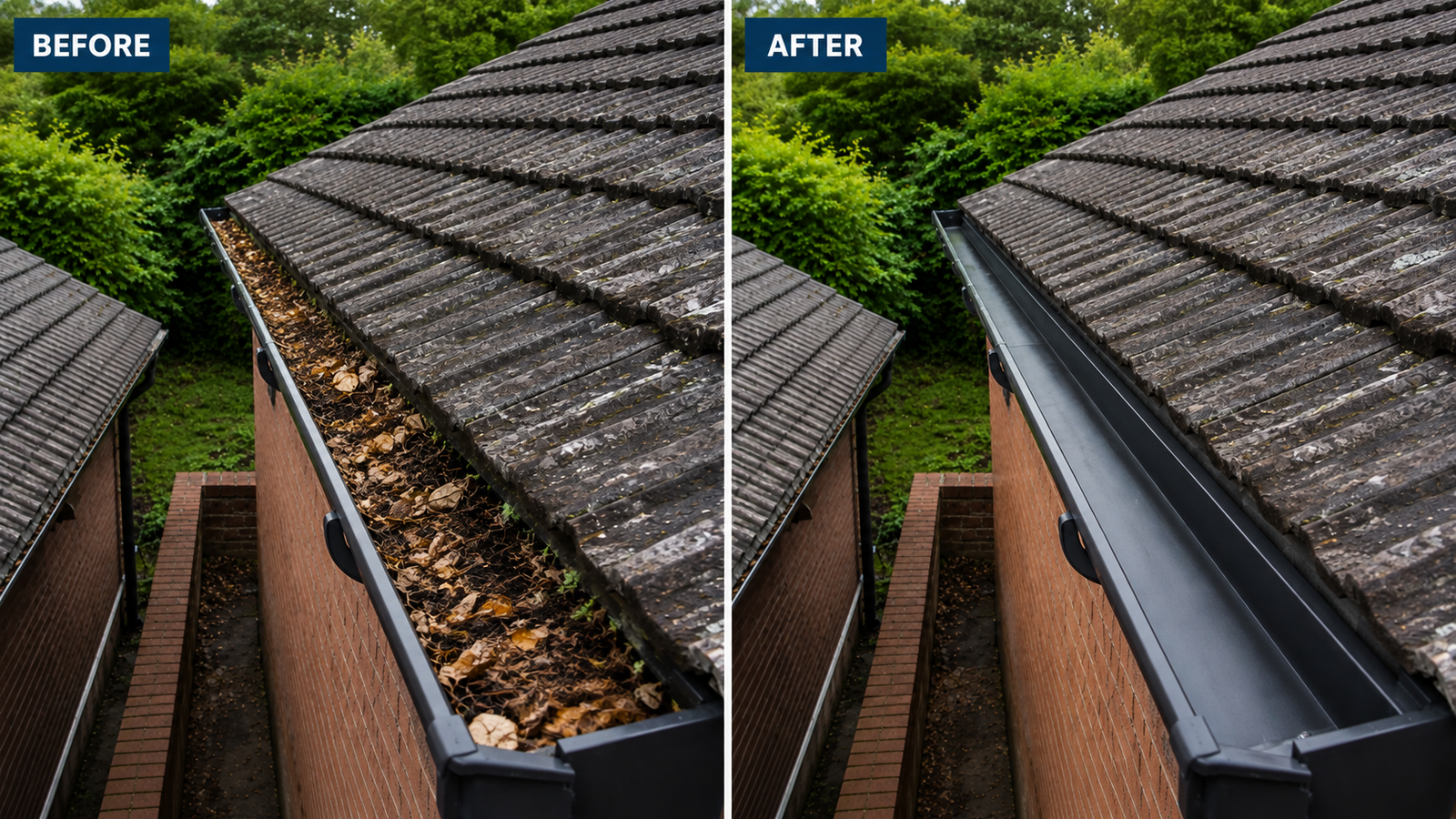
What We Found in the Box Gutter
The condition of the gutter channel told its own story before we extracted a single bucket of debris.
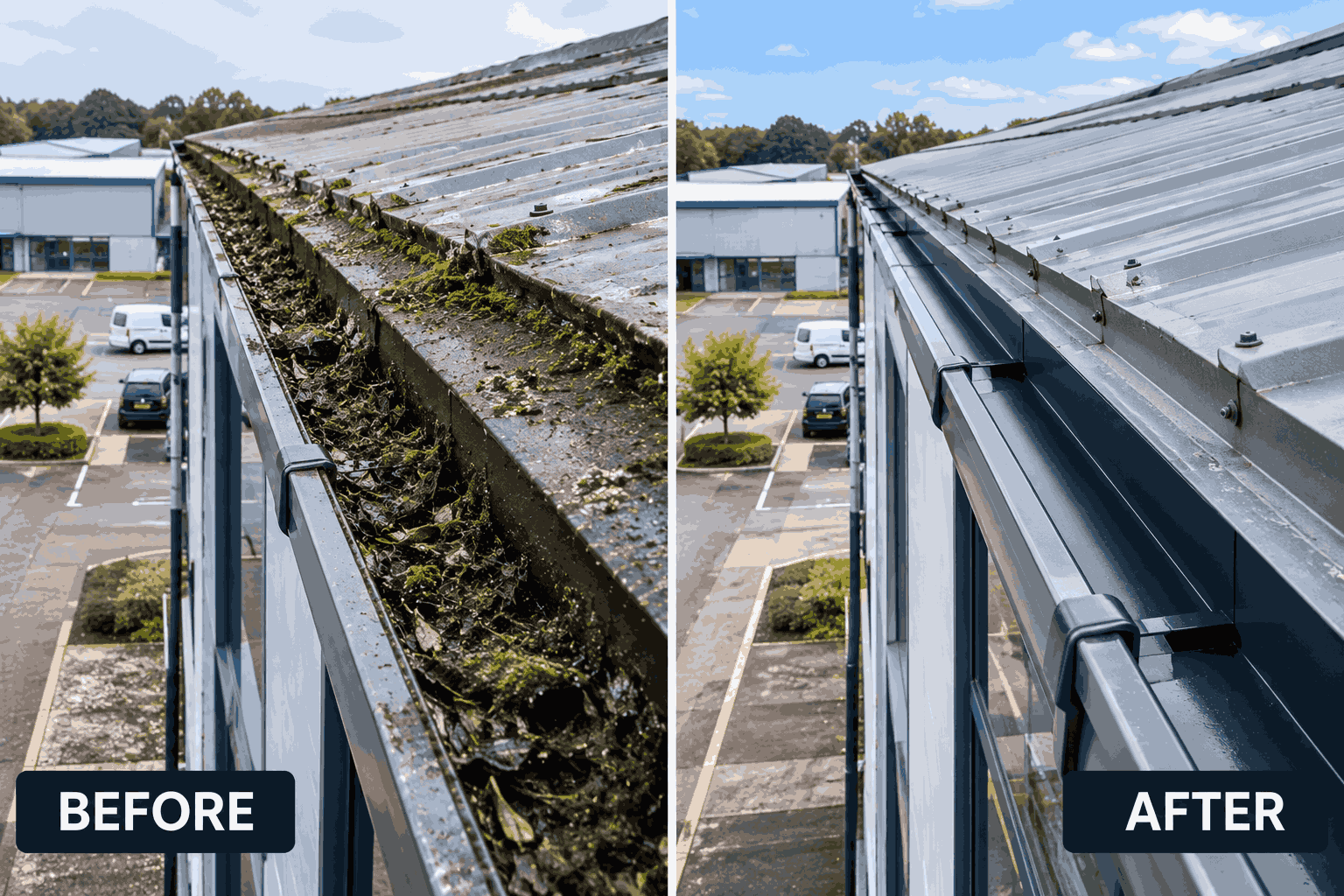
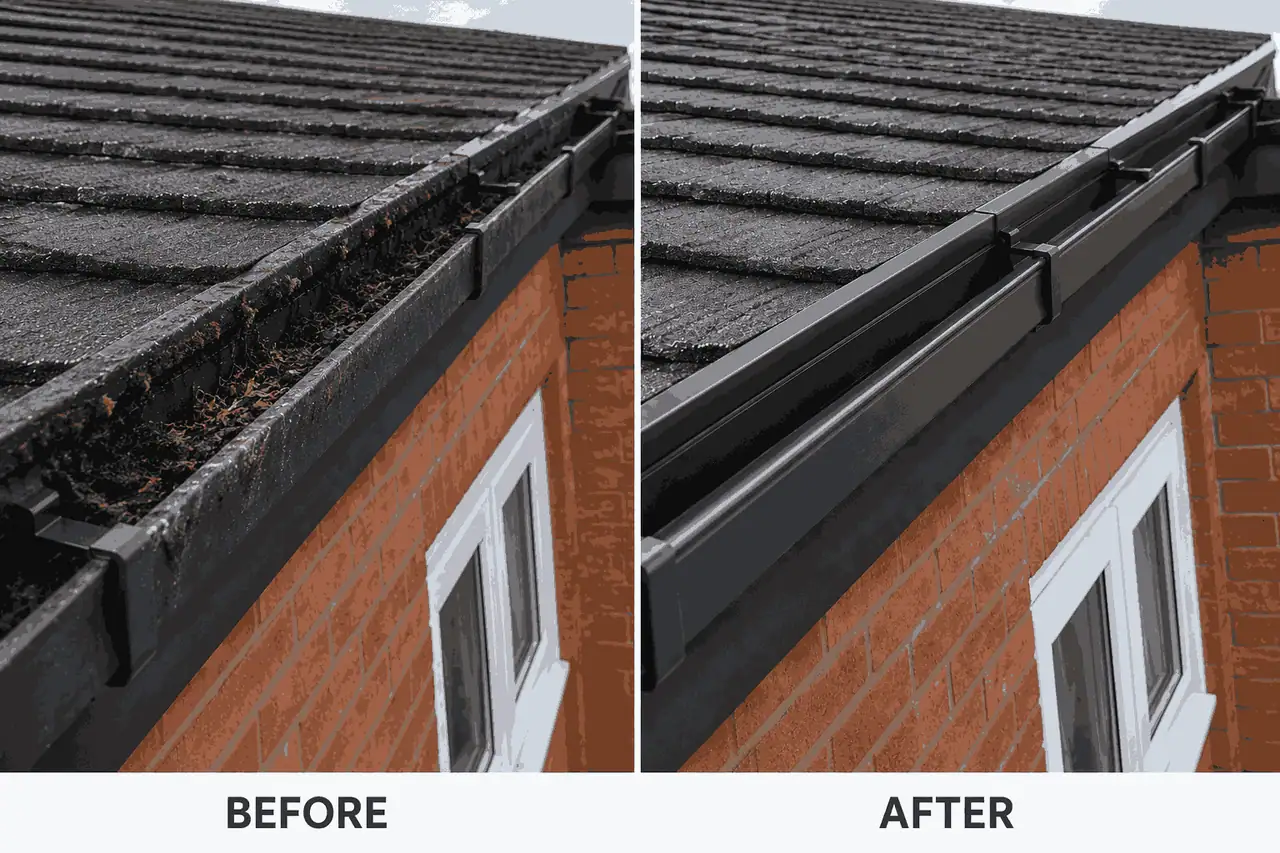
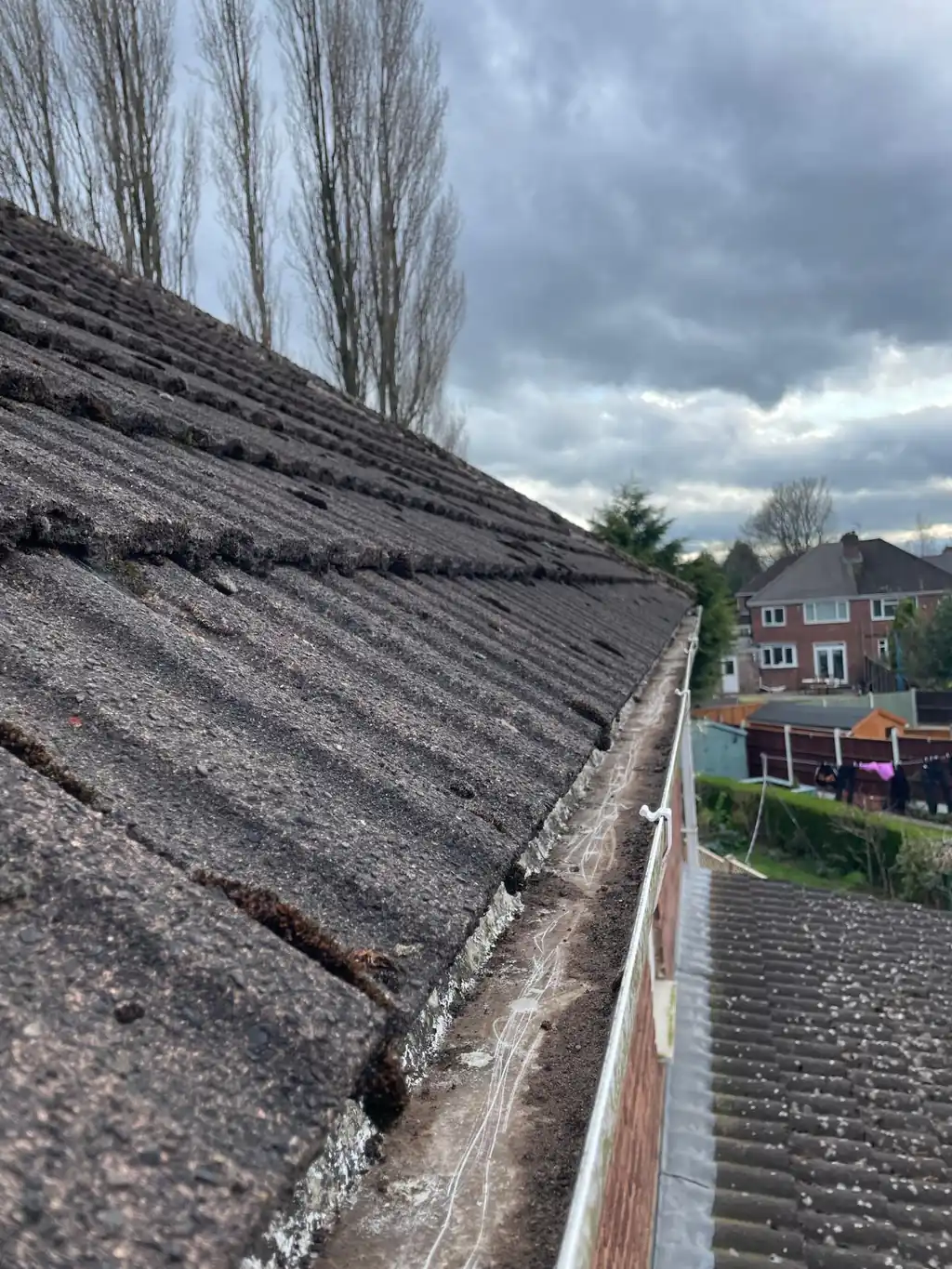
Along multiple sections of the run, the gutter floor was covered in a thick layer of compacted organic silt — the accumulated result of dust, airborne seed matter, and fine debris settling and compacting over successive seasons of rainfall. In several sections, this silt layer had reached sufficient depth and moisture retention to support fully rooted plant growth: established wheat and grass, with visible root systems anchored into the compacted base material, growing upward out of the channel in dense clumps.
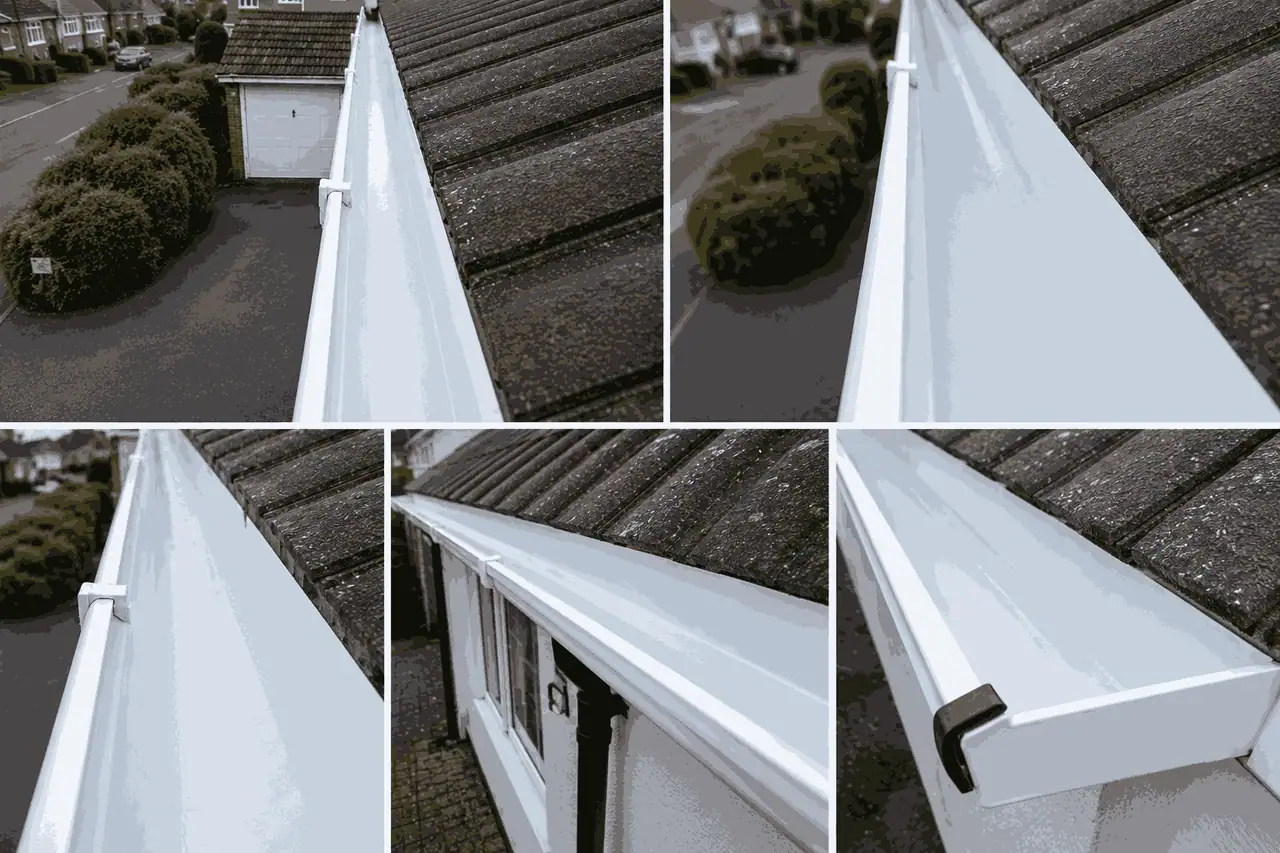
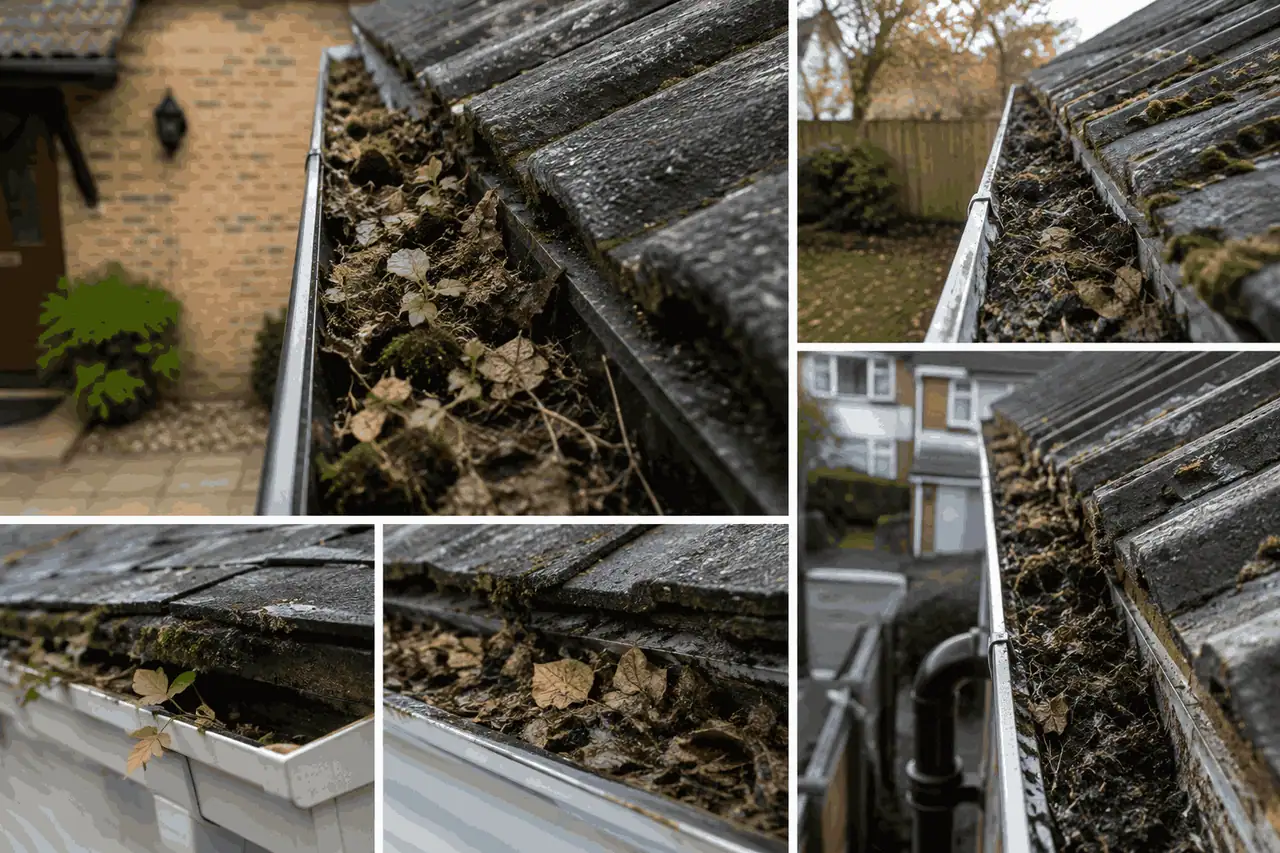
This is not something that happens after one missed season. Grass and wheat establishing root systems inside a metal gutter channel requires sustained moisture, an accumulated growing medium of sufficient depth, and enough undisturbed time for germination and growth to occur. The scale and maturity of the growth we found — dense clumps with well-developed root systems, not scattered seedlings — indicated this gutter had likely gone without a proper clear for multiple years.
Standing water was present throughout much of the channel, sitting on top of and around the compacted silt base rather than draining freely. Sections without visible plant growth still carried a substantial layer of dark, waterlogged organic sludge across the full width of the gutter floor.
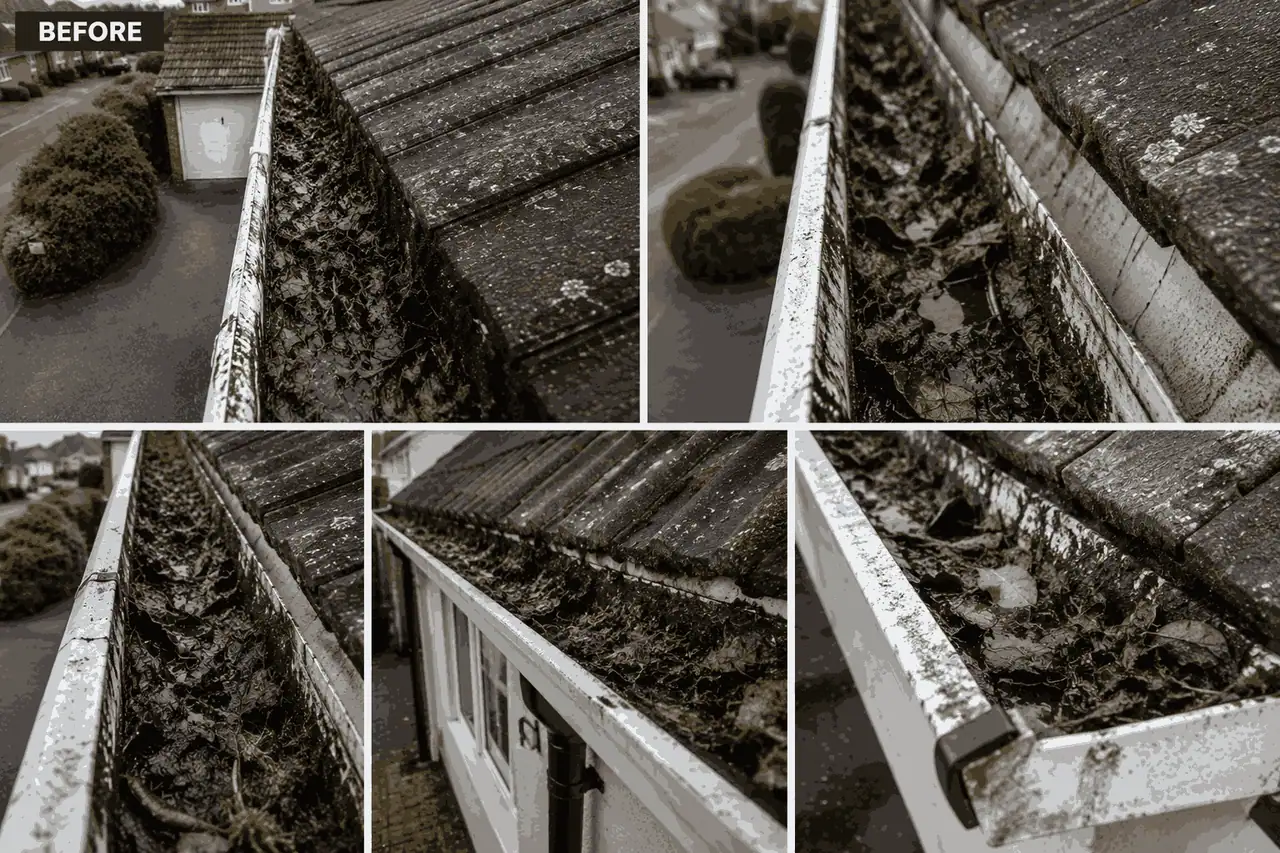
Why Grass Was Growing in a Metal Gutter Channel
It's a genuinely useful question, because the answer explains exactly why routine gutter maintenance matters so much for large commercial roofs.
A box gutter is, structurally, just a long metal trough. On its own, it holds nothing but rainwater passing through. The moment organic debris — dust, pollen, airborne seed matter, fragments from nearby vegetation, bird activity — begins settling in that trough and isn't removed, it starts to build a growing medium. Each season adds another layer. Rainfall keeps that layer consistently damp. Over several years without intervention, what began as fine dust becomes a compacted bed of decomposed organic matter, indistinguishable in composition from garden topsoil.
At that point, any windblown seed that lands in the channel has everything it needs to germinate: growing medium, consistent moisture, and — on a flat box gutter section that isn't shaded — enough light to support growth. Grass and wheat seed, carried by wind from surrounding farmland and verges (as visible in the surrounding fields and hedgerows around this site), found ideal germination conditions in a gutter channel that should have contained nothing but rainwater.
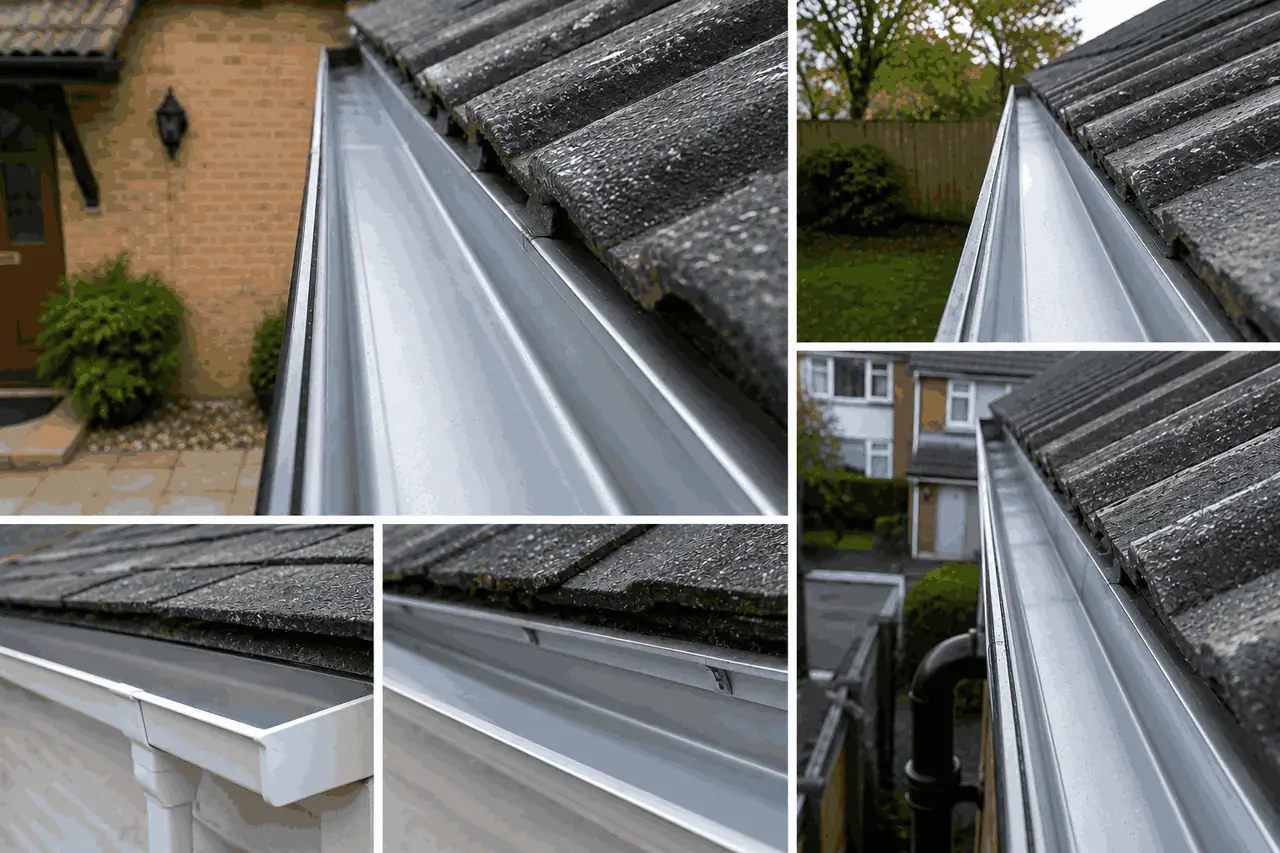
This is an extreme example, but it illustrates a point that applies to every commercial gutter system: debris accumulation is not a cosmetic issue. Left unaddressed for long enough, it fundamentally changes what the gutter is — from a drainage channel into a raised planter bed that happens to be bolted to a roof.
How the Clear Was Carried Out
Clearing a gutter in this condition required a different approach from a standard debris removal visit.
The rooted plant material had to be removed manually, section by section, working along the full length of the affected gutter runs. Root systems anchored in the compacted silt would not respond to vacuum extraction alone — the material needed to be physically lifted and separated from the channel floor before any further clearing could proceed.
Beneath the rooted growth, the compacted silt layer itself required systematic removal. This material had the consistency of wet garden soil rather than typical gutter debris, and was extracted by hand into buckets, working methodically along the gutter run from one section to the next.
Once the bulk material was cleared, the remaining gutter floor and outlets were assessed and cleaned to bare metal, confirming the channel could return to its designed function — carrying rainwater cleanly to the outlet points rather than retaining it in a bed of silt and root matter.
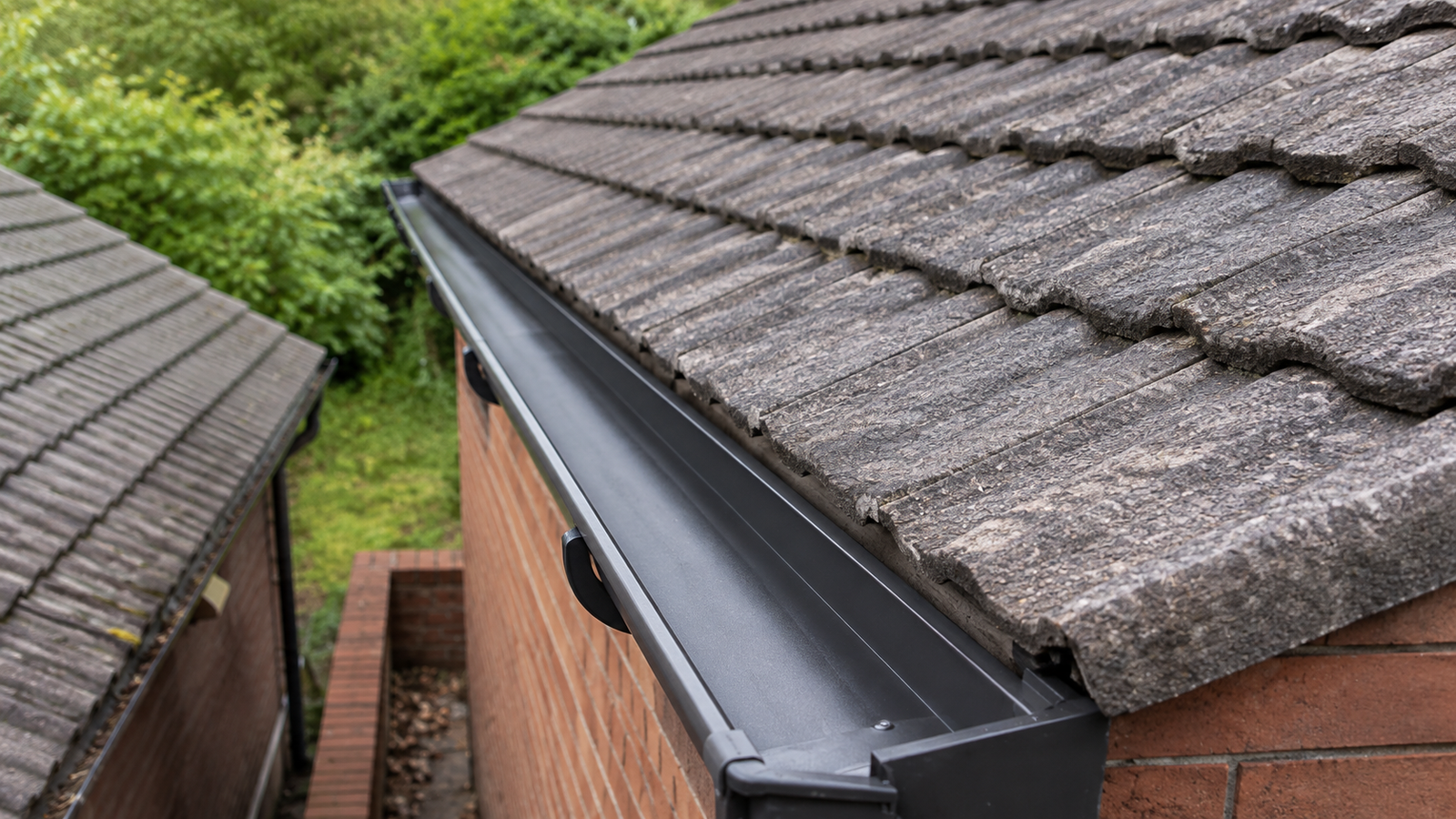
Throughout the job, our team worked from the roof surface itself using appropriate access and safety equipment for a large flat commercial roof of this kind, moving systematically along the gutter run rather than working in isolated sections — necessary given the scale of the building and the length of the affected gutter.
Twenty Buckets of Evidence
The material extracted from this single gutter run filled more than twenty buckets — compacted soil-like silt, decomposed organic matter, root balls from the established grass and wheat growth, and standing water and sludge from the sections without visible plant growth.
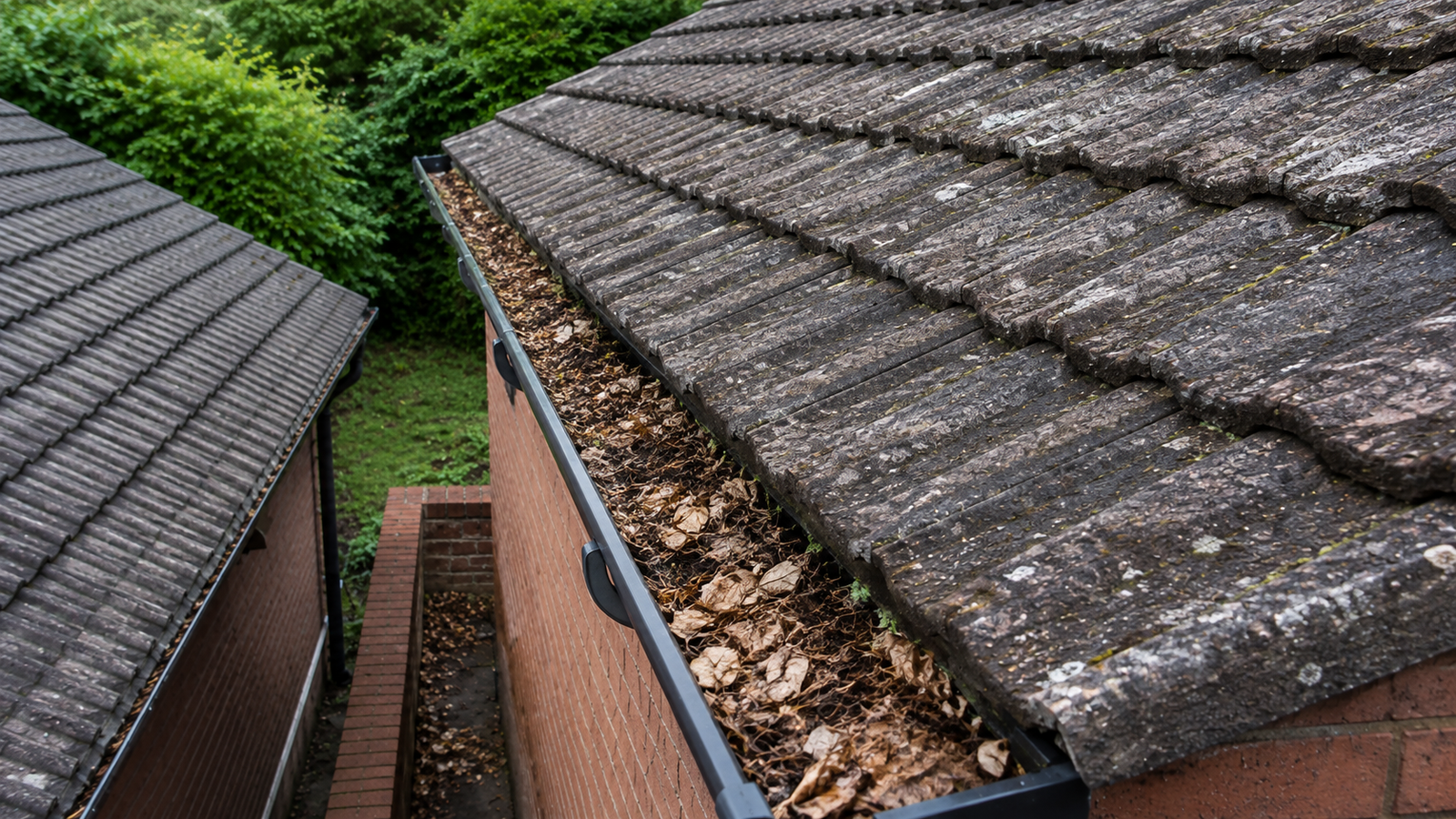
That volume of material is worth pausing on. Twenty-plus buckets of compacted organic debris did not accumulate in one wet season, or even two. It represents years of continuous, unaddressed build-up — every season adding another layer that nobody removed, until the channel reached a state where it was actively supporting plant life rather than draining rainwater.
For context, a well-maintained box gutter on a comparable commercial building, cleared on a routine schedule, should never approach anything close to this volume of accumulated material. Routine maintenance removes debris while it is still loose surface material — leaves, dust, light seed matter — long before it has the opportunity to compact into a growing medium.
What This Level of Neglect Costs a Business
The visible material — the grass, the silt, the standing water — is only part of the story. The real cost of years of unaddressed gutter neglect on a commercial building shows up in the components the gutter was supposed to be protecting.
Structural load on the gutter and its fixings. Twenty-plus buckets of waterlogged silt and root matter represents genuine, sustained weight on a gutter system and its supporting brackets — weight the system was never designed to carry. Over years, this accelerates wear on fixings and increases the risk of sagging or structural failure in the gutter itself.
Water ingress risk. A box gutter holding standing water rather than draining it is a box gutter at meaningfully higher risk of overflow, backing up, and finding a route into the roof structure below — insulation, roof deck, and eventually the building interior. On a distribution warehouse, water damage to stock, equipment, or racking represents a significantly larger cost than any gutter maintenance programme.
Compromised drainage capacity during heavy rainfall. A gutter channel with several inches of compacted silt across its floor has correspondingly reduced capacity to handle the rainfall volumes it was designed for. During a serious downpour, a gutter in this condition is far more likely to overflow than a clear one — precisely when the building needs its drainage system working at full capacity.
Pest and vegetation risk to the wider roof. Established plant growth in a gutter channel doesn't stay contained. Root systems can work into gutter joints and fixings over time, and seed dispersal from mature grass and wheat growth in a gutter creates an ongoing source of further vegetation establishing elsewhere on the roof.
None of this is inevitable. All of it is preventable with a routine commercial gutter maintenance schedule — the kind that would have addressed this gutter's condition years before it reached the state we found it in.
Commercial Box Gutter Maintenance: What Warehouse Operators Need to Know
Large commercial and warehouse buildings with box gutter systems have specific maintenance needs that differ from standard residential gutters, and this job is a clear illustration of what happens when those needs go unmet.
Box gutters need more frequent attention than pitched roof gutters. The flat-bottomed design that makes box gutters efficient at handling high water volumes also means debris settles and compacts rather than washing through, as it might in a steeper-pitched gutter. Left unaddressed, that debris builds progressively rather than clearing itself.
Rural and semi-rural sites face elevated risk. Distribution and logistics sites positioned near farmland, verges, or open countryside — as this site was — face a higher airborne seed load than urban buildings, making unmaintained box gutters more likely to develop the kind of vegetation growth found on this job.
A proper maintenance schedule prevents this entirely. For a large commercial box gutter system, an annual or twice-yearly professional clear removes debris while it is still loose surface material, long before it has the chance to compact into a growing medium capable of supporting plant life. The difference in cost between routine maintenance and a job of this scale is considerable — this single clear required specialist manual extraction, extended time on site, and disposal of a volume of material that routine maintenance would never allow to accumulate.
Documentation matters for facilities management. A job of this nature — with before and after photographic evidence — provides facilities managers and building owners with a clear record for maintenance planning, budget justification, and building condition history going forward.
BOOK COMMERCIAL GUTTER CLEARING
Restricted access, hazardous locations, high buildings — full before and after documentation on every job.