
Not every tree drops autumn leaves in the same way, and the differences matter far more than most homeowners realise when it comes to how hard a specific property's gutters actually get hit during the autumn season. A property beneath a mature oak experiences a genuinely different severity of autumn gutter impact than a comparably sized property beneath a birch or a cherry tree, and the difference isn't marginal — it's the difference between a gutter that manages a moderate autumn deposit reasonably well and one that faces a genuinely severe blockage risk requiring urgent attention.
This article ranks the tree species most commonly found across Birmingham residential streets specifically by their autumn leaf fall severity — measuring volume, leaf density, decomposition speed, and timing concentration — from the species that genuinely hit gutters hardest through to those with a comparatively modest autumn impact. If you know which species overhang or stand near your property, this ranking tells you exactly how seriously your specific autumn gutter risk should be taken, and what that risk actually looks like in practical terms.
📞 WOW Gutters Ltd — Birmingham's gutter cleaning specialists
07421 433910 · support@wowgutters.co.uk
What Actually Determines Autumn Gutter Impact Severity
Before ranking specific species, it's worth being clear about what genuinely determines how severely a given tree species affects gutters during autumn, because "hits gutters hardest" isn't a single, simple measure — it's a combination of several distinct factors that together determine the actual practical severity a property owner experiences.
Total leaf volume per tree matters, but not in isolation — a mature specimen of any species produces more total leaf mass than a younger one, meaning tree maturity and size genuinely affects severity independent of species alone. Leaf size and physical density matters considerably, because larger, denser leaves occupy more physical volume within a gutter channel per individual leaf than smaller, lighter ones, meaning species with large leaves can produce a severe blockage from a comparatively smaller leaf count than species with small, light leaves would require to produce equivalent severity. Decomposition speed matters genuinely significantly, because species whose leaves break down quickly into a dense, compacted slurry create a considerably more severe downpipe blockage risk than species whose leaves remain largely intact for longer, even at equivalent leaf volume, as covered in detail in our guide to hidden gutter damage that's easier to spot in summer. Timing concentration matters too — species that drop the substantial majority of their leaves within a short, concentrated window create a more severe short-term impact than species whose leaf fall spreads more gradually across a longer period, even at equivalent total annual volume.
Combining these four factors — volume, density, decomposition speed, and timing concentration — produces the genuine severity ranking that follows, rather than a simpler ranking based purely on total leaf volume alone, which would miss important practical differences between species that drop similar total leaf mass but in genuinely different ways that produce meaningfully different practical consequences for a property's gutter system.
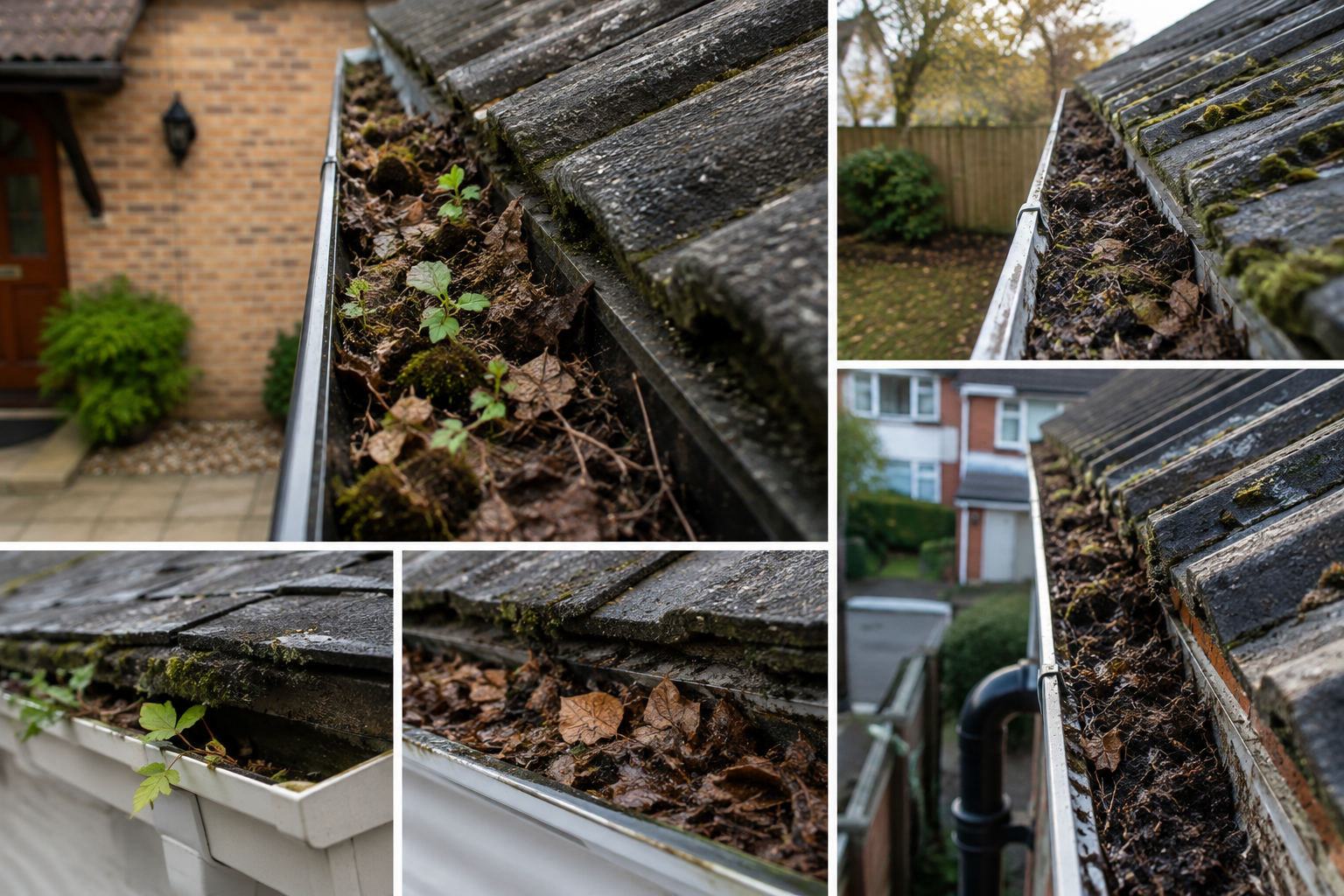
The Severity Ranking: Heaviest Impact to Lightest
Based on the combination of factors described above, here is the genuine severity ranking of tree species commonly found across Birmingham residential streets, from those that hit gutters hardest during autumn through to those with a comparatively modest impact.
Tier one — severe impact: Oak, Sycamore, Lime
Tier two — significant impact: Ash, Horse Chestnut
Tier three — moderate impact: Beech, Birch
Tier four — lighter impact: Cherry, ornamental and smaller garden species
Each of these species is covered in detail below, explaining specifically why it sits at its particular severity level and what that means practically for a property affected by it.
Oak: The Heaviest Sustained Impact Over the Longest Period
Oak trees, common across the more established, mature streets of Sutton Coldfield and parts of Solihull where larger, older properties with substantial garden trees are more prevalent, produce genuinely the heaviest sustained autumn gutter impact of any species commonly found across Birmingham, and the reason isn't simply total leaf volume alone.
Oak leaves are moderately large and hold their shape reasonably well after falling, meaning individual leaves occupy meaningful physical volume within a gutter channel. But the genuinely defining characteristic that makes oak the heaviest severity ranking is timing — oak trees hold their leaves considerably longer into the autumn and winter calendar than any other common species discussed in this article, with some mature oak specimens not completing their leaf fall entirely until December, extending the autumn gutter risk period considerably beyond what most homeowners associate with a standard autumn season. This extended timing, covered in detail in our guide to getting gutters ready before Birmingham's autumn leaves arrive, means oak-adjacent properties face genuine risk of accumulation continuing well past the point most homeowners have concluded their autumn maintenance is complete, catching them out with a second, unexpected wave of leaf fall considerably later than anticipated.
Properties near mature oak genuinely need their final autumn gutter visit scheduled meaningfully later than the standard October timing most generic advice suggests — often into late November or even early December — to properly capture this extended, delayed leaf fall pattern that no other common Birmingham species produces to the same degree.
Sycamore: Highest Combined Volume Across Two Separate Seasons
Sycamore trees, abundant across Edgbaston, Harborne, Moseley, and Bournville, earn their place in the severe impact tier not through any single overwhelming characteristic but through the sheer combined volume of debris they produce across two genuinely separate seasonal events, as detailed extensively in our companion guide on how tree cover changes your gutter cleaning schedule across Birmingham.
The winged seed cases falling from late spring through early summer represent a substantial debris volume in their own right, well before the actual autumn leaves even begin falling. When the autumn leaf drop then follows in October and November, it lands directly on top of whatever seed case residue remains from the earlier summer deposit, creating a genuinely severe combined accumulation that considerably exceeds what either individual event would produce in isolation. A sycamore-adjacent property assessing only the autumn leaf volume in isolation, without accounting for the earlier summer seed case contribution, genuinely underestimates the tree's true overall severity ranking, which only becomes apparent when the full annual picture, rather than the autumn portion alone, is properly considered.
Lime: Dense, Sticky, and Genuinely Difficult to Clear
Lime trees, a genuine fixture of Birmingham's Victorian and Edwardian residential streets across Bournville, Selly Oak, and Kings Norton, earn their severe impact ranking through a combination of high leaf volume and a genuinely distinct physical characteristic that most other species don't share: the sticky honeydew secretion produced throughout the summer months that coats surfaces beneath the canopy, including the leaves that subsequently fall in autumn.
This honeydew coating means lime leaf debris adheres considerably more tenaciously to gutter channel surfaces and to itself than equivalent dry leaf matter from other species, requiring more thorough, deliberate extraction to remove completely rather than a straightforward surface clearance pass. Properties near mature lime trees frequently find that debris removal takes genuinely longer and requires more thorough vacuum extraction than an equivalent leaf volume from a non-honeydew-producing species would demand, placing lime firmly in the severe impact tier despite leaf volume alone potentially being comparable to some moderate-tier species — it's specifically the adhesion characteristic that elevates lime's genuine practical severity ranking.
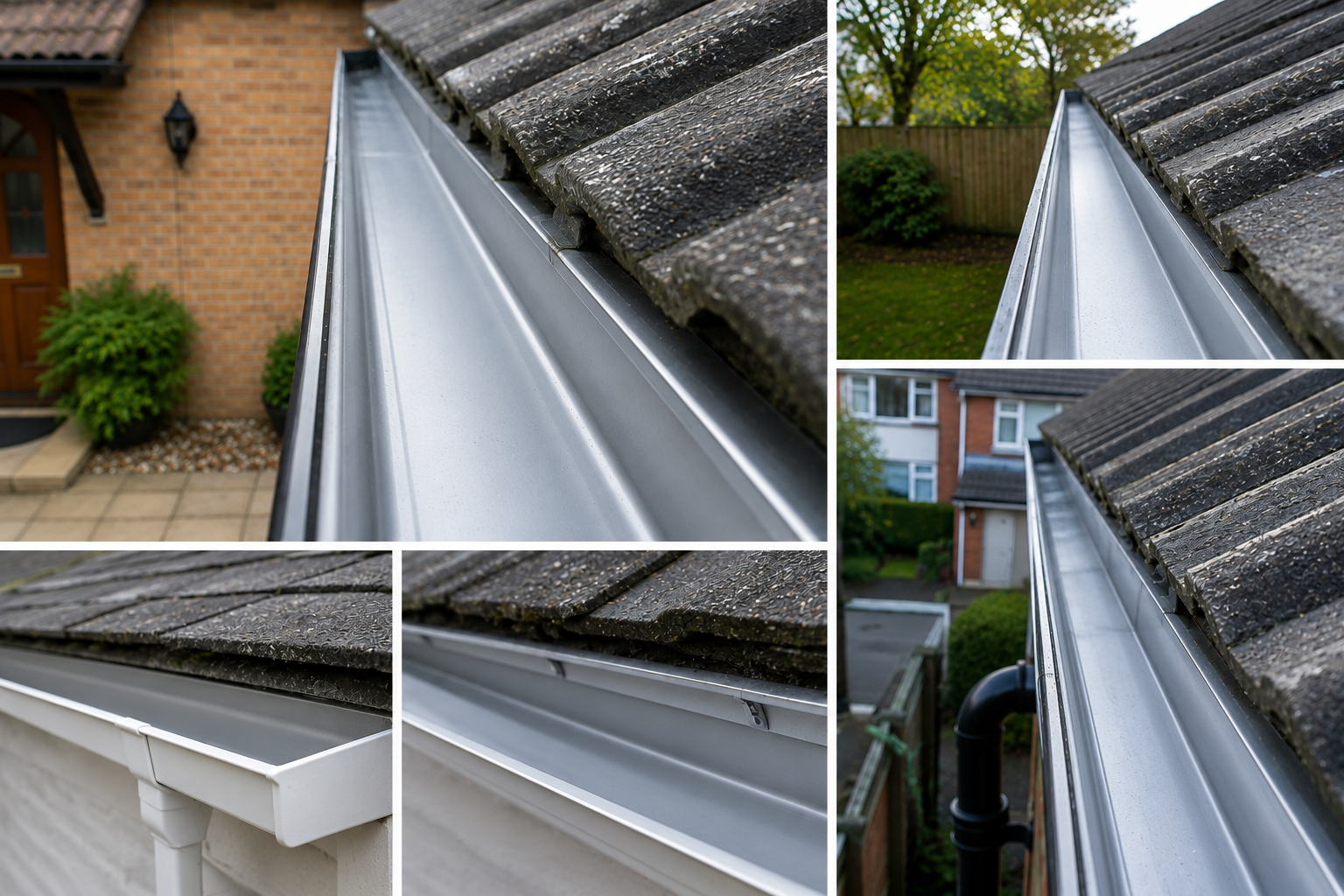
Ash: Fast, Concentrated, and Structurally Deceptive
Ash trees, present across various Birmingham residential streets in meaningful numbers, drop their leaves in a relatively concentrated, late-season timing window broadly similar to oak, but the specific characteristic that earns ash its significant impact ranking is decomposition speed rather than volume or timing alone.
Ash leaves break down considerably faster in wet conditions than most comparable species, forming a dense, dark, slurry-like material rather than remaining as recognisable, largely intact whole leaves for an extended period. This rapid decomposition creates a genuinely deceptive risk profile — a gutter channel affected by ash leaf fall can appear, on casual visual inspection, to be carrying a comparatively modest debris volume, while the actual downpipe blockage risk beneath that visible surface layer is considerably more severe than the visible volume alone would suggest, given how effectively this decomposed slurry material seals downpipe inlets compared with intact leaf matter from slower-decomposing species. This deceptive characteristic, covered in more detail in our dedicated guide on why downpipes keep blocking again despite repeated clearing attempts, is precisely why ash-adjacent properties warrant particular attention to downpipe flow testing specifically, rather than relying on visual gutter channel assessment alone to judge the genuine severity of risk present.
Horse Chestnut: Large Leaves, Fast Concentrated Drop
Horse chestnut trees, present across a meaningful number of Birmingham's older, more established residential streets and parks-adjacent properties, produce genuinely large individual leaves — among the largest of any common UK garden and street tree species — that drop in a comparatively fast, concentrated autumn window rather than the more gradual pattern some other species exhibit.
This combination of large individual leaf size and concentrated timing means horse chestnut can produce a genuinely severe short-term gutter blockage risk during its specific, relatively narrow drop window, even though the tree's overall annual leaf volume and extended-season risk profile don't match oak's genuinely longer sustained impact period. Properties near mature horse chestnut specifically benefit from timing a dedicated clearing visit to coincide reasonably closely with the tree's typical drop window, given how concentrated and severe the short-term accumulation can be compared with species whose leaf fall spreads more gradually across a longer autumn period.
Beech: Moderate Volume, Moderate Timing
Beech trees, found across various established Birmingham residential areas though generally less numerous than oak, sycamore, or lime in terms of overall street tree presence, produce a genuinely moderate autumn impact that sits comfortably in the middle severity tier — meaningful enough to warrant proper attention but without the extreme characteristics that elevate oak, sycamore, or lime into the severe category.
Beech leaves are moderately sized, drop within a reasonably standard autumn timing window without the extended late-season pattern that characterises oak, and don't exhibit the sticky adhesion characteristic that makes lime debris particularly difficult to extract. Properties near mature beech generally find that a standard, correctly timed autumn clearing visit, following the general guidance covered throughout our Birmingham gutter maintenance calendar, adequately addresses the debris this species produces without requiring the additional, more targeted attention that the severe-tier species genuinely warrant.
Birch: Lighter Volume, Underestimated Silt Contribution
Birch trees, present across various Birmingham residential streets though generally less dominant than the severe-tier species in terms of sheer numbers, produce fine catkins alongside relatively small individual leaves that break down considerably faster than the debris from most other species covered in this ranking.
This combination places birch in the moderate tier for immediate visible severity — the individual debris pieces are genuinely small and don't create the kind of obvious, visually dramatic gutter filling that larger-leaved severe-tier species produce. However, this rapid breakdown characteristic means birch-adjacent properties contribute disproportionately to the hidden silt layer accumulation described extensively in our guide to hidden gutter damage that's easier to spot in summer — the compacted base layer that reduces effective gutter capacity without producing any visible overflow symptom until that reduced capacity is finally tested by genuinely heavy rainfall. This means birch's true severity is genuinely underestimated by visual assessment alone, warranting particular attention to base-layer silt clearance during any maintenance visit on a birch-adjacent property, even where the visible debris volume appears comparatively modest.
Cherry: Early, Light, and Easily Underestimated
Ornamental and wild cherry trees, increasingly common across Birmingham's newer residential developments, sit at the lighter end of the severity ranking in terms of overall autumn volume, but earn a specific mention regarding timing that genuinely matters for accurate maintenance planning.
Cherry leaves are physically smaller than leaves from severe-tier species like oak or sycamore, and drop earlier in the season — often beginning as early as September, well before the more standard October onset most homeowners associate with the start of autumn leaf fall proper. While the overall severity is genuinely modest compared with the heavier-tier species, this early timing means a homeowner who schedules their autumn clearing visit based on generic mid-to-late October guidance, appropriate for most standard species, can miss the earlier cherry contribution that has already fallen and begun accumulating before that later visit even takes place.

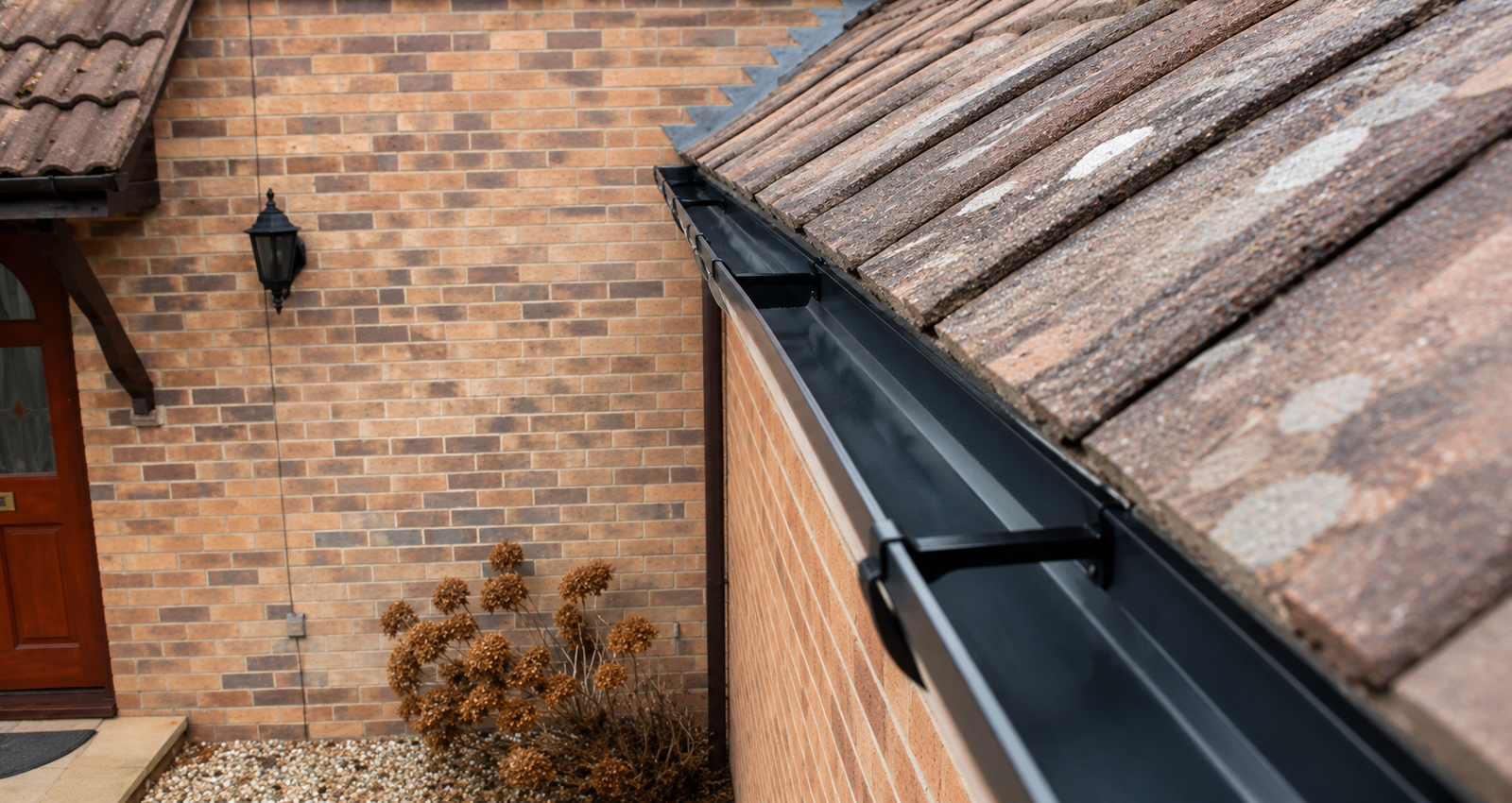
Which Birmingham Areas Face the Most Severe Combined Risk
While individual tree species severity applies universally regardless of specific location, certain Birmingham areas carry a particularly high concentration of the severe and significant tier species discussed throughout this ranking, making autumn gutter risk genuinely more pronounced in these specific locations than the general citywide picture would suggest.
Streets across Sutton Coldfield and parts of Solihull featuring mature oak alongside other established garden trees face the extended, late-season risk period that oak's genuinely unique timing characteristic creates. Areas including Edgbaston, Harborne, Moseley, and Bournville, with substantial sycamore and lime presence, face the combined severe-tier risk from both species' distinct high-severity characteristics — sycamore's two-season combined volume and lime's sticky adhesion difficulty. Properties across these specific areas genuinely benefit from the kind of tailored, species-aware maintenance planning covered throughout our tree cover scheduling guidance considerably more than properties in areas with lighter, more moderate-tier tree presence.
What Severity Ranking Actually Means for Your Maintenance Plan
Understanding where your specific property's nearby tree species sit within this severity ranking genuinely informs a more accurate, proportional maintenance approach than applying identical attention regardless of what's actually growing nearby.
Properties near severe-tier species — oak, sycamore, or lime — genuinely warrant the more intensive, multi-visit approach detailed throughout our late summer gutter maintenance guidance and our broader autumn preparation advice, recognising that these species produce genuinely elevated risk requiring correspondingly elevated attention. Properties near significant-tier species — ash or horse chestnut — benefit from the specific targeted considerations covered for each species above, whether that's particular downpipe attention for ash or precisely timed clearing for horse chestnut's concentrated drop window. Properties near moderate or lighter-tier species can generally rely on the standard, correctly timed autumn approach covered throughout our general seasonal guidance without requiring the additional, more intensive attention the higher-tier species genuinely demand.
GET YOUR SPECIFIC TREE SEVERITY ASSESSED
We take your property's surrounding tree species into account on every visit — recommending timing and frequency that match your actual autumn risk. Free quote, no hidden charges.