
Real Wolverhampton Job: Before & After
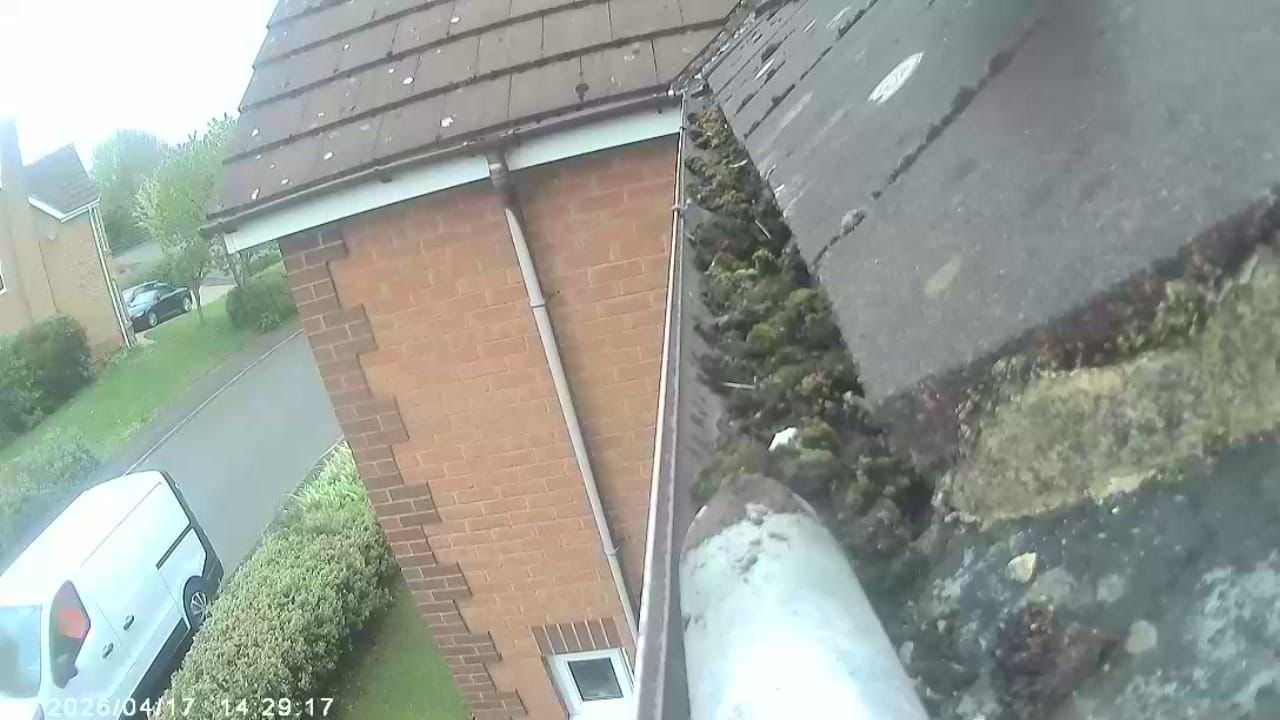
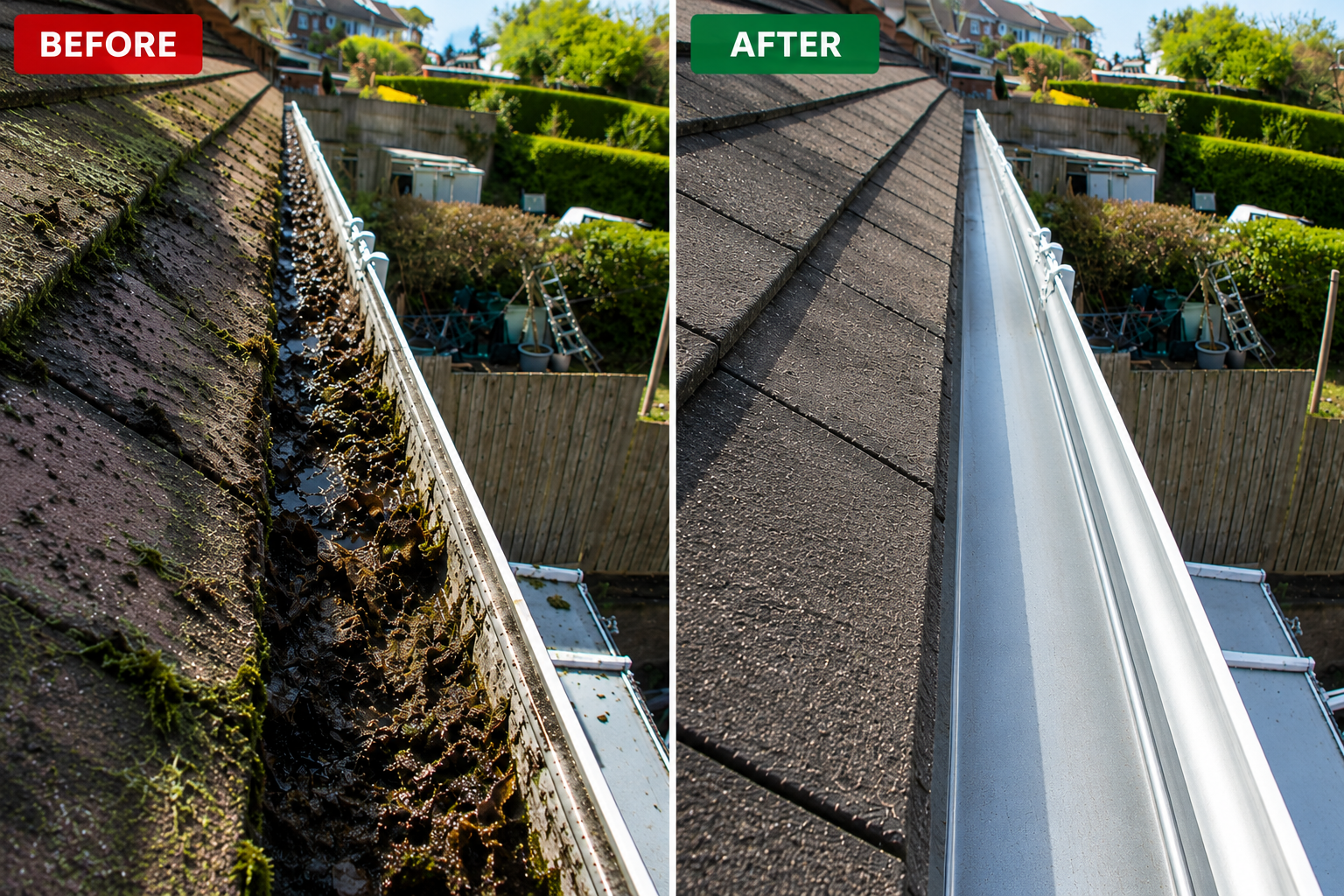
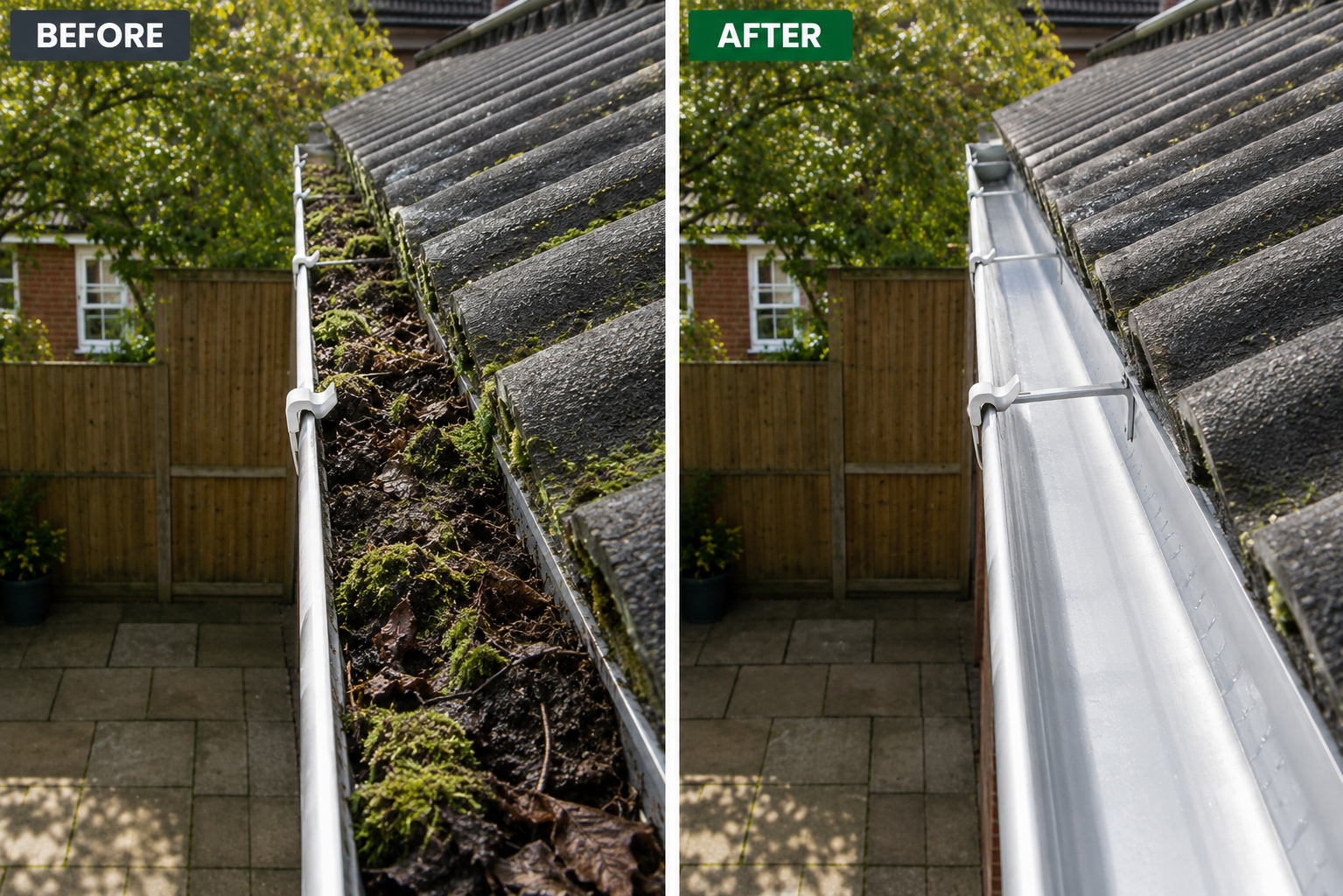
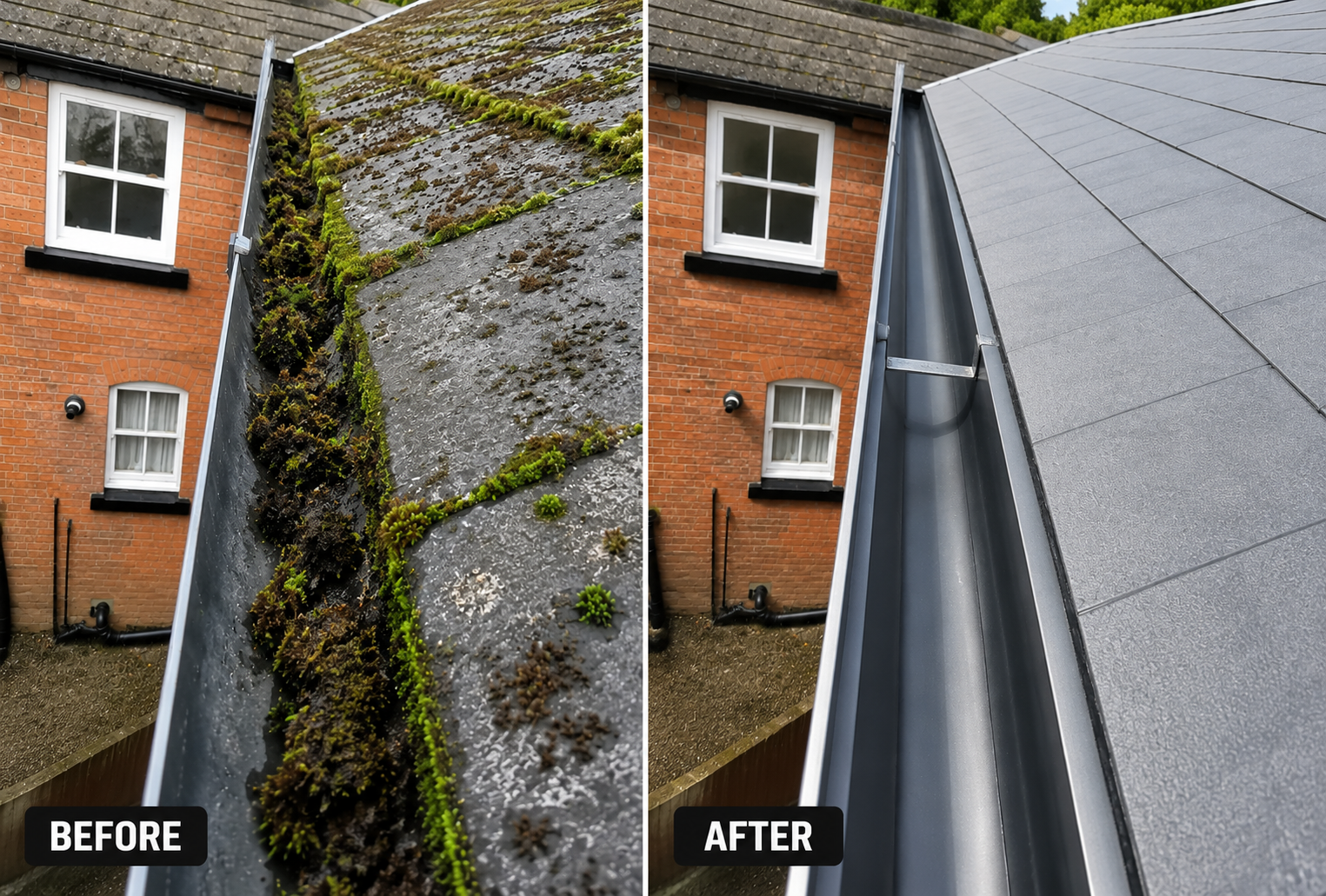
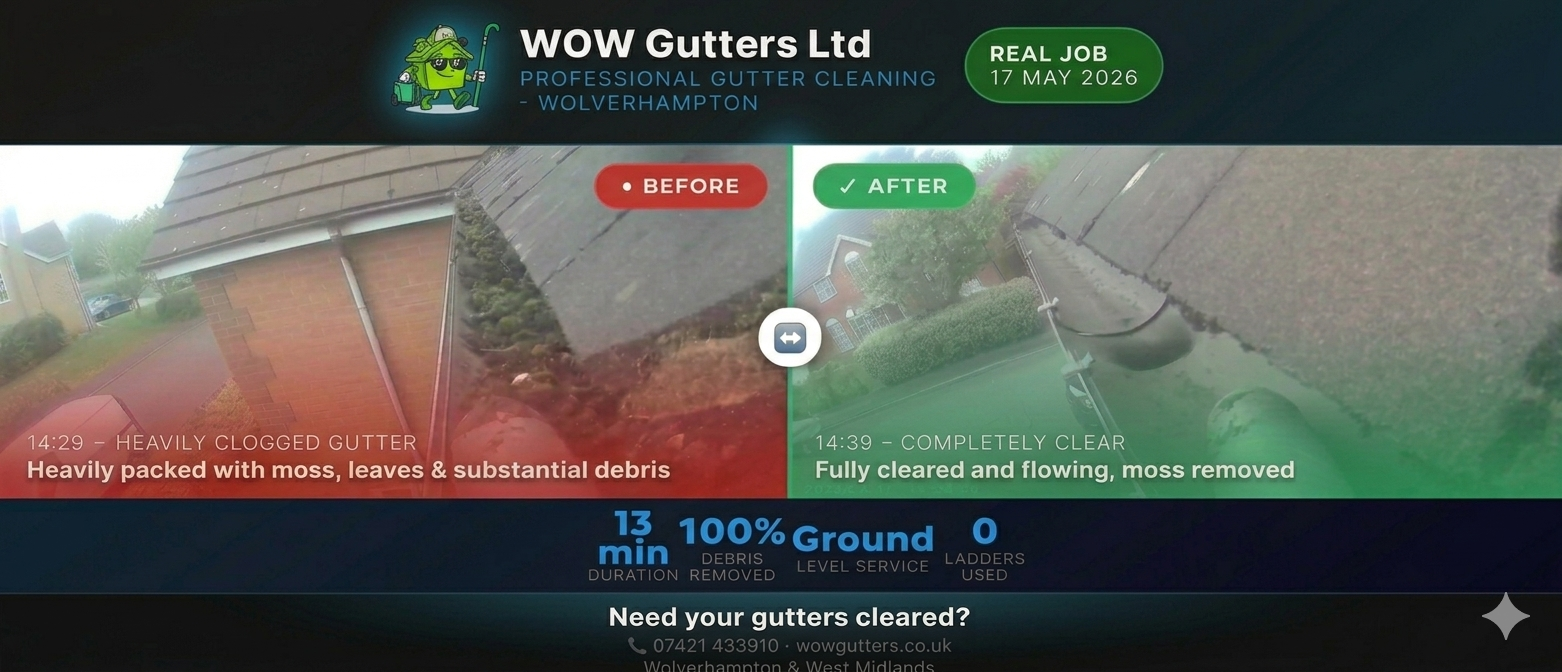
This is a real WOW Gutters Ltd job completed in Wolverhampton. The gutter was completely blocked with multiple seasons of accumulated debris — leaves from mature oak and sycamore trees, compacted moss, and a thick layer of organic silt.
The blockage had been building for at least two years, causing water to overflow during every rainfall and run down the external walls. You can see the dark staining on the fascia board where water has been running back behind the gutter bracket.
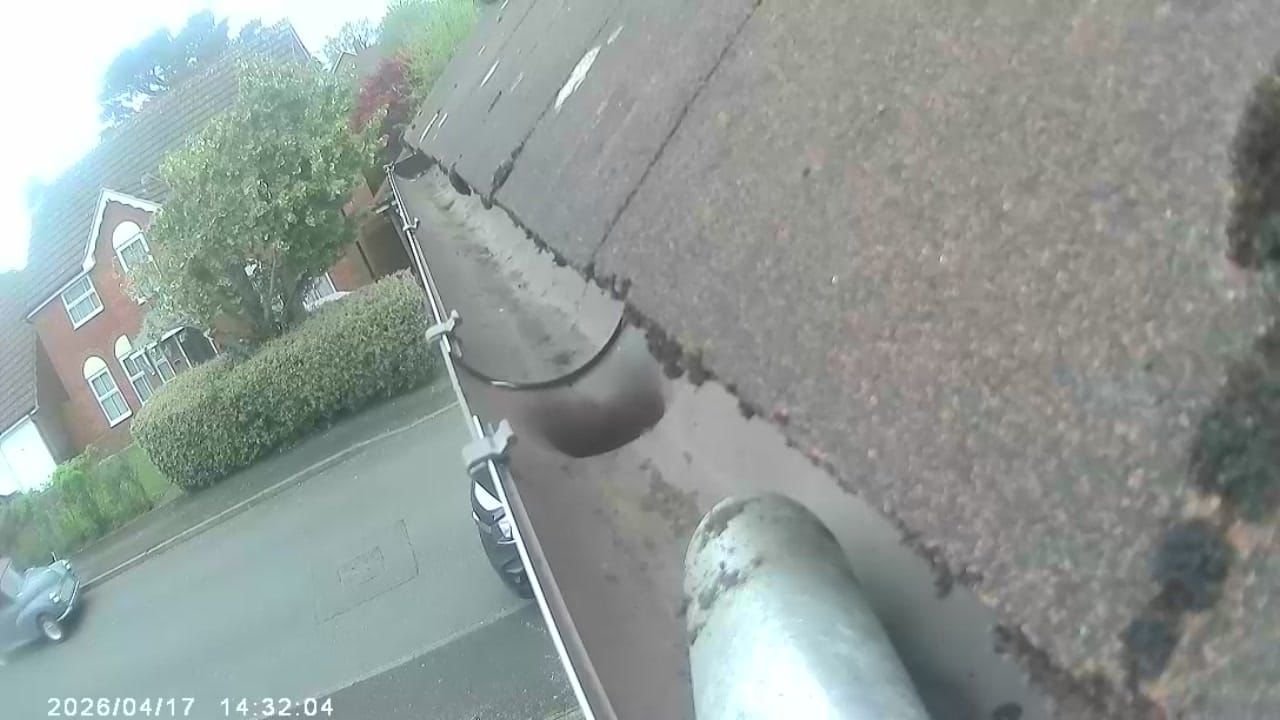
The after photograph shows the same gutter fully cleared — down to the plastic channel — with the downpipe tested and flowing freely. Our team completed this job in 28 minutes from ground level, with zero ladders used.
No ladders. No scaffolding. No mess left behind.
Why Wolverhampton Gutters Need Regular Cleaning
Wolverhampton's mix of Victorian terraces, post-war semi-detached housing, and modern developments all share one thing in common: gutters that need regular professional cleaning to function properly.
The city's mature tree coverage — particularly in areas like Tettenhall, Penn, Compton, and around West Park — combined with the region's rainfall patterns, creates ideal conditions for gutter blockages to form quickly and cause serious damage if left untreated.
What Causes Gutter Blockages in Wolverhampton?
Autumn Leaf Fall
Wolverhampton's established residential areas are lined with mature oak, sycamore, ash, and lime trees. Every autumn, these trees shed thousands of leaves that land directly in gutters or are blown onto roofs and washed into the channel during rainfall.
Properties in Tettenhall, Penn, Compton, Finchfield, and around West Park are particularly affected due to heavy tree canopy coverage. A single mature oak can shed enough leaves to completely block a standard residential gutter system in one season.
Sycamore Helicopter Seeds
Sycamore trees are common throughout Wolverhampton, and their distinctive winged seeds (helicopter seeds or samaras) are one of the most persistent causes of gutter blockages across the West Midlands. Learn more about how sycamore seeds block gutters.
Unlike leaves, which decompose relatively quickly, sycamore seeds interlock and compact inside the gutter channel, forming a dense, water-resistant mat. This mat traps subsequent debris — moss, silt, and more leaves — creating a blockage that gets worse with every rainfall.
Sycamores drop seeds twice a year: once in autumn and again in spring. Properties near mature sycamore trees often need cleaning twice annually rather than just once.
Moss from Roof Tiles
Moss grows naturally on roof tiles, particularly on north-facing or shaded sections of the roof. Every time it rains, small fragments of moss wash off the tiles and into the gutter channel below.
Over time, this moss accumulates inside the gutter, forming a thick, spongy mat that holds water long after rainfall has stopped. The sustained moisture accelerates the growth of more moss and algae, compounding the problem.
Wolverhampton properties with slate or concrete tile roofs — common across the city's Victorian and Edwardian housing stock — are particularly prone to moss accumulation.
Bird Nesting Material
Gutters filled with leaves and organic debris are attractive nesting sites for birds, particularly sparrows and starlings. Birds bring additional nesting material — twigs, grass, feathers — which compounds the existing blockage.
Bird droppings also accumulate inside the gutter, creating additional staining and accelerating the corrosion of metal guttering.
Silt and Fine Debris
Even properties without nearby trees are not immune to gutter blockages. Wind-blown dust, roof tile grit, and atmospheric pollution all settle on the roof and wash into the gutter during rainfall.
Over months and years, this fine material accumulates as a layer of compacted silt in the bottom of the gutter channel. This silt reduces the effective depth of the gutter, meaning it fills and overflows more quickly during heavy rain.
10 Warning Signs Your Gutters Are Blocked
1. Water Overflowing Over the Gutter Edge
The most visible sign of a blockage. During or immediately after rainfall, you will see water cascading over the front or side of the gutter rather than flowing towards the downpipe.
This happens when debris has built up to the point where it is blocking the natural flow of water along the channel. The gutter fills up and spills over the nearest edge.
What to watch for: Watch your gutterline during a rain shower. Any waterfall effect from the gutter edge — rather than flow at the downpipe — confirms a blockage.
2. Green or Black Staining on External Walls
When a blocked gutter overflows, rainwater runs continuously down the same section of brickwork every time it rains. This water carries algae, moss spores, and organic debris from inside the gutter, creating dark vertical streaks — green, black, or brown — below the gutterline.
On Wolverhampton's red brick Victorian and Edwardian properties (common in Tettenhall, Penn, Compton, and the city centre), this staining is highly visible and difficult to remove once it has penetrated the mortar joints.
What to watch for: Vertical streaking on external walls directly below the gutterline or downpipe connections. Staining that appears darker immediately after rainfall confirms active overflow.
3. Damp Patches or Mould Inside Upstairs Rooms
Internal damp in upper-floor rooms — particularly near external walls — is frequently caused by overflowing gutters saturating the brickwork over months and years.
The damp travels through the wall and appears as dark patches, mould, or tide marks on internal plaster. Many Wolverhampton homeowners spend money on internal damp treatments without ever addressing the external cause — the blocked gutter.
What to watch for: Mould or damp patches on upper-floor walls near external corners, below window sills, or on ceilings near the eaves. Musty smell in the loft space.
4. Plants or Weeds Growing From the Gutterline
If you can see greenery — grass, moss, weeds, or even small saplings — sprouting from your gutters, there is a substantial build-up of organic material inside the channel.
Seeds blown by wind land in accumulated leaf mulch, germinate, and take root inside the gutter. This is a sign of long-term neglect — the blockage has likely been forming for more than one season.
Plant roots can crack or dislodge plastic guttering sections from the inside, turning what would have been a simple clean into a repair job.
What to watch for: Any visible greenery along the gutterline, especially in spring and summer when growth is fastest.
5. Sagging Gutters Pulling Away From the Fascia
Gutters are designed to carry moving water — not to hold the sustained weight of wet leaves, compacted silt, standing water, and debris.
When a blockage causes pooling inside the gutter, that additional weight puts sustained downward pressure on the brackets and the fascia board they are fixed to. The result is a gutter that visibly droops or pulls away from the roofline.
Left unattended, the fascia board itself can begin to rot — a repair that costs significantly more than a gutter clean.
What to watch for: Step back from your property and look at the gutterline from street level. Any visible dip, bow, or gap between the gutter edge and the fascia is a warning sign.
6. No Flow From the Downpipe During Rainfall
Your downpipe should flow clearly during and immediately after rainfall. If your gutters are visibly filling with water but little or nothing is coming out at the bottom of the downpipe, the downpipe itself is blocked — not just the gutter channel.
Downpipe blockages are frequently caused by debris washing down from the gutterline and compacting at the downpipe inlet or at a bend mid-pipe. In winter, water trapped inside a blocked downpipe can freeze, expand, and crack the pipe wall.
What to watch for: Watch the base of your downpipe outlet during rainfall. No flow, intermittent dripping, or water escaping from mid-pipe joints all indicate a downpipe blockage.
7. Ice Dams and Icicles in Winter
During cold snaps — which Wolverhampton experiences regularly between November and February — standing water inside a blocked gutter can freeze solid.
This creates an ice dam that prevents any subsequent rainfall from draining at all. Ice expands as it freezes, which can crack plastic guttering, dislodge joints, and bend metal brackets. When it thaws, the damage becomes visible.
What to watch for: Icicles hanging from the gutter edge during cold weather, or visible ice inside the gutter channel.
8. Staining on Fascias and Soffits
When gutters overflow, water does not just drip off the front edge. It also runs back behind the gutter bracket and onto the fascia board — the horizontal timber that the gutter is fixed to.
Sustained damp on the fascia causes paint to peel, timber to soften, and eventually the board to rot through. On Wolverhampton's older properties, fascia boards are often original timber that has never been replaced — making them particularly vulnerable to water damage.
What to watch for: Peeling paint on fascia boards, dark tide marks on soffits, visible softness or cracking in wooden fascia boards.
9. Birds or Pests Near Your Gutterline
Debris-filled gutters are attractive nesting sites for birds. A gutter full of leaves and organic material provides perfect nesting material and shelter.
Pest activity near the gutterline is a strong signal that a significant debris build-up is present inside. Nesting material compounds the blockage further, and bird droppings cause additional staining.
What to watch for: Birds regularly landing on or perching near your gutterline, especially in the spring nesting season (March to May). Chirping sounds from inside the guttering.
10. You Cannot Remember the Last Time Your Gutters Were Cleaned
If you cannot remember when your gutters were last professionally cleared — or if you have owned or managed the property for several years without a clean — it is almost certain that you have a build-up of debris that needs addressing.
Gutters in Wolverhampton should be cleaned at least once a year, ideally in late autumn after the bulk of leaf fall (November to December). Properties near trees should be cleaned twice a year — once in spring and once in autumn. Get an instant quote using our gutter cleaning cost calculator.
What Happens If You Leave a Blockage Untreated?
Blocked gutters are not just a cosmetic issue. Left untreated, they cause serious and expensive damage to your property:
Continuous Overflow and Wall Staining
Every time it rains, water that cannot drain through the blocked channel spills over the gutter lip and runs down the external wall. On brick and render properties, this creates vertical green and black streaking below the gutterline.
On limestone and painted surfaces, the staining penetrates the material itself and can be extremely difficult to remove without specialist cleaning.
Internal Damp
Water running continuously down the same section of wall — every rainfall, week after week — eventually saturates the brickwork. On solid-wall properties (common across Wolverhampton's Victorian and Edwardian housing stock), saturated outer walls transfer moisture to internal surfaces.
The result is damp patches and mould in upper rooms, often appearing near the ceiling line on external walls. Many homeowners spend hundreds of pounds on internal damp treatments without ever finding the cause on the outside.
Fascia Board Rot
When a gutter overflows, water runs back behind the gutter bracket and onto the fascia board. Sustained damp on the fascia causes the paint to peel, the timber to soften, and eventually the board to rot through.
A fascia board replacement costs significantly more than a gutter clean — typically —500 to —2,000+ depending on the size of the property and access requirements. Check our gutter cleaning prices to see how affordable preventive maintenance is.
Foundation Splash Damage
Water overflowing from ground-floor gutters and lower rooflines lands at the base of the wall, soaking into the ground around the foundations. Over time this can contribute to subsidence on certain soil types, and on older properties can saturate the base course of brickwork.
Gutter and Downpipe Damage
The sustained weight of wet debris, standing water, and established plant roots can crack plastic guttering, dislodge joints, and bend brackets. In winter, water trapped inside a blocked downpipe can freeze and crack the pipe from the inside.
What would have been a simple clean becomes a repair job — with costs running into hundreds of pounds.
How WOW Gutters Ltd Clears Blocked Gutters in Wolverhampton
WOW Gutters Ltd uses a professional ground-level vacuum system to clear gutters without ladders, scaffolding, or contact with your roof or fascia.
Our high-reach gutter vacuum equipment extends to four storeys and creates powerful suction that pulls debris — leaves, moss, compacted silt, weeds, and root material — out of the gutter channel completely from the ground below.
Our Process on Every Wolverhampton Job:
1. Ground Survey
We walk the full perimeter of the property and assess the gutterline before starting — identifying blockages, sagging sections, downpipe connections, and any visible damage.
2. Camera Inspection (Where Required)
Our pole-mounted camera lets us see inside the gutter channel before we start — so we know exactly what we are dealing with and can confirm the result after.
3. Vacuum Extraction
Powerful suction removes all debris from the gutter channel — leaves, moss, compacted organic material, weeds, and root systems. Debris is captured directly into our collection system, not dropped onto your garden or driveway.
4. Downpipe Inspection and Clearance
We check and clear every downpipe to confirm the complete drainage run is flowing freely — not just the gutter channel.
5. Before and After Photographs
Taken on every job and sent directly to you. You see what was there before, and what it looks like after.
6. Final Flow Check
We run water through the system to confirm free flow to every outlet before we leave.
No ladders. No scaffolding. No mess left behind.
Areas We Cover in Wolverhampton
WOW Gutters Ltd provides gutter cleaning across all WV postcodes, including:
- Tettenhall, Compton — WV6
- Penn, Merry Hill — WV4
- Finchfield, Castlecroft — WV3
- City Centre, Chapel Ash — WV1, WV2
- Whitmore Reans, Park Village — WV1
- Wednesfield, Heath Town — WV11, WV10
- Bilston, Bradley — WV14
- Codsall, Perton — WV8
- Wombourne, Trysull — WV5
- Bushbury, Oxley — WV10
Not sure if we cover your postcode? Call us on 07421 433910 or get a free quote online and we will confirm within the hour.
Book Gutter Cleaning in Wolverhampton Today
Same-day and next-day appointments are available across Wolverhampton and all surrounding WV postcodes.
- ? Same-day and next-day appointments across Wolverhampton
- ? Fully insured, professional local technicians
- ? Ground-level vacuum system — zero ladders
- ? Before and after photo evidence on every single job
- ? Complete water flow testing on all cleaning work
- ? Highly rated with verified Google reviews
?? Call us now: 07421 433910
?? Email: support@wowgutters.co.uk
?? Book online: wowgutters.co.uk/quote
Covering Wolverhampton, Dudley, Walsall, Cannock, Stafford, and all surrounding West Midlands and Staffordshire areas.
Frequently Asked Questions — Gutter Cleaning in Wolverhampton
Q: How often should gutters be cleaned in Wolverhampton?
A: At least once a year — ideally in late autumn (October to December) after the main leaf fall. Properties near heavy tree coverage, such as those in Tettenhall, Penn, Compton, and around West Park, should be cleaned twice a year — once in spring and once in autumn.
Q: How much does gutter cleaning cost in Wolverhampton?
A: WOW Gutters Ltd prices start from —50 for a bungalow, —75 for a semi-detached, and —95 for a detached property. Downpipe inspection is included. Use our cost calculator for an instant estimate.
Q: Do you use ladders?
A: No. We use a professional ground-level high-reach vacuum system. No ladders, no scaffolding, no contact with your roof tiles, fascia, or brickwork.
Q: Do you provide before and after photos?
A: Yes — on every job, without exception. We photograph the gutters before we start and after we finish, and send both images directly to you.
Q: Do you cover Tettenhall, Penn, Compton, and Wednesfield?
A: Yes. We cover all WV postcodes across Wolverhampton and the surrounding area, including Tettenhall, Penn, Compton, Finchfield, Wednesfield, Bilston, Codsall, Wombourne, and Bushbury.
Q: Do you test downpipes after cleaning?
A: Yes. All WOW Gutters Ltd cleaning work includes high-volume water flow testing on downpipes and gutters to ensure free, unrestricted drainage.
Q: Do you also repair gutters in Wolverhampton?
A: Yes. In addition to cleaning, we repair leaking joints, broken brackets, sagging sections, and cracked downpipes. All repair work comes with a complete water flow testing. View our gutter repairs service.