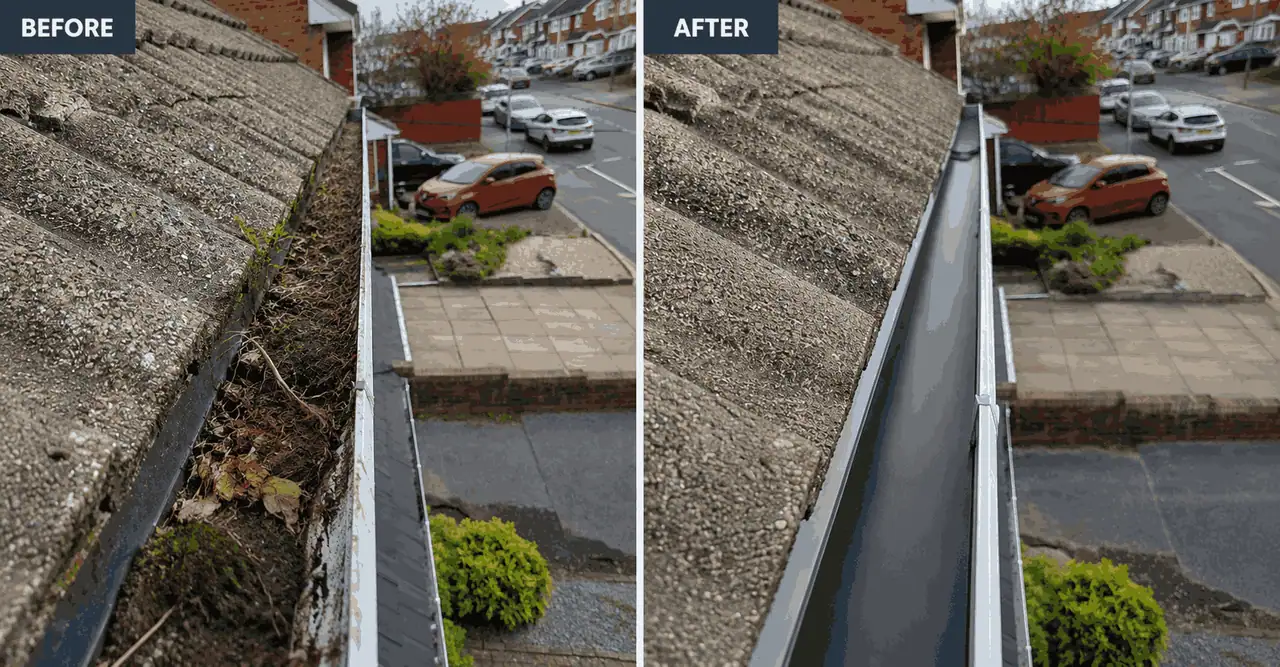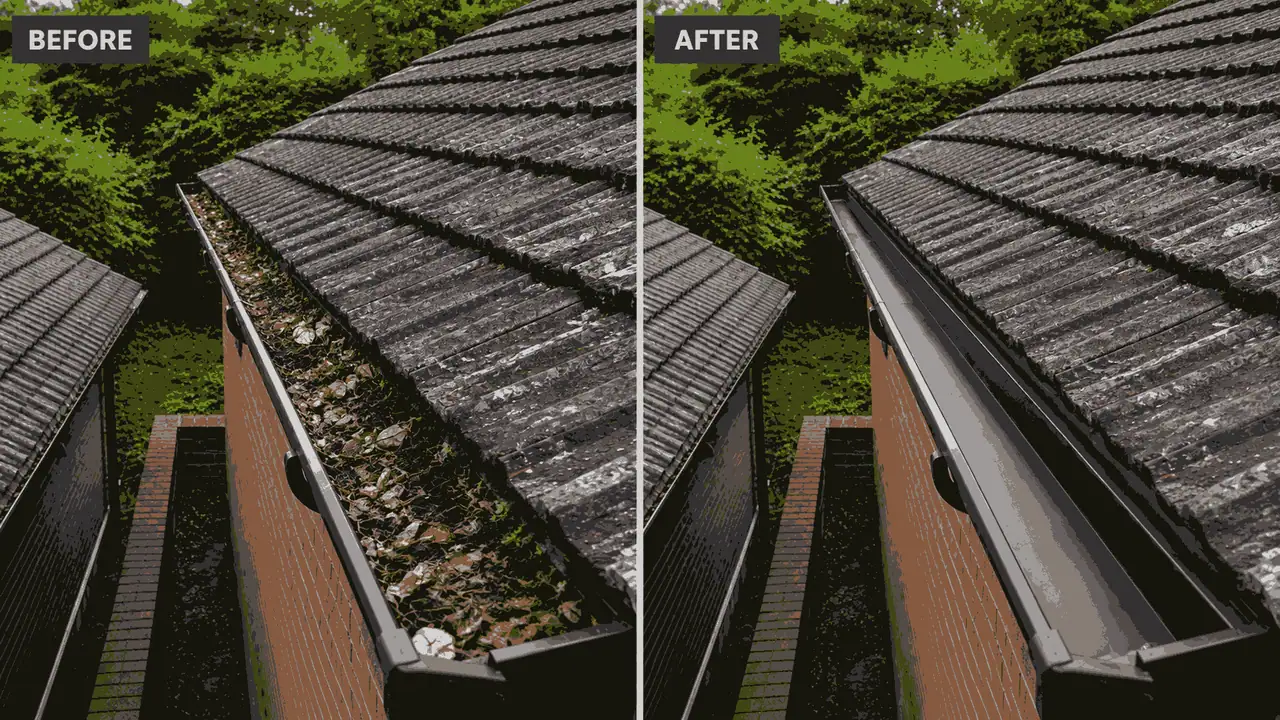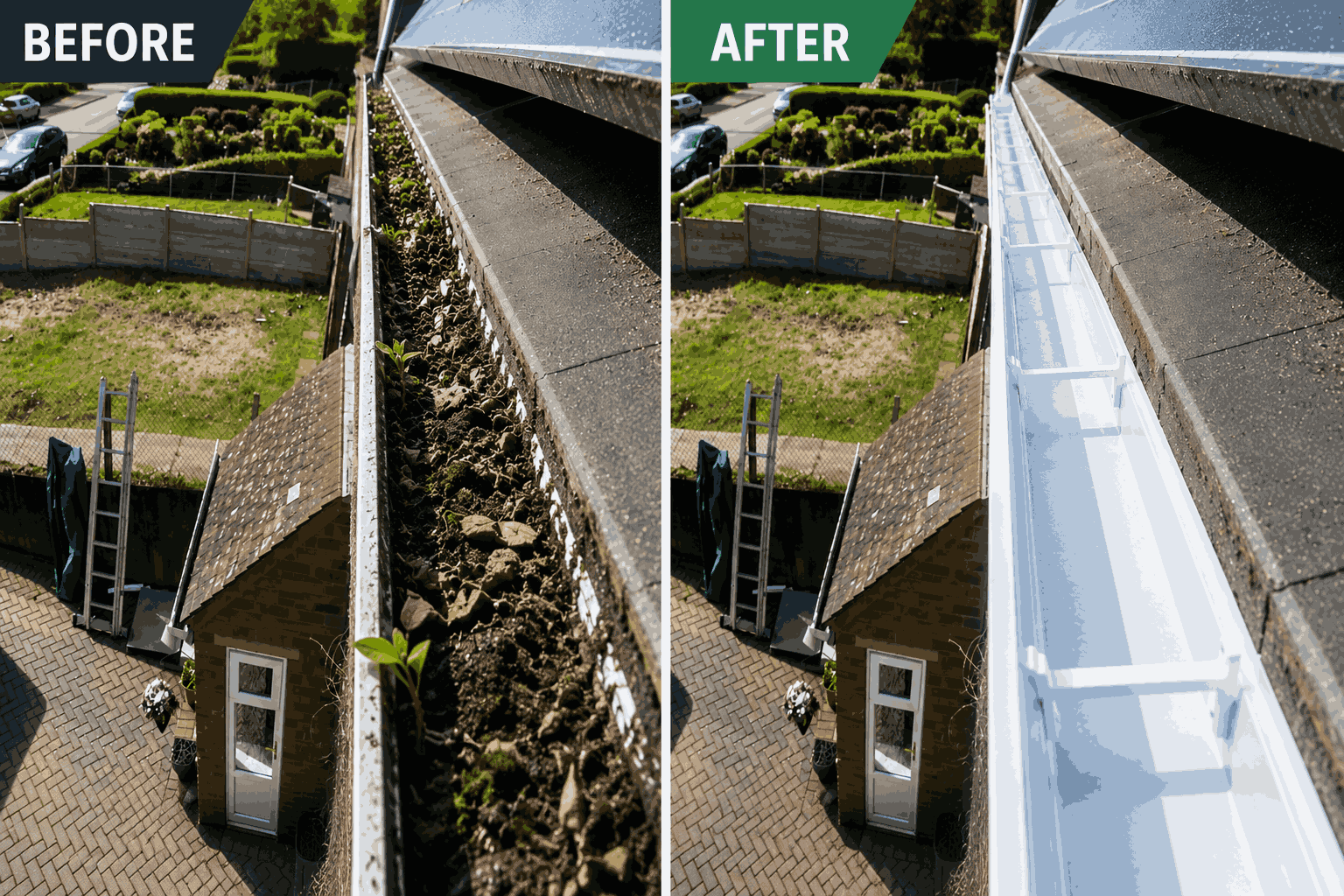

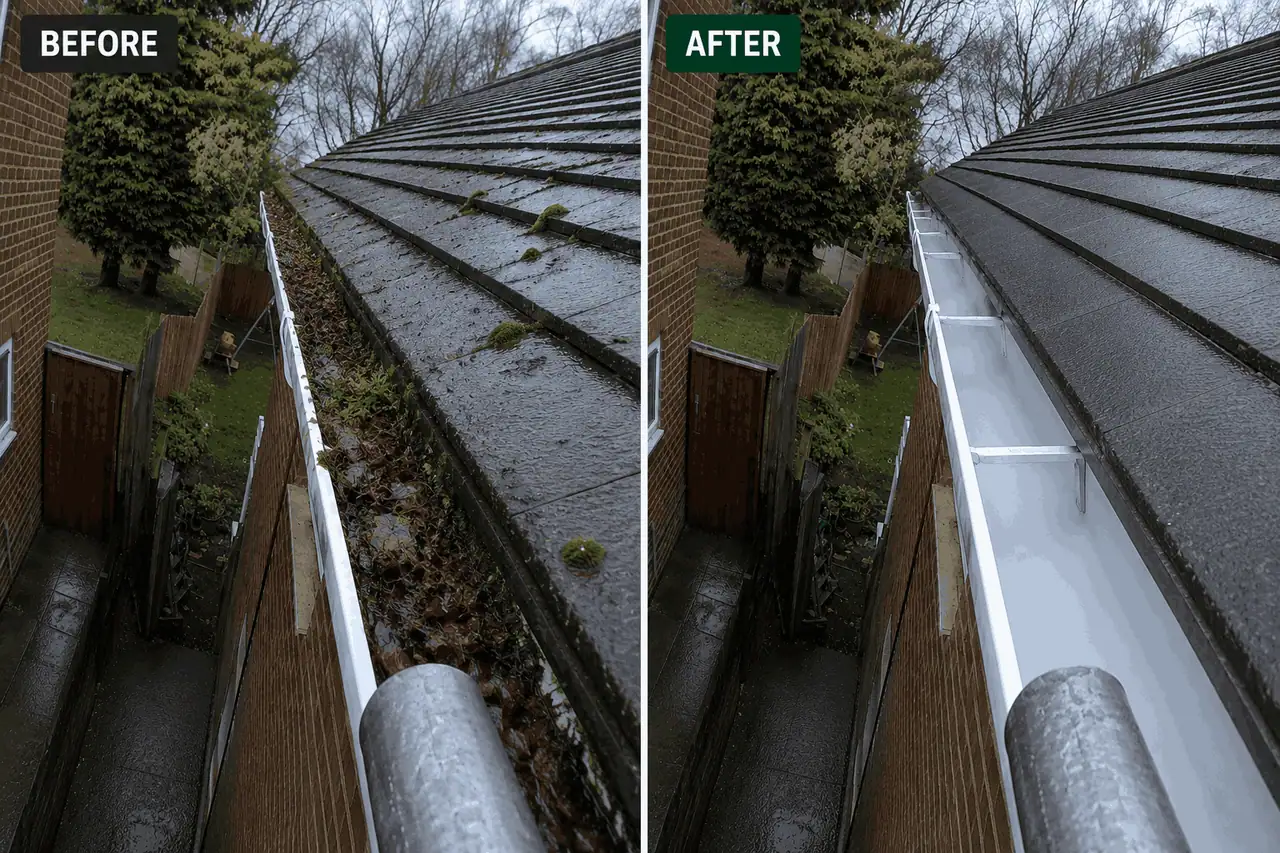
Gutters don't come with a service light. They quietly fill with leaves, moss and silt until one heavy shower sends water over the edge and down your wall. So how often should you have them cleaned? For most UK homes the answer is once a year, but some houses need it twice and a few can wait longer. This guide explains how to work out the right schedule for yours.
The short answer
| Your home | How often | Best time |
|---|---|---|
| Typical house, a few trees nearby | Once a year | Late autumn (November) |
| Overhanging or neighbouring trees | Twice a year | Late autumn and spring |
| Mossy concrete or clay tile roof | Twice a year | Autumn and spring |
| Flat roof, box or valley gutters | Twice a year | Autumn and spring |
| Newer home, no trees nearby | Every 12–24 months | Autumn |
| Commercial or rented property | At least once a year | Planned schedule |
What decides how often your gutters need cleaning?
Trees
Trees are the biggest factor. Leaves drop in autumn, but trees also shed seeds, blossom, twigs and needles in spring and summer. Pine needles are especially troublesome because they knit together into a mat that traps silt. If branches overhang your roof, or a large tree sits in a neighbour's garden, plan for two cleans a year. Our guide on how tree cover changes your gutter cleaning schedule goes into more detail.
Moss on the roof
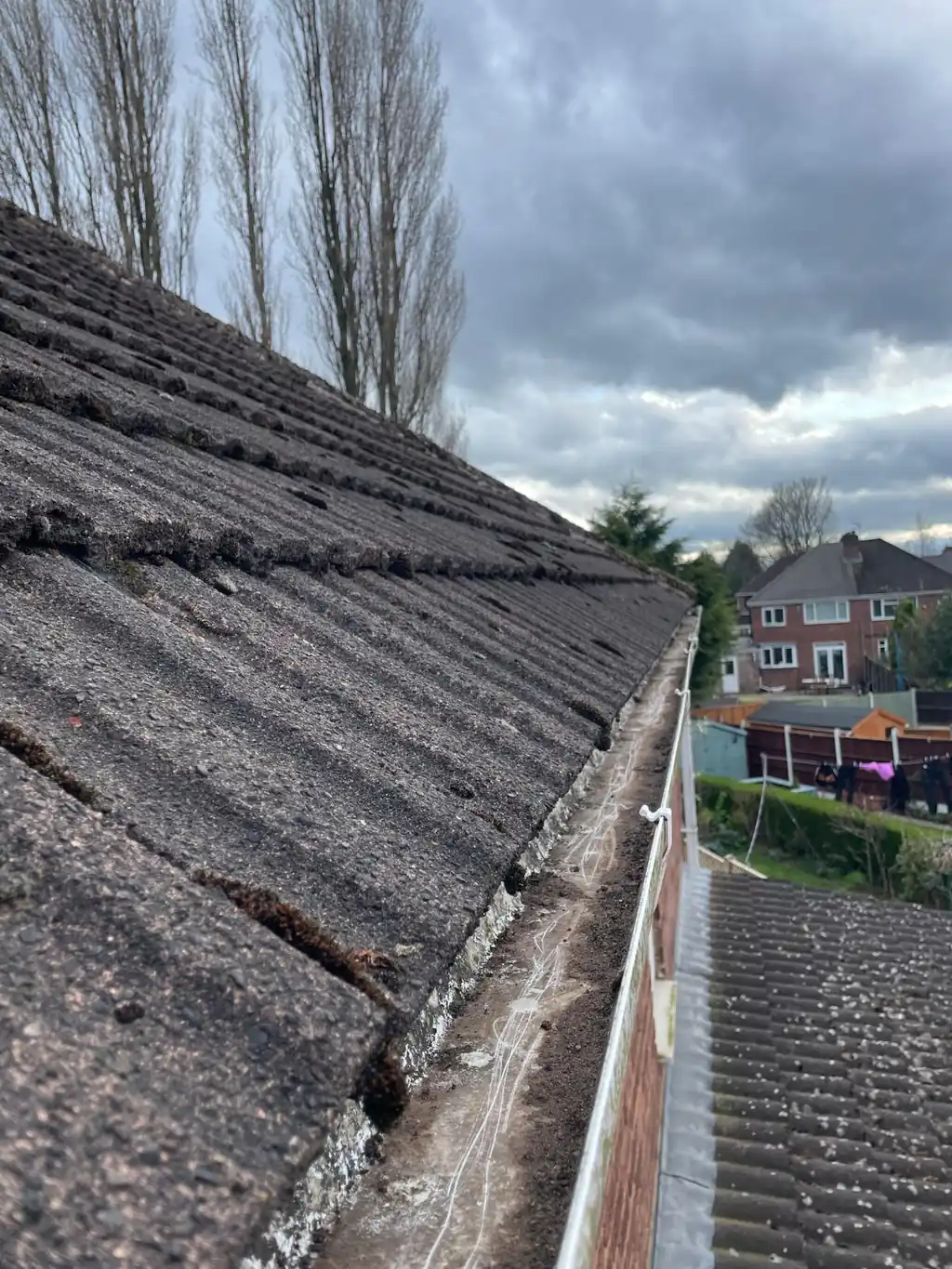
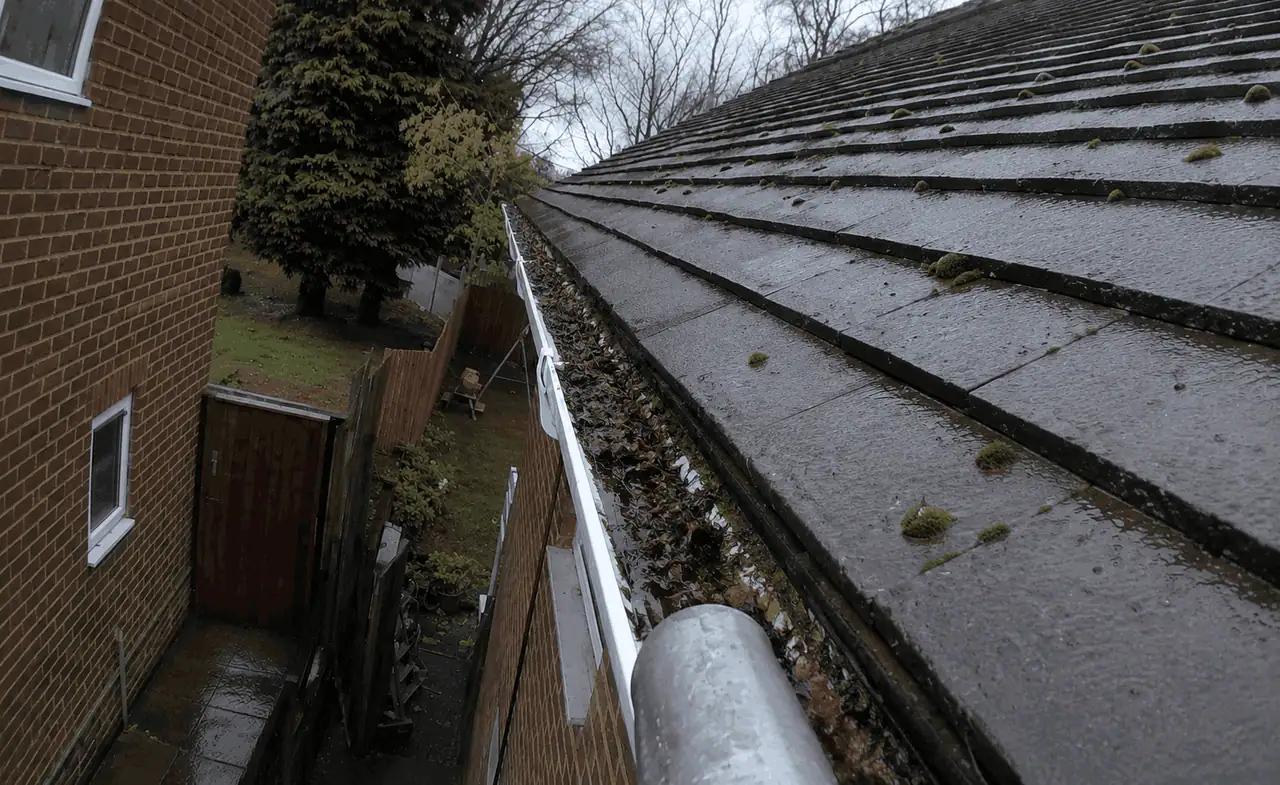
Concrete and clay roof tiles grow moss, especially on north-facing slopes. Rain washes moss and grit down into the gutters all year round, where it settles into a heavy sludge. If your roof is mossy, a roof moss treatment alongside a gutter clean stops the problem coming straight back.
Roof and gutter type
Valley gutters (where two roof slopes meet), box gutters and flat-roof outlets collect debris faster and overflow more easily than standard half-round gutters. They benefit from more frequent checks.
Birds and pests
Pigeons and other birds nest in gutters and behind fascias, leaving nesting material and droppings that block outlets. If birds regularly roost on your roof, check gutters more often.
The best time of year to clean gutters
Late autumn (usually November) is the most important clean, once most leaves have fallen and before winter rain and frost. Water that sits in blocked gutters can freeze and expand, straining joints and brackets.
Spring (April or May) is the second clean for homes near trees or with mossy roofs. It clears winter debris, seeds and blossom before summer storms.
Booking in early autumn helps too. October and November are the busiest months for gutter cleaners, so appointments fill quickly. Our seasonal gutter maintenance calendar sets out what to do each season.
DUE A CLEAN? BOOK BEFORE THE AUTUMN RUSH
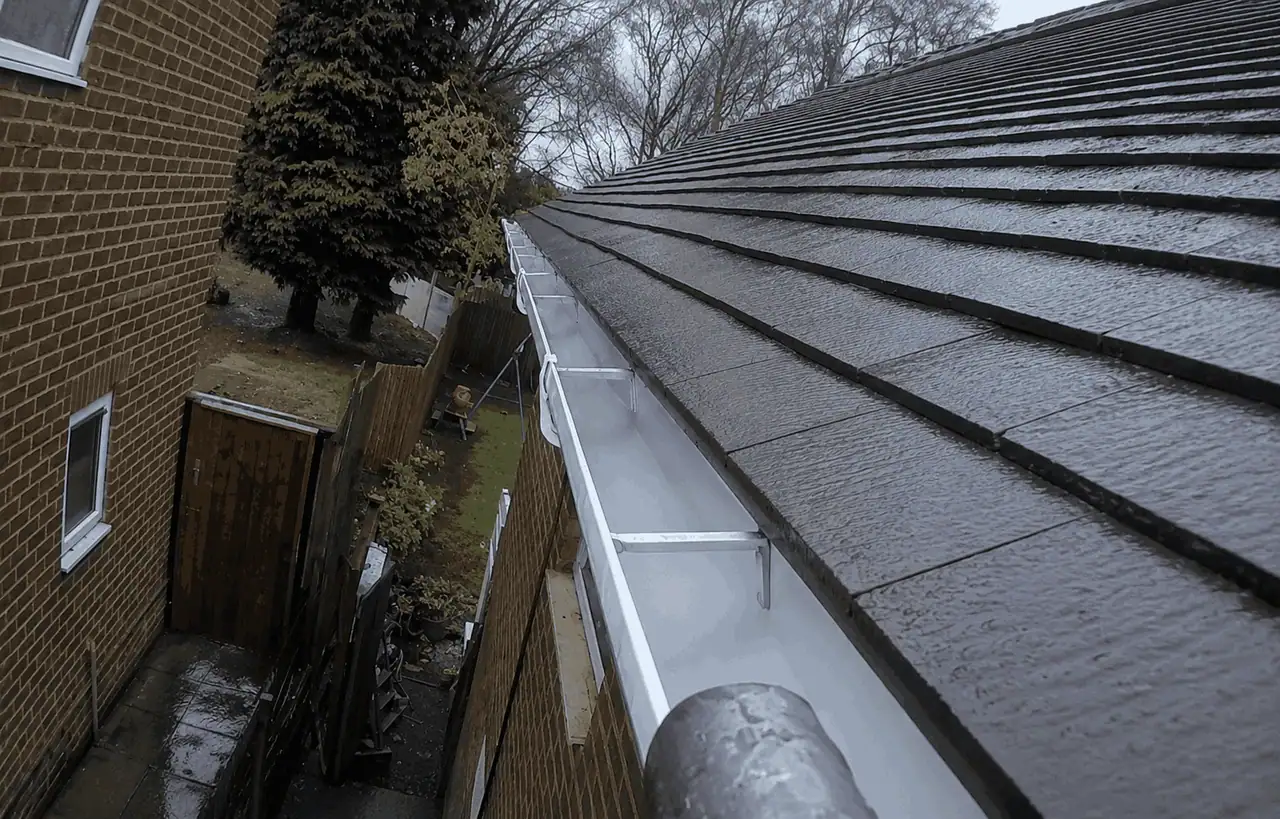
Ground-based vacuum gutter cleaning across Birmingham and the West Midlands. From £100, downpipes flushed and tested, before & after photos on every job.
Signs your gutters need cleaning now
Whatever your schedule, book a clean straight away if you notice:
- Water spilling over the gutter edge when it rains
- Plants, grass or moss growing out of the gutter
- Damp patches, green stains or algae on outside walls
- A downpipe that stays dry during heavy rain (it's blocked)
- Gutters sagging or pulling away from the fascia
- Damp or mould on ceilings or walls inside, near the roofline
More warning signs are in signs your gutters are clogged.
What happens if you don't clean your gutters?
Blocked gutters rarely cause a problem overnight, but the damage builds up. Overflowing water soaks brickwork and can cause damp inside, rots timber fascias and soffits, stains render and can pool around foundations. The weight of wet debris also pulls gutters out of line, so joints start leaking. A yearly clean costs far less than fixing any of these. See our gutter cleaning prices, or read how much gutter cleaning costs in the UK.
Gutter cleaning in Birmingham and the West Midlands
Many Birmingham suburbs have mature, tree-lined streets, so plenty of local homes need two cleans a year. We provide gutter cleaning in Birmingham and across the West Midlands, including Solihull, Sutton Coldfield, Wolverhampton and Coventry. Our ground-based vacuum reaches up to four storeys without ladders, and every visit includes downpipe flushing and before and after photos.