
Most gutter problems don't happen in a single storm. They build over months and years, quietly, out of sight — until the damage is already expensive. This guide walks through what actually happens to a Birmingham home when gutters are ignored. It's written for homeowners who have missed a few years of maintenance and want to understand what's already at risk, and for buyers inspecting a property that hasn't been looked after. It is general guidance, not a survey of your specific home.
📞 WOW Gutters Ltd: 07421 433910 | 📋 Request a free quote
Quick answer: Within 1–2 years of no cleaning, debris clogs downpipe heads and overflow staining appears on brickwork. By year three, fascia boards begin absorbing moisture. By year five, rot, structural bracket failure and interior damp are common findings. The longer it's left, the more expensive the fix — and some damage (rotten fascias, subsidence-linked damp) can't be undone with a clean alone.
Why Gutters Block So Predictably
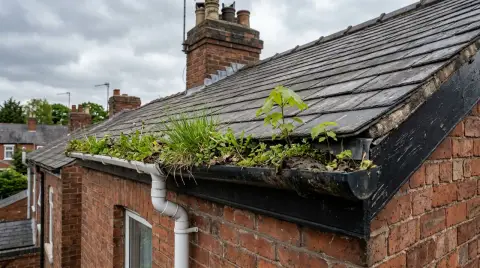
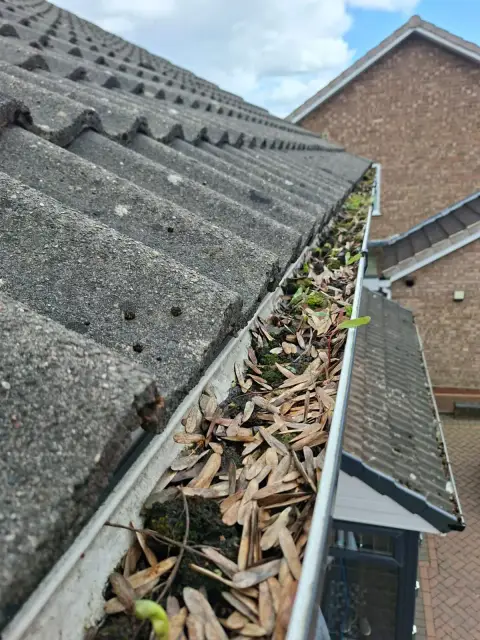
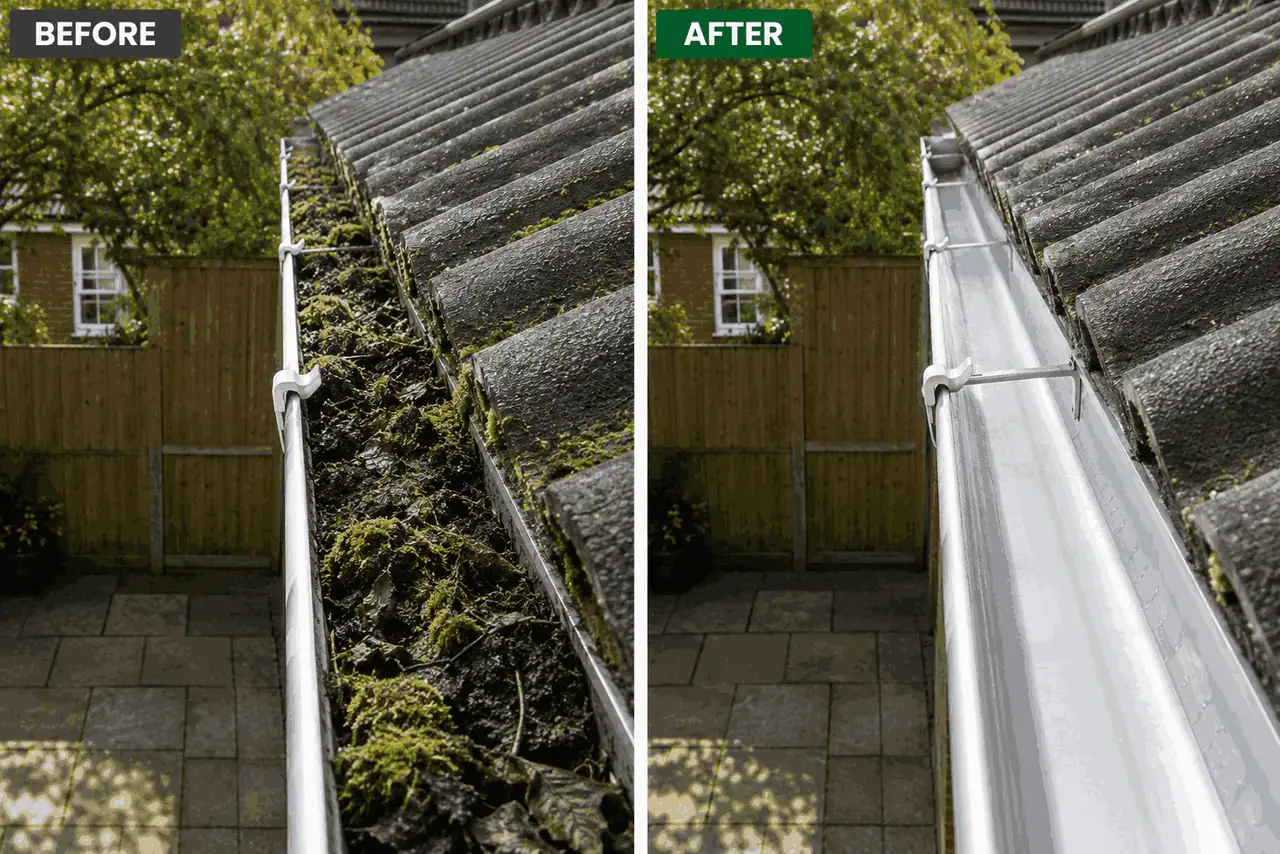
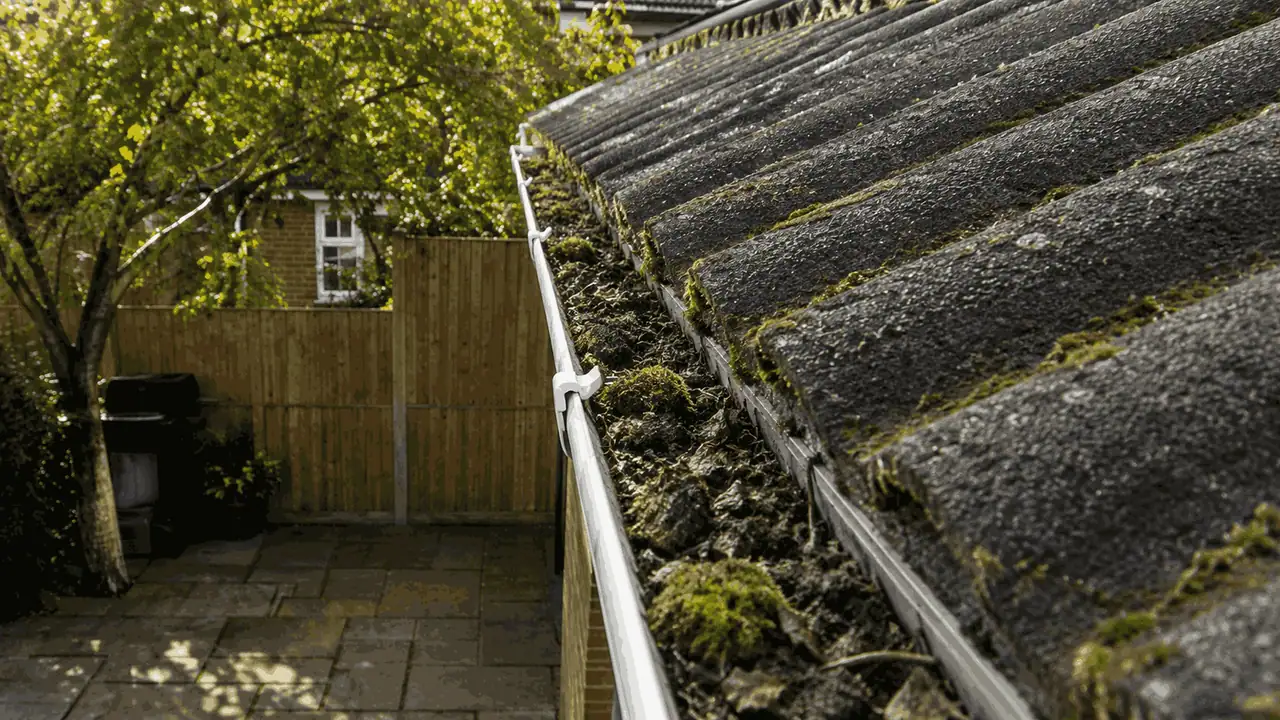
A gutter is a channel on a slope. Everything that lands in it — leaves, moss, seed pods, grit, bird debris — washes along the channel and collects at the lowest point, which is usually the downpipe entry. Once that entry is partly blocked, water pools. Pooling water grows algae and moss, which acts as a net for the next wave of debris. Each season the blockage grows a little denser.
In Birmingham the process is accelerated by tree cover. Much of the city's housing stock — terraced, semi-detached and detached houses in areas like Moseley, Harborne, Kings Heath, Acocks Green and Sutton Coldfield — sits under substantial canopy. Oak, sycamore, lime and horse chestnut all shed late and heavily. A gutter that is clean in September can be half-blocked by Christmas.
The Timeline: Year by Year
Year 1 — Debris Accumulates
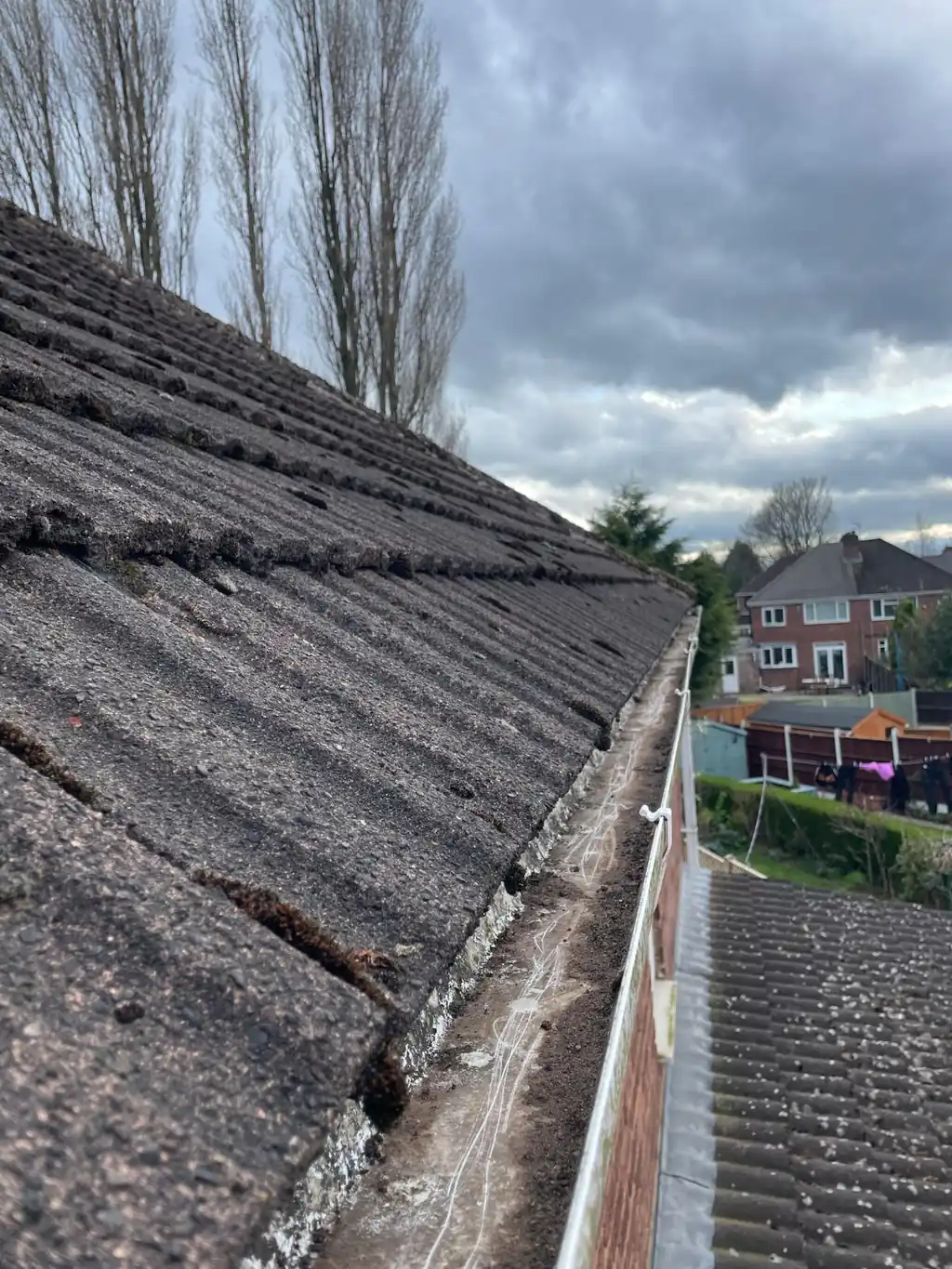
In a typical Birmingham year, a gutter that hasn't been touched will collect enough debris to slow flow noticeably. You won't see much from the ground in the first year — overflow during the heaviest rain, perhaps, or a slightly discoloured streak on the brickwork after a wet month. The downpipe still flows, but under pressure rather than freely. This is the easiest year to intervene: a standard clean costs little and prevents everything below.
Year 2 — Overflow Becomes Regular
By the second year the debris mat at the downpipe entry has usually compacted enough to block it in moderate rain, not just heavy downpours. Water spills over the front lip of the gutter. It runs down the face of the building repeatedly, leaving visible tide marks on render or brickwork. The mortar joints in the overflow path begin absorbing water on every wet day. Soffit boards — the horizontal boards under the eaves — are repeatedly splashed from above and start to show staining.
⚠First visible damage: overflow staining on walls, soffit splash-back staining, possibly green algae on brickwork below the gutter line.
Year 3 — Fascia Boards Begin to Suffer
The fascia board is the vertical board that the gutter is fixed to. It runs along the roofline and closes the gap between the roof rafters and the outside air. When a gutter sits full of wet debris or holds standing water, the fascia board behind and below it absorbs moisture continuously. uPVC fascias are largely resistant, but the fixings — screws, brackets — corrode, and water migrates behind the board to the timber noggins beneath. Timber fascias, still common on older Birmingham properties, begin to soften and rot from the rear face outward.
⚠At this stage: fascia boards may feel soft when pressed, paint may bubble or peel, and gutter brackets may start to work loose as their fixing screws lose purchase in softened timber.
Year 4–5 — Interior Damp Appears
Water that has been running behind a fascia board, saturating the wall plate and rafter feet, eventually travels inward. The first internal sign is usually a damp patch in the corner of a bedroom ceiling — faint at first, often mistaken for a roof leak. It is often not a roof leak. It is water from a blocked gutter that has been feeding the wall plate for years. By year four or five, the mortar joints on the gutter-facing elevation are regularly saturated, and hairline cracks in render (common on Birmingham's mix of brick and rendered properties) allow water to penetrate the cavity wall.
⚠Interior symptoms: damp patches on bedroom or landing ceilings near external walls, musty smell in top-floor rooms, condensation on external walls in cold weather.
See our separate guide if you're already seeing these signs: Damp on an External Wall: When Gutters Are the Cause.
Year 5+ — Structural Consequences
Beyond five years of complete neglect the damage typically reaches a scale that a gutter clean alone cannot fix. Common findings include:
⚠Rotten fascia and soffit boards requiring full replacement — a significantly larger job than a gutter clean.
⚠Failed rafter feet where the timber at the base of the rafters has softened, affecting the structural integrity of the roof edge.
⚠Rising damp confusion — repeated saturation of the base of an external wall can mimic rising damp, leading to unnecessary damp-proofing treatment that doesn't address the real source.
⚠Downpipe-related erosion — where downpipes discharge at ground level and have been overloaded for years, soil erosion and, in some older properties, undermining of foundation footings can occur.
The Cost Comparison: Clean Now vs. Repair Later
What you're comparing
✔Annual gutter clean: preventive cost, keeps the system working, avoids all downstream damage.
⚠Fascia and soffit replacement: a significantly larger investment — plus any associated gutter rehang — required when boards have rotted beyond repair.
⚠Interior damp remediation: replastering, possible timber treatment, redecoration — costs that compound if the gutter issue isn't fixed first.
⚠Structural repairs to rafter feet or wall plates: scaffolding-dependent work that can run to thousands, depending on extent.
These are general ranges for context — not quotes. See our gutter cleaning cost guide for more detail on what cleaning typically costs in Birmingham.
The maths is consistent regardless of property type: prevention costs a fraction of remediation. The only variable is how long the neglect has gone on.
The Parts of Your Roof That Suffer Most

Fascia Boards
The fascia takes the most punishment from a neglected gutter. It sits directly behind and below the channel. When a gutter overflows at the rear (between the gutter and the wall) rather than the front, the fascia is the first thing the water contacts. Timber fascias in this condition rot from the inside out — by the time external paint shows bubbling or discolouration, the structural rot is already established. uPVC fascias resist rot but allow water behind them to reach the timber substrate, which is often the problem you can't see.
Related reading: Fascia and Soffit Cleaning in Birmingham: What It Does and Doesn't
Soffit Boards
Soffits close the underside of the eaves. They are horizontal, face downward, and are exposed to water blown back from an overflowing gutter, plus moisture rising from a saturated fascia above. Soffit failure shows as cracking, crazing on uPVC, or softness on timber. Once a soffit board fails it allows cold air and moisture directly into the roof void, which affects insulation performance and can allow pests in.
Gutter Brackets and Fixings
A gutter full of wet compacted debris is heavy — significantly heavier than a flowing gutter. That weight is carried by the brackets, which are screwed into the fascia board. When a fascia board softens from moisture, the screws lose their grip. Brackets pull forward. The gutter begins to sag, losing its fall (the slope that moves water toward the downpipe). A sagging gutter pools water permanently, which accelerates both the blockage and the fascia damage in a feedback loop.
Downpipes and Below-Ground Drainage
When a blocked gutter finally forces water to find another route, downpipes often receive erratic surge flows — large volumes in one burst rather than steady flow. This stresses the pipe joints and the connections to below-ground drainage. At ground level, repeated overflow from a downpipe that can't cope saturates the soil against the foundation wall. On clay-heavy soils — common across Birmingham and the West Midlands — repeated wetting and drying cycles can contribute to subsidence risk over time, though this is at the more serious end of the damage spectrum.
Related reading: Downpipe Unblocking in Birmingham: What's Involved and When You Need It

Specific Birmingham Factors That Make Neglect Worse
Tree cover and leaf volume
Birmingham has one of the highest urban tree cover rates of any UK city. Areas like Moseley, Edgbaston, Harborne, Sutton Coldfield and Solihull have particularly dense canopy over residential streets. A house under oak or sycamore can fill its gutters in a single heavy leaf fall. Without annual clearing, the debris mat becomes structural — compacted enough to hold its shape even when dry, completely blocking flow year-round rather than just in autumn.
Birmingham's rainfall pattern
Birmingham averages around 700–750mm of rainfall per year, spread fairly evenly across all twelve months with peaks in autumn and winter. There is no long dry season in which a blocked gutter has time to clear itself. Every month brings enough rain to test the system. A gutter that is functionally blocked will overflow every time it rains substantially — which in Birmingham is several times a month, year-round.
Clay subsoil
Large parts of Birmingham and the West Midlands sit on Mercia Mudstone and Triassic clay formations — soil types that expand when wet and shrink when dry. Properties on these soils are already at heightened subsidence risk. Persistent water discharge at the base of a wall — from an overflowing or misdirected downpipe — wets the clay repeatedly, increasing the drying/wetting cycle that drives subsidence. This is a background risk rather than an immediate consequence, but it is a real one on affected soil types.
What to Do If Your Gutters Haven't Been Cleaned in Years
Step 1: Do the ground-level check first
1.Walk around the building and look for overflow staining — green or brown vertical tide marks below the gutter line
2.Look at the fascia behind the gutter for paint bubbling, dark damp patches or visible rot
3.During rain, check whether downpipes are flowing freely or producing only a trickle
4.Check top-floor ceilings and walls near external corners for damp patches
Our guide to doing this check safely: 9 Clogged Gutter Symptoms Birmingham Homeowners Miss
Step 2: Book a professional clean and inspection
For a gutter that hasn't been touched in several years, a standard clean is the right first step — but ask for a report on what's found during the job. A good contractor will tell you if the debris is unusually compacted, if any brackets are loose or if the fascia behind shows signs of water damage. This gives you a clear picture of whether the clean alone is enough or whether further work is needed.
Our high-reach vacuum system clears debris from ground level, with camera footage available on request. How High-Reach Gutter Vacuum Cleaning Works.
Step 3: Assess what the clean reveals
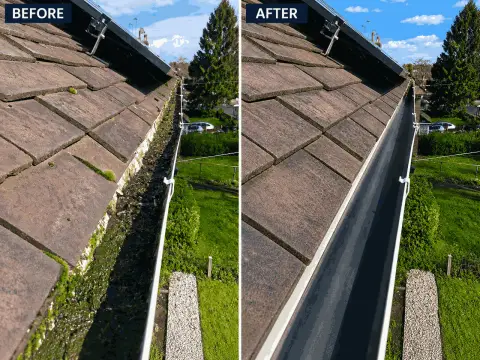
✔If only debris is found and channels and brackets are sound: a clean resolves the issue. Set a reminder for 12 months.
✔If brackets are loose or sagging: re-fixing brackets is a relatively straightforward job, usually done at the same visit or shortly after.
⚠If fascia boards are soft or showing visible rot: the fascia needs attention before the gutter is rehung. A rotten fascia won't hold a bracket reliably.
⚠If interior damp is already present: the gutter clean must happen first — to remove the ongoing water source — before internal repairs are assessed. Fixing the internal symptom before the external cause is a common and costly mistake.
What a Professional Clean Can and Can't Fix
What a clean resolves
✔Removes all accumulated debris from channels
✔Clears downpipe blockages and restores free flow
✔Removes the ongoing water source causing overflow staining and wall saturation
✔Allows the building fabric to begin drying out
✔Reveals the true condition of channels, brackets and fascia boards
What a clean cannot fix on its own
✗Rotten or structurally compromised fascia boards — these need replacement
✗Existing interior damp or staining — the building needs time to dry and may need replastering
✗Cracked or joint-failed gutter sections — repair or replacement needed
✗Overflow staining on external brickwork — this requires separate cleaning treatment
✗Eroded ground or soil compaction at downpipe bases
Frequently Asked Questions
My gutters have never been cleaned in 10 years — is it too late to start?
No. The right time to clean is now. The longer you wait, the more damage accumulates — but a clean today stops any further water damage from occurring. Even if the fascia has already suffered some damage, removing the ongoing source of water is always the first step in any remediation plan. Book a clean, get a condition report, then assess what else is needed.
Can I tell from inside the house whether my gutters are causing damp?
Sometimes. Interior damp linked to gutters tends to appear near the top of external walls, in the corners of top-floor rooms or just below the ceiling on an external wall. It is often worse after prolonged wet weather rather than immediately after a storm. Rising damp, by contrast, appears at the base of walls. If damp is appearing at ceiling level on an external wall, gutters are a very likely cause and should be checked before any internal work is commissioned.
Will my insurer cover damage caused by blocked gutters?
Most home insurance policies exclude damage caused by lack of maintenance. A claim for interior damp traced to a gutter that hasn't been cleaned in five years is likely to be declined on maintenance grounds. This is a good reason to keep a simple maintenance record — date of last clean, contractor used — in case you ever need to demonstrate that the property has been maintained.
How often should gutters be cleaned to avoid this damage?
For most Birmingham properties: once a year after the main leaf fall (November to December) is the minimum. Properties with heavy tree cover — particularly oak or sycamore — benefit from twice-yearly cleaning (spring and late autumn). Read our detailed guide: Month-by-Month Gutter Maintenance Schedule for Birmingham.
Can blocked gutters cause subsidence?
In extreme cases on clay subsoils, yes — but this is at the more serious end of the damage spectrum and is not a typical outcome of a blocked gutter alone. The more common pathway is: blocked gutter → persistent wall saturation → interior damp → mortar decay and lintel corrosion. Subsidence-linked effects from gutters are most often seen where a downpipe has been directing large volumes of water directly against a foundation wall for many years.
The Summary: What Gets Damaged and When
Neglect damage timeline at a glance
Year 1Debris accumulates, downpipe flow slows, minor overflow in heavy rain
Year 2Regular overflow, staining on brickwork and soffits, mortar joints begin absorbing water
Year 3Fascia moisture absorption, bracket fixings weaken, timber fascias begin to soften
Year 4–5Interior damp appears, cavity wall saturation, fascia rot progresses, potential soffit failure
Year 5+Structural fascia/soffit replacement needed, rafter feet affected, foundation risk on clay soils
📞 WOW Gutters Ltd: 07421 433910 | 📋 Request a free no-obligation quote — we serve Birmingham and all areas of the West Midlands.
Related reading: Gutter Repair or Replace: How to Decide | Landlord's Gutter Checklist for Birmingham Rentals | 9 Clogged Gutter Symptoms to Check From the Ground